


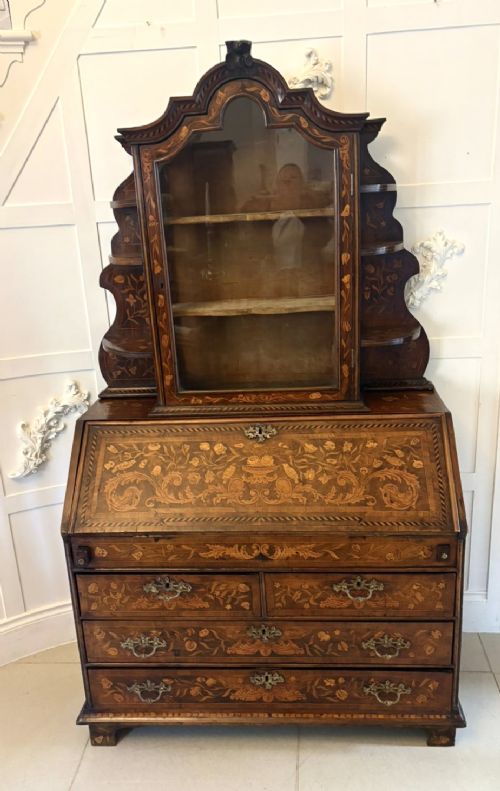


Dutch Walnut Bookcase
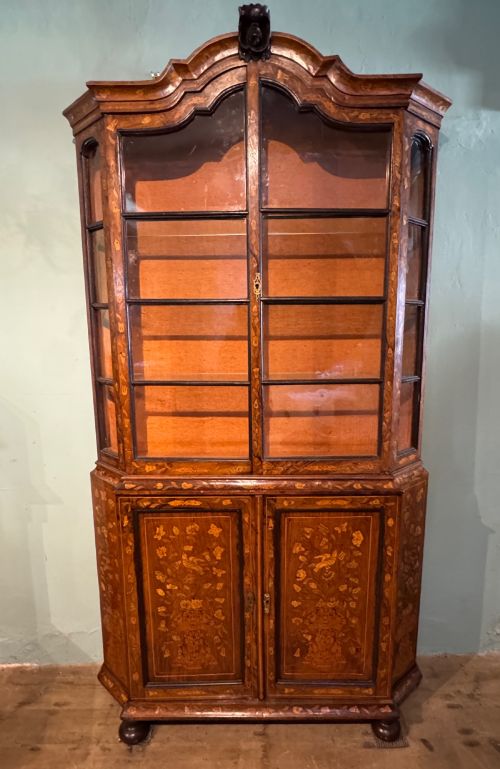
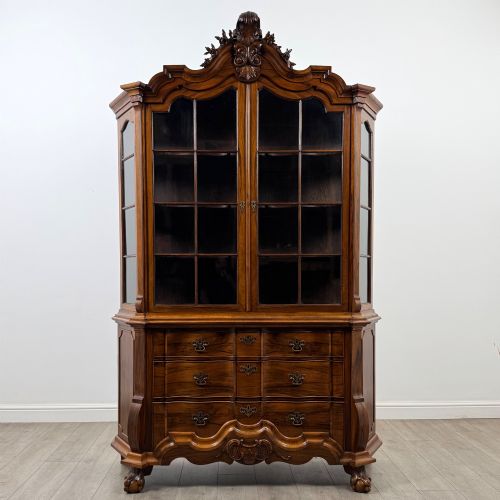
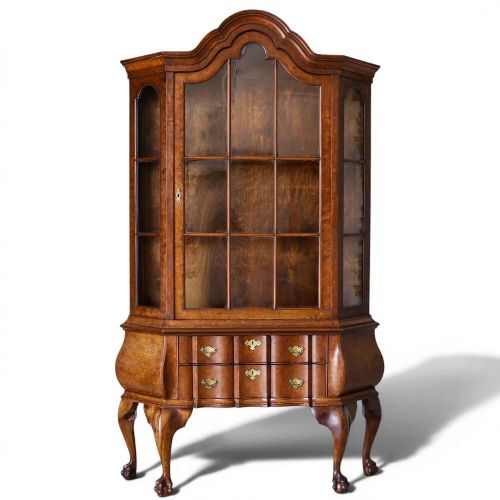
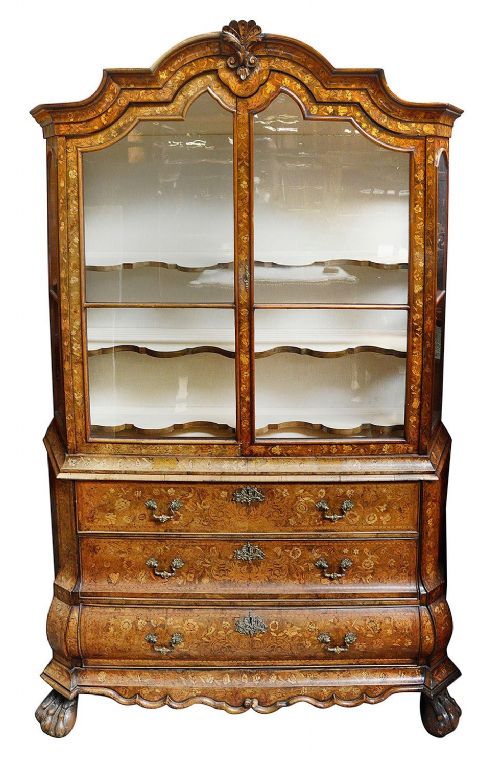
A dutch walnut bookcase brings together rich burr veneers, intricate floral marquetry, and architectural glazed upper sections designed to display collections.
Dutch Walnut Bookcase
A dutch walnut bookcase is a substantial piece of furniture combining storage for books or collections with decorative display, frequently featuring glazed upper cabinets and bureau desks.
Buyers meet examples spanning from the eighteenth century through the nineteenth century, including later revival pieces from the twentieth century.
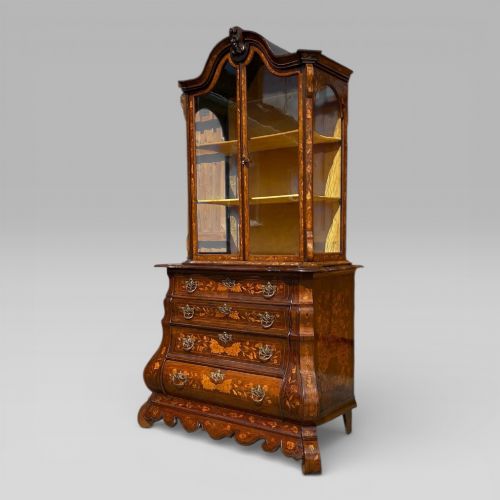
The form encompasses tall bureau bookcases, vitrines, and cabinet on chest configurations rooted in styles such as Dutch Baroque and Dutch Rococo.
Materials and technique
Craftsmen built these cabinets using primary timbers of walnut and burr walnut, often supported by secondary woods like oak, applied as veneers over construction carcases.
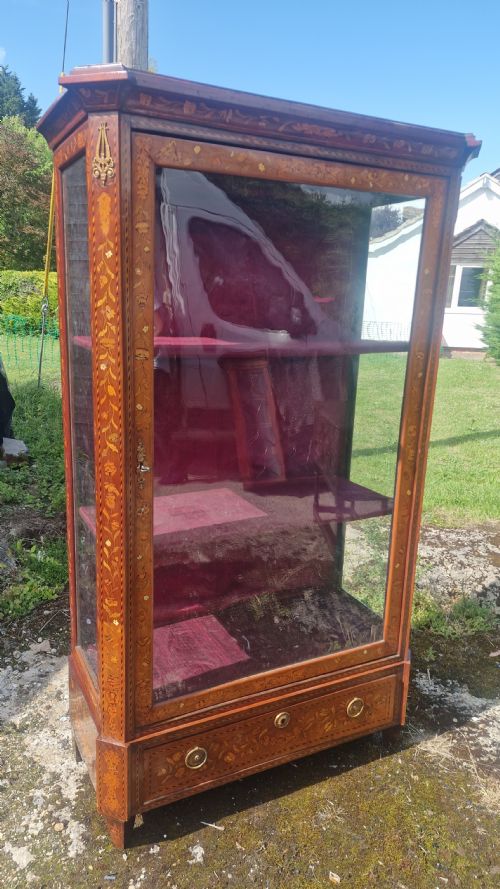
Surfaces frequently showcase elaborate fruitwood inlay and floral marquetry, creating contrasting botanical motifs across doors, slopes, and drawer fronts.
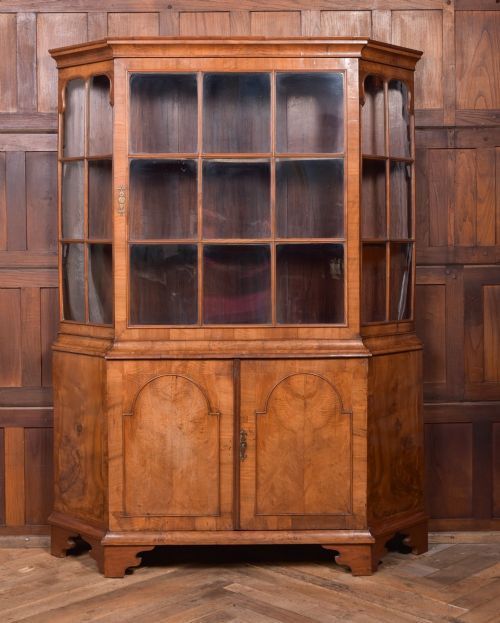
Glazed upper doors, brass hardware, and occasionally canted sides or bombe shaped lower bases complete the construction.
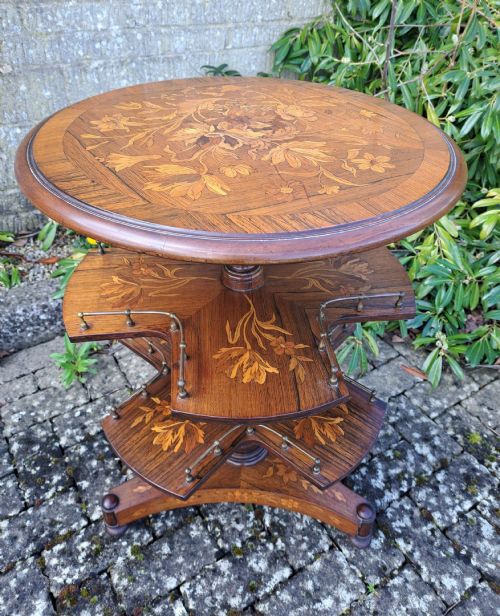
Some revolving library tables spin effortlessly, letting you browse your entire book collection without moving from your favourite chair.
Distinctions in quality
The refinement of the floral marquetry and the choice of highly figured burr walnut veneer distinguish superior examples from simpler plain walnut pieces.
Structural harmony defines better cabinets, particularly in the shaping of bombe bases and the crispness of inlaid fruitwood details against the dark walnut background.
Proportion and the handling of curved glazed doors dictate the visual impact of each cabinet or bureau bookcase.
Edwards and Roberts
The Dutch Walnut Bookcase Glossary
- Marquetry
- Decorative patterns formed by fitting together thin slices of wood veneer into pictorial or floral designs. This technique covers many eighteenth-century cabinet surfaces.
- Bombe
- A swelling, bulging contour found on the lower sections of certain cabinets and chests. This curved profile creates a dramatic silhouette.
- Vitrine
- A glass-fronted cabinet intended for the display of curiosities or porcelain. These glazed pieces protect contents while offering full visibility.
- Burr walnut
- Wood taken from a walnut tree growth, yielding swirling and knotted grain patterns. Cabinetmakers prized this timber for its decorative appearance on primary surfaces.
Dutch Walnut Bookcase: Frequently Asked Questions
How do I date a dutch walnut bookcase?
Dating relies on examining construction methods, timber choice, and stylistic cues such as Baroque shaping or marquetry motifs. Eighteenth-century pieces typically show hand-cut joinery and specific fruitwood inlay styles that evolved into nineteenth-century revivals.
Secondary woods and drawer linings also offer clues, as earlier pieces utilise native timbers differing from twentieth-century manufacturing standards.
Where should I place a bureau bookcase?
These large cabinets require stable wall space with consistent humidity away from direct sunlight to protect the walnut veneer and fruitwood marquetry. Libraries, studies, or spacious living rooms suit their substantial proportions.
Ensure floor surfaces are level, particularly with heavier items featuring bombe bases or tall glazed upper sections.
How do I care for antique walnut veneer?
Maintain walnut veneer by dusting gently with a dry, soft cloth and avoiding silicone-based polishes or excessive moisture. Feed the timber periodically with appropriate conservation wax to preserve the grain.
Keep pieces away from direct heat sources and dramatic temperature shifts to prevent the veneer from lifting or cracking.