

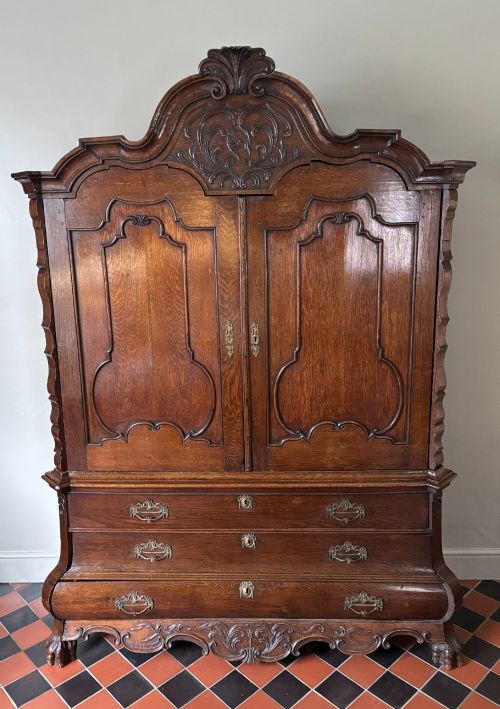

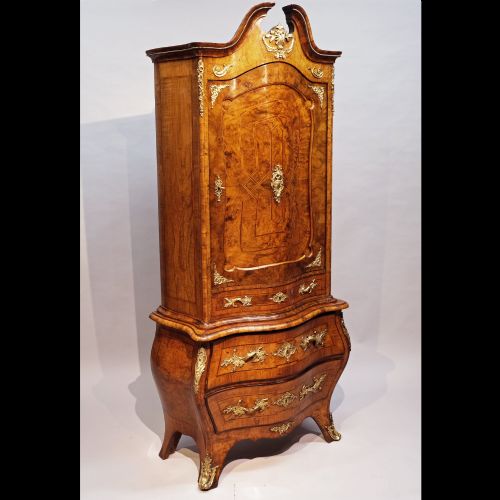
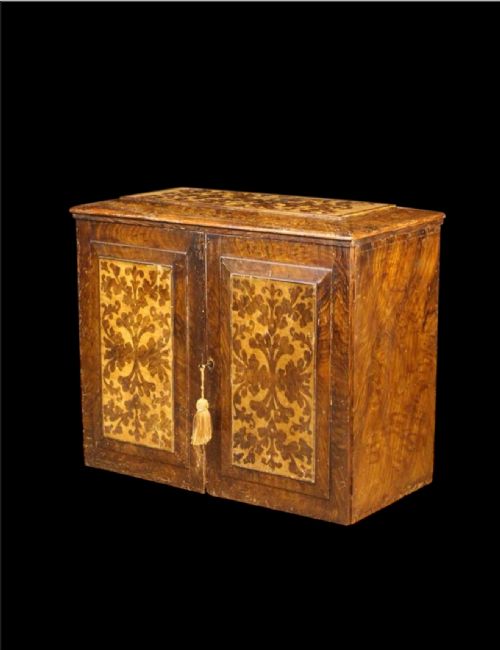


Dutch Storage Cupboard
These Dutch storage cupboard pieces are substantial timber vessels built to hold linens and precious collections, offering deep shelving and rich historical character.
Dutch Storage Cupboard
A dutch storage cupboard encompasses a diverse group of large timber furniture pieces designed for household organisation and display, originating across several centuries. Buyers searching for a dutch storage cupboard will encounter various forms ranging from grand linen presses and armoires to compact collectors cabinets and corner units.
The pieces on this page span several distinct eras, drawing heavily from the eighteenth and nineteenth centuries alongside earlier sixteenth-century examples. Common regional styles include Dutch Baroque, Dutch Rococo, and Dutch Neoclassical designs, alongside simpler country house interpretations and colonial hardwood items.
How they were made
Cabinetmakers utilised robust timbers such as oak, walnut, pine, and fruitwood to construct these substantial storage vessels. Many examples feature intricate burr walnut veneers and elaborate floral marquetry inlay work executed in contrasting woods.
Metalwork played a functional and decorative role, incorporating cast brass handles, iron hardware, and occasional ormolu mounts to secure doors and drawers. Surface treatments varied from natural polished grains and bleached finishes to original painted schemes and tambour slats.
Dutch Storage Cupboard Retail Price Guide 2026
Typical asking prices for dutch storage cupboard among the pieces listed under this phrase on Sellingantiques today, from the lower quarter to the upper quarter. They describe what is for sale here now, not the wider market.
Apprentice chests provided young woodworkers a chance to demonstrate mastery by crafting miniature furniture before joining the guild.
What varies in quality
Quality in these storage pieces rests upon the precision of the marquetry inlay and the choice of primary timber veneers. Examples utilising finely figured burr walnut and complex floral patterns demonstrate a higher tier of workshop skill than plain pine or utilitarian surfaces.
The integrity of the structural proportions and the survival of original hardware and painted finishes dictate the historical standing of each piece. Superior craftsmanship shows in the balanced execution of architectural mouldings and the seamless integration of doors, panels, and internal shelving.
The Dutch Storage Cupboard Glossary
- Marquetry
- Decorative veneer work arranged in pictorial patterns using various coloured woods. It adorns the exterior doors and drawer fronts of many finer cabinets.
- Linen Press
- A tall piece of furniture featuring upper doors enclosing shelves for textiles and lower drawers for general storage. These served as primary wardrobes in traditional homes.
- Tambour
- Slender strips of wood glued to a canvas backing allowing flexible sliding doors to curve around corners. This mechanism appears on specialised corner cabinets.
- Ormolu
- Gilded bronze mounts applied for decorative effect on furniture frames and drawer fronts. It highlights the luxury finish of high-status pieces.
Dutch Storage Cupboard: Frequently Asked Questions
Where did these cupboards sit in a home?
These large storage vessels stood primarily in bedchambers and main living spaces to secure household textiles and valuables.
Smaller corner units and tabletop cabinets found places in parlours and studies for specialised display purposes.
How do I care for antique timber?
Keep wooden furniture away from direct heat sources and fluctuating humidity to prevent timber splitting and veneer lifting.
Apply traditional wax sparingly and polish gently with a soft cloth to maintain the natural finish.
What is a linen press used for?
A linen press provided deep shelved storage specifically designed to keep household sheets and garments flat and clean.
The lower drawers accommodated bulkier items that required enclosed storage away from dust.
How do I distinguish regional styles?
Regional pieces often reflect local tastes through carved mouldings, timber choices, and painted surface treatments.
Baroque and Rococo examples display curved lines and floral inlay, whereas country pieces favour simpler pine and utilitarian construction.