






Dutch Inlaid Vitrine
These Dutch inlaid vitrine pieces bring intricate marquetry and glazed display space together, offering a stately way to showcase fine collections.
Dutch Inlaid Vitrine
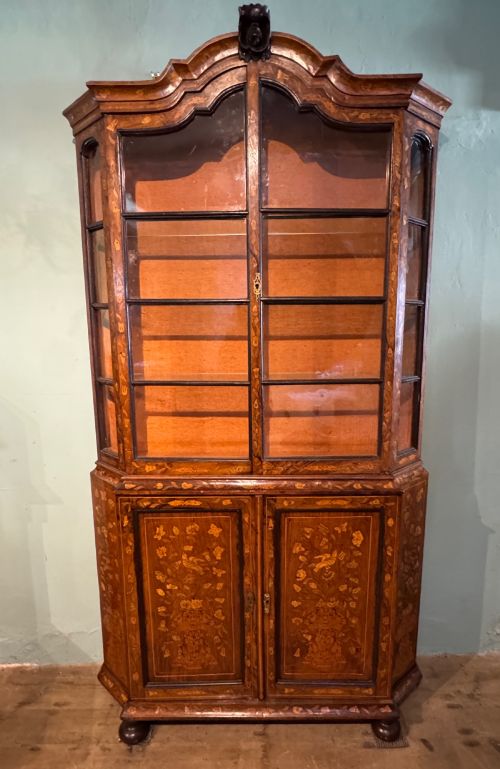
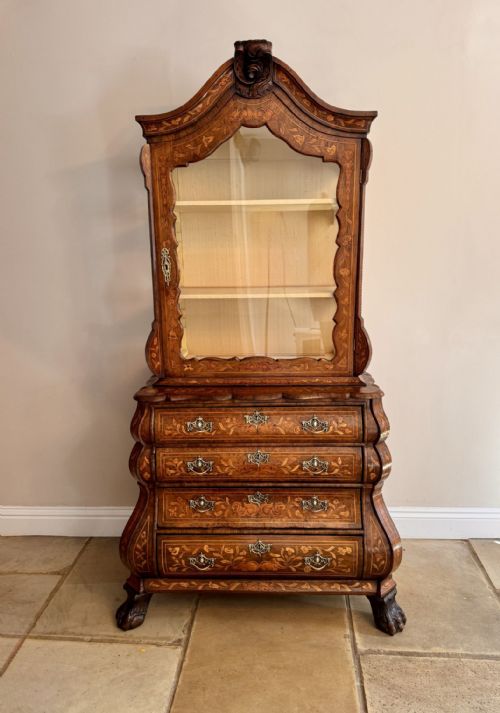
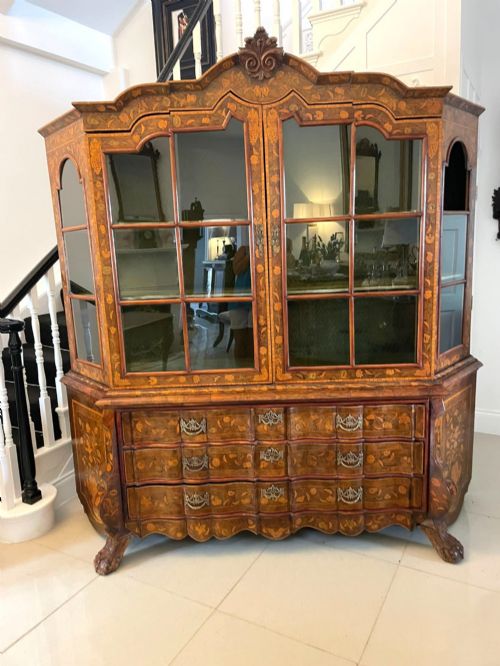
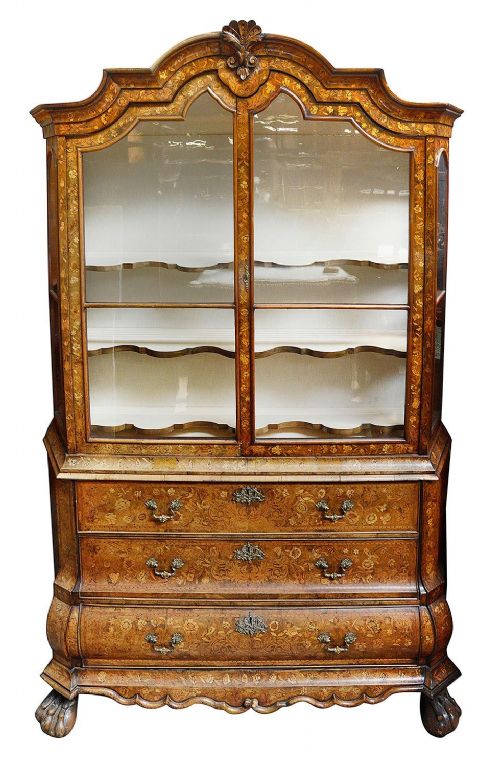
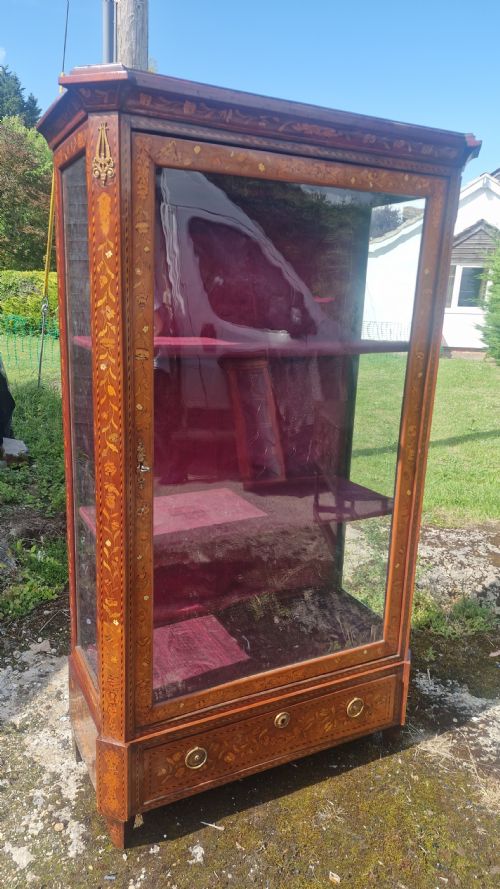
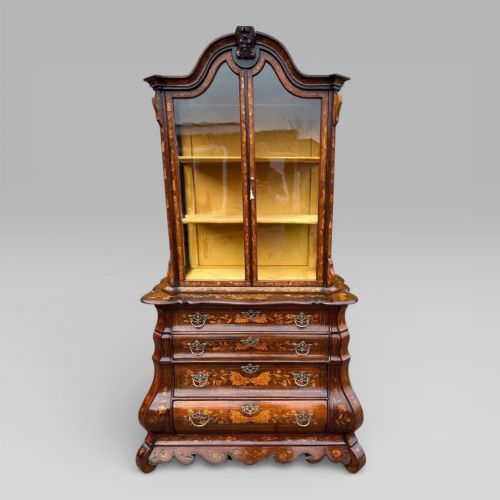
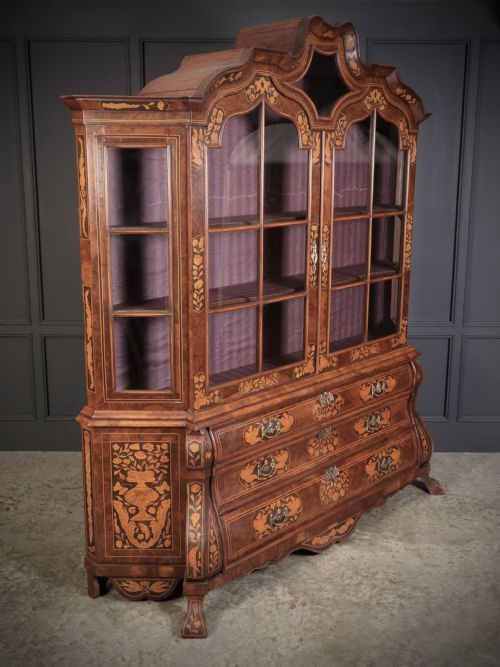
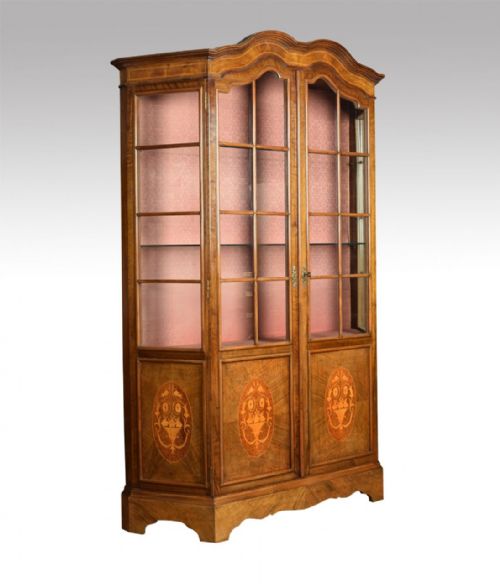
A dutch inlaid vitrine combines glazed display space with elaborate floral or figurative marquetry, originating across periods from the eighteenth century to the twentieth century. These furnishings appear in forms ranging from freestanding display cabinets and bookcases to bombé shapes and corner cupboards.
The buyer meets versions styled in Dutch Baroque, Queen Anne style, and Victorian aesthetics, constructed predominantly as walnut or satinwood display cabinets on chests. These pieces serve primarily to exhibit glassware, porcelain, and small objects of curiosity behind glass panels.
Originating largely from Dutch workshops, the cabinet forms utilise rich fruitwood and oak carcases overlaid with detailed marquetry. The selection spans standard display cases to expansive cabinets on chest designs.
What varies in quality
The sophistication of the marquetry separates standard items from exceptional examples, with finer pieces displaying complex tonal shading in fruitwood and satinwood. The crispness of the floral inlay and the natural grain movement within the burr walnut surfaces dictate visual impact.
Proportion and structural form also define the range, where bombé contours and cabinet on chest configurations demand greater joinery expertise than straight-sided corner cupboards. The integration of original brass fittings and undamaged glass panes further distinguishes superior pieces.
Dutch Inlaid Vitrine Retail Price Guide 2026
Typical asking prices for dutch inlaid vitrine among the pieces listed under this phrase on Sellingantiques today, from the lower quarter to the upper quarter. They describe what is for sale here now, not the wider market.
Listings span periods from the eighteenth century to the 1930s, featuring walnut, satinwood, and fruitwood materials.
Edwards and Roberts
The Dutch Inlaid Vitrine Glossary
- Marquetry
- A decorative technique of applying veneers of different woods to a structure to form intricate pictorial or floral patterns. This method defines the primary visual appeal of these cabinets.
- Vitrine
- A glass-fronted cabinet designed specifically for displaying fine objects or collections. The term is often used interchangeably with display cabinet.
- Bombé
- A furniture shape featuring outward-curving or bulging sides and fronts. This style requires advanced woodworking skill to execute properly.
- Satinwood
- A durable, yellowish timber prized for its smooth grain and reflective quality when used as a veneer. It provides high contrast in marquetry panels.
- Cabinet on chest
- A tall furniture form comprising an upper display section mounted upon a lower chest of drawers. This configuration adds considerable height and storage capacity.
Dutch Inlaid Vitrine: Frequently Asked Questions
What is a dutch inlaid vitrine used for?
These cabinets serve as refined storage and display units for porcelain, glassware, and small collectibles. The glass panels protect delicate items from dust while keeping them fully visible.
Interior velvet linings provide a soft surface for arrangement, while the lower chest sections offer additional concealed storage space.
How do I date a dutch inlaid vitrine?
Dating relies on identifying structural characteristics, wood species, and stylistic periods such as Dutch Baroque or Victorian revival forms. Eighteenth-century examples often feature distinct bombé profiling and dense walnut marquetry.
Later nineteenth-century and twentieth-century interpretations incorporate satinwood veneers and modified proportions while retaining traditional floral motifs.
Where should I place a corner cabinet?
Corner cupboards fit neatly into ninety-degree wall junctions, making them practical for rooms with limited floor space. They utilise dead corners while drawing the eye upward through glazed display doors.
Positioning them away from direct sunlight protects the delicate fruitwood veneers and velvet linings from fading over time.
What woods are used in these cabinets?
Primary carcases utilise sturdy timbers like oak and walnut, providing a stable foundation for decorative veneers. Surface decoration relies on satinwood, fruitwood, and burr walnut.
Contrast between these lighter and darker woods creates the characteristic botanical and floral marquetry patterns seen across the panels.