




Dutch Delftware Vessel
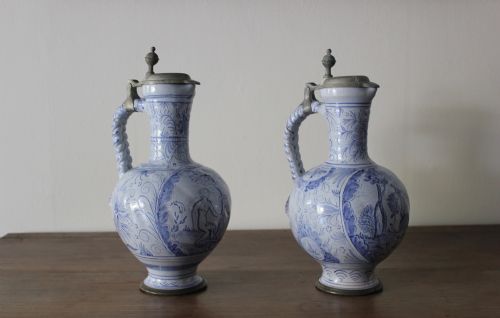
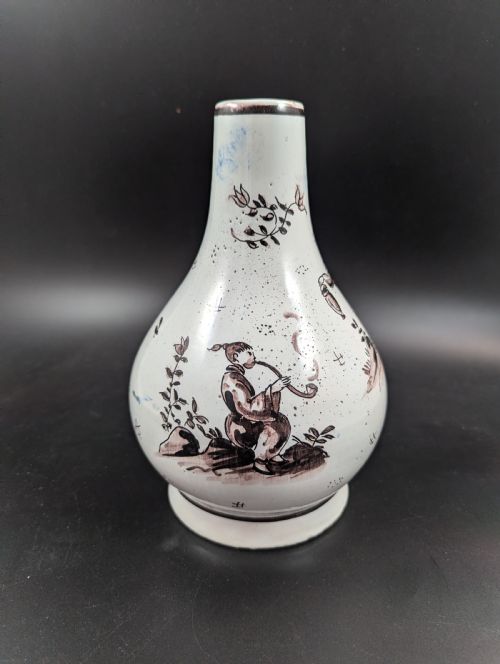
These pieces of dutch delftware vessel bring tin-glazed earthenware into a room, offering the hand-painted blue and white character collectors seek.
Dutch Delftware Vessel
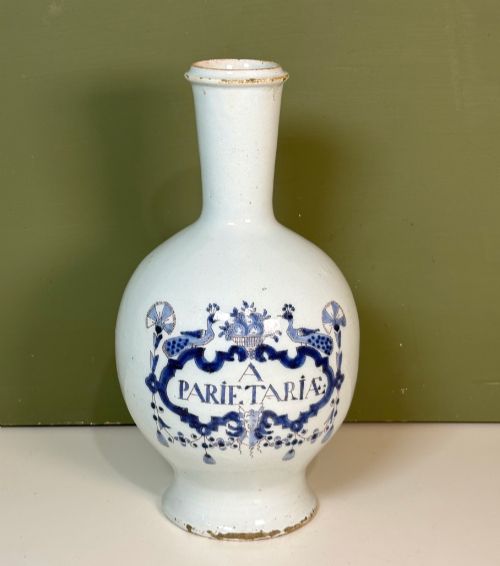
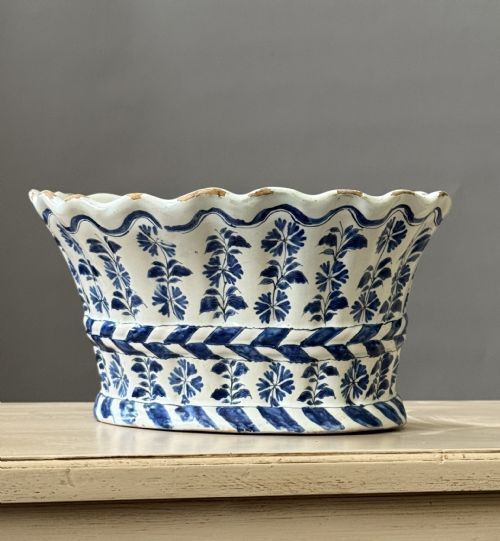
When you search for a dutch delftware vessel, you encounter 18th century and 19th century ceramics intended for utility or display. The forms appearing on this page span apothecary jars, apothecary bottles, storage jars, tobacco jars, bough pots, posset pots with lids, puzzle jugs, planters, jardinieres, decorative jugs, ewers, and vases.
The 18th century examples dominate the selection, showing the distinct Dutch Baroque and 18th century Delft styles. Buyers meet both matched pairs and individual pieces, ranging from large vases to smaller pharmacy containers.
The origin sits firmly in the Dutch tradition, utilising tin glaze on earthenware bodies. Each item reflects the historical production methods of Dutch potteries.
Materials and construction
Makers formed these pieces using earthenware, coating the ceramic body in a tin glaze to create an opaque white surface. Cobalt oxide and cobalt pigment provided the blue coloration applied over the glaze before firing.
The fabrication relies on traditional potting techniques for earthenware, followed by the specific application of tin-glazed earthenware finishes. This combination produced the characteristic appearance of Dutch Delft.
Dutch Delftware Vessel Retail Price Guide 2026
Typical asking prices for dutch delftware vessel among the pieces listed under this phrase on Sellingantiques today, from the lower quarter to the upper quarter. They describe what is for sale here now, not the wider market.
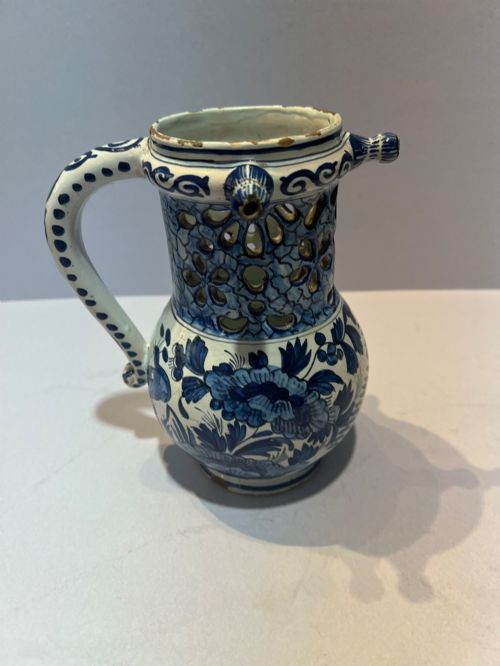
Puzzle jugs invite guests to solve a riddle of hidden spouts without soaking their waistcoats.
Judging the work
The distinction between tiers rests upon the precision of the cobalt pigment painting and the preservation of the tin glaze. Tighter brushwork and more complex forms command greater attention from collectors.
Proportion and scale also separate the standard utility containers from the larger decorative vases and bough pots. The depth of the glaze and the clarity of the blue decoration determine the visual impact of each vessel.
The Dutch Delftware Vessel Glossary
- Tin-Glazed Earthenware
- Earthenware covered with a lead glaze made opaque by the addition of tin oxide. This coating provides the white background typical of Delftware.
- Cobalt Oxide
- A mineral pigment utilised to achieve the blue decoration on these ceramics. It reacts with the glaze during firing to produce deep blue tones.
- Bough Pot
- A specialised vessel designed to hold cut branches or flowers. These containers often feature multiple spouts or openings across the top.
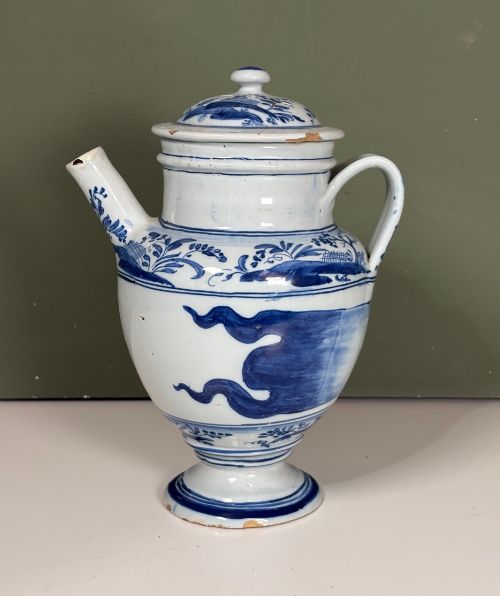
- Posset Pot
- A handled vessel with a lid and sometimes a spout, used historically for serving a hot drink made of curdled milk and wine. They represent some of the more elaborate domestic forms.
- Puzzle Jug
- A drinking vessel with a perforated neck and multiple spouts that requires solving a riddle of fluid dynamics to drink without spilling. They demonstrate the playful side of historic ceramic design.
Dutch Delftware Vessel: Frequently Asked Questions
What is a dutch delftware vessel?
A dutch delftware vessel is a tin-glazed earthenware ceramic made in the Netherlands during the eighteenth or nineteenth century. These objects include utilitarian pharmacy jars alongside decorative vases and jugs.
Potters shaped them from local clay, applied an opaque white tin glaze, and painted designs using cobalt pigment before a final firing.
How were apothecary jars used?
Apothecary jars and bottles held dry drugs, syrups, and ointments in pharmacies and dispensaries. Their labeled surfaces kept medicinal contents organised on shop shelves.
Over time, many transitioned from working medical containers into decorative display items inside homes.
How do I date an 18th century piece?
Dating relies on stylistic markers, potting weight, and the characteristics of the tin glaze. Eighteenth-century examples often display Dutch Baroque painting conventions and specific forms like posset pots or bough pots.
Examining the foot ring and the composition of the earthenware body helps confirm the production era.
How should I display them at home?
These vessels suit placement on wooden surfaces where their blue and white tin glaze contrasts with natural textures. Grouping matched pairs or mixing jars with vases creates balanced arrangements.
Keep them away from areas of high impact to protect the earthenware and glaze from chipping.