
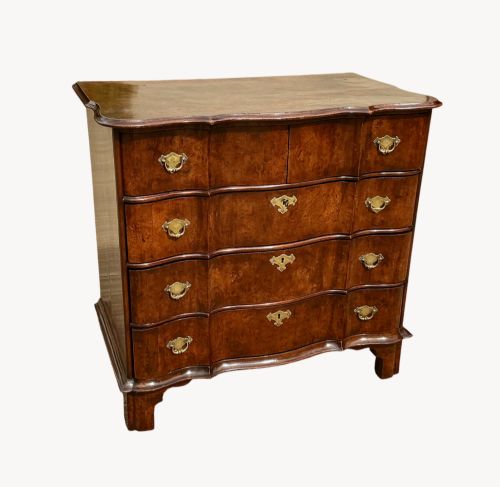
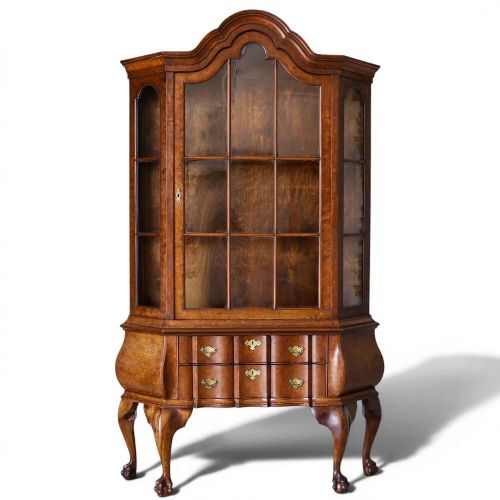


Dutch Burr Walnut Furniture
Dutch burr walnut furniture combines rich, swirling timber figures with classical continental forms that elevate any interior.
Dutch Burr Walnut Furniture
Dutch burr walnut furniture comprises cabinets, bureaux, and display pieces originating from periods including the eighteenth and nineteenth centuries. These items showcase domestic storage and display forms shaped by continental design traditions.
The pieces most frequently met on this page are bureaux, bureau bookcases, and cabinets featuring distinct ornamental marquetry. They reflect centuries of cabinet-making skill focused on practical utility and decorative presence.
Makers utilised characteristic wood figures and classical proportions to construct practical household items. Buyers exploring dutch burr walnut furniture encounter forms ranging from mid eighteenth century chests to later revival pieces.
How they were made
Craftsmen applied burr walnut veneers over secondary timbers such as oak and fruitwood to create patterned exterior surfaces. This technique allowed workshops to display rich grain figures across large panels and drawer fronts.
Makers integrated marquetry inlay and fruitwood inlay to form floral and decorative motifs across the facades of bureaux and cabinets. Brass hardware and glazed upper compartments completed the construction of these refined storage pieces.
Listings feature burr walnut, oak, fruitwood, and glass materials across eighteenth and nineteenth century periods.
What varies in quality
The refinement of the marquetry inlay and the boldness of the burr walnut grain pattern determine the visual impact of each piece. Finer examples display meticulous floral detailing and balanced timber selection across every surface.
Proportion and structural integrity separate standard utility items from masterwork cabinets and bureau bookcases. The execution of canted sides, fitted interiors, and secondary wood choices reflects the skill of the original workshop.
The Dutch Burr Walnut Furniture Glossary
- Burr walnut
- Timber harvested from walnut tree growths, yielding intricate, swirling grain patterns highly prized for cabinet veneers. It provides the dominant decorative surface on these pieces.
- Marquetry inlay
- Decorative patterns formed by fitting small pieces of contrasting wood and fruitwood veneers into a prepared ground. This technique creates detailed floral motifs on drawer fronts and fall-fronts.
- Bureau bookcase
- A writing desk with a sloping fall-front combined with an upper shelving or display cabinet. It offers dual functionality for writing and storage.
- Lowboy
- A small side table featuring drawers, raised on four legs. It serves as a compact surface for display or daily use.
- Dutch Baroque
- A continental design style characterised by ornate forms, dramatic curves, and rich surface decoration. It heavily influences eighteenth-century cabinet-making.
Dutch Burr Walnut Furniture: Frequently Asked Questions
What is Dutch burr walnut furniture?
Dutch burr walnut furniture consists of storage and display pieces decorated with figured walnut veneers and floral marquetry inlay. These items originate primarily from eighteenth and nineteenth century European workshops.
Craftsmen built these pieces using oak and fruitwood structures covered in decorative veneers. They encompass forms such as bureaux, cabinets, and lowboys designed for domestic use.
How do I identify an eighteenth century piece?
Eighteenth century pieces display traditional construction methods, hand-cut dovetails, and period-specific floral marquetry inlay. They often utilise solid oak secondary woods beneath the burr walnut veneers.
Stylistic markers include continental Baroque and Rococo forms with characteristic canted sides and fitted desk interiors. Closer inspection of the timber ageing and veneer application helps confirm the period.
Where were these cabinets used?
These cabinets and bureaux functioned as principal storage and writing furniture in domestic reception rooms and parlours. Display cabinets and bureau bookcases held books and valued household objects.
Their decorative marquetry and rich timber figures ensured they served as focal points within wealthy interiors. Lower forms like lowboys provided accessible surface space in various rooms.
How do I care for burr walnut veneer?
Burr walnut veneer requires stable environmental conditions away from direct sunlight and excessive humidity. Maintaining consistent indoor temperatures prevents the veneer from lifting or cracking over time.
Routine dusting with a soft, dry cloth preserves the polished surface and natural patina. Avoid harsh chemical cleaners and abrasive materials that can damage the historical finish.