



Dutch Bombe Furniture
Dutch bombe furniture comprises swelling, serpentine forms in walnut, oak, and fruitwood that bring striking continental presence to any interior.
Dutch Bombe Furniture
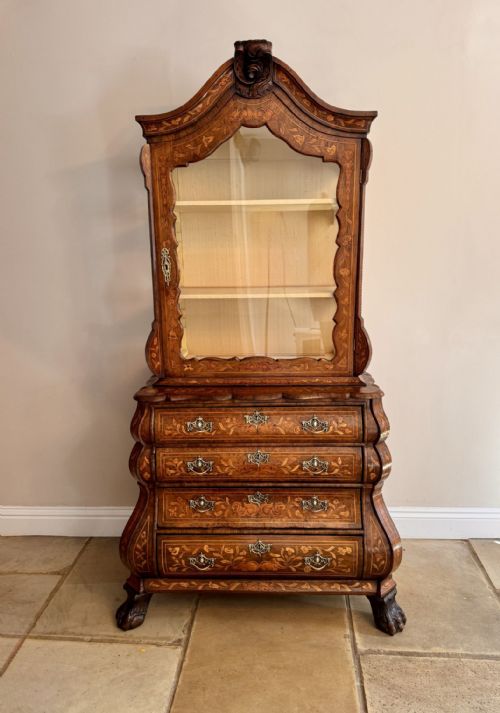
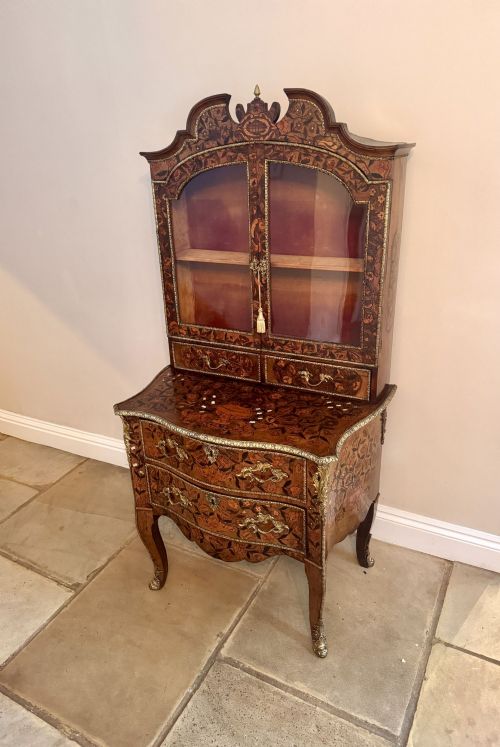
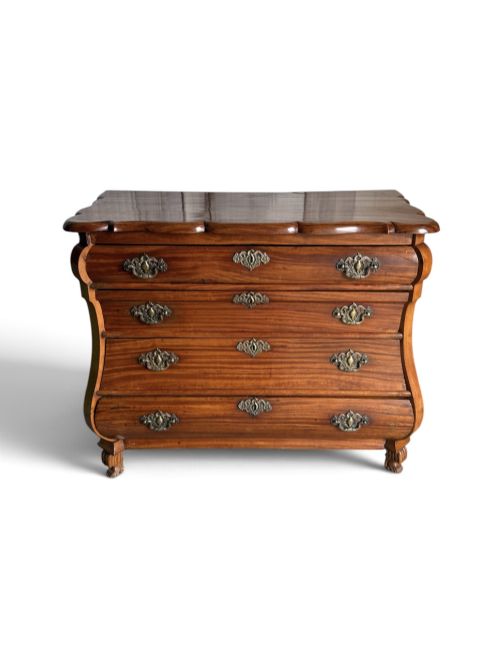
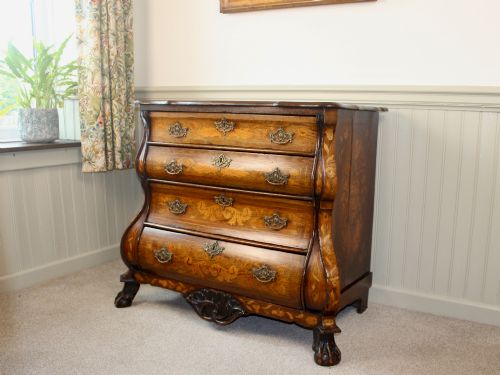
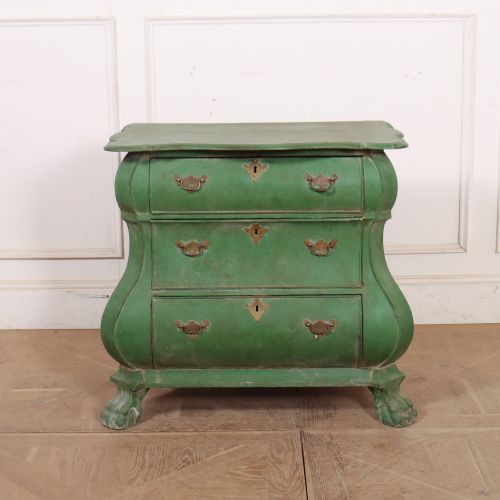
When you search for dutch bombe furniture, you encounter robust storage pieces defined by their convex curved fronts and sides, ranging from compact chests of drawers to towering bureau bookcases and display cabinets. These pieces span the eighteenth and nineteenth centuries, incorporating revival styles alongside eighteenth-century originals.
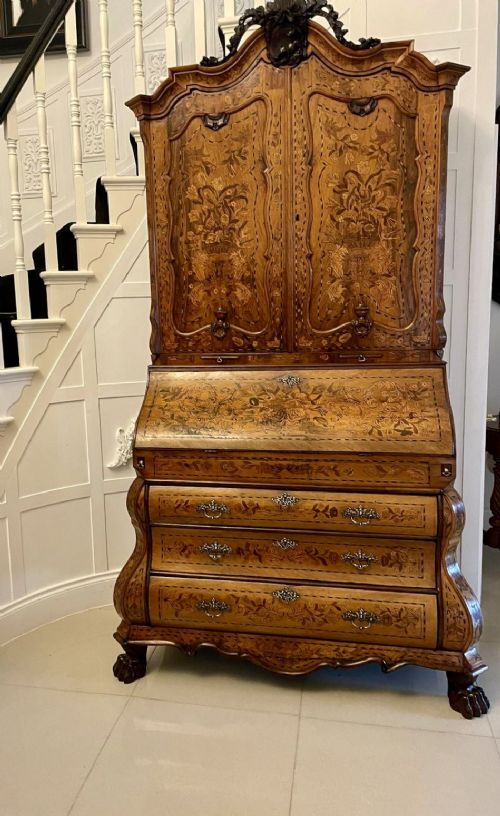
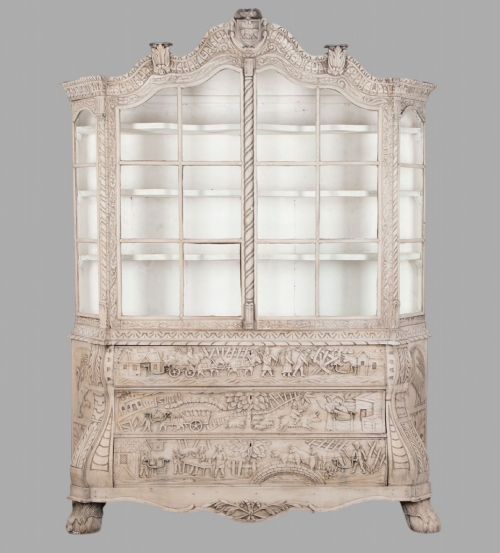
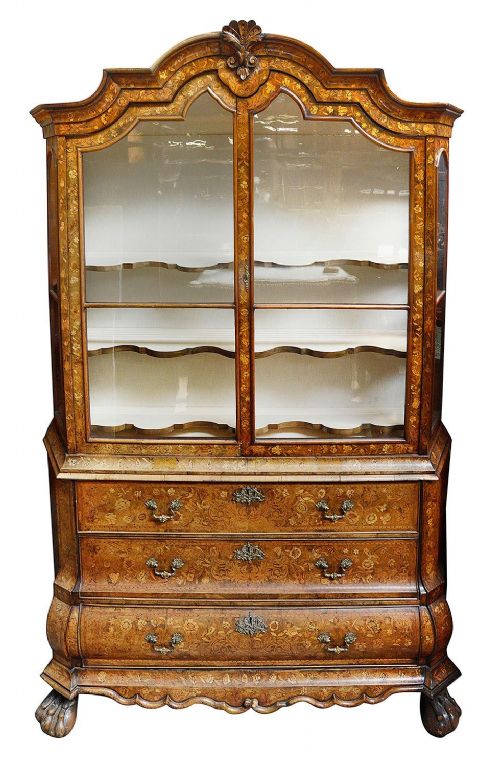
Chest of drawers and bureau formats dominate the selection, often elevated on claw feet or substantial bracket bases. Display cabinets and vitrines also appear, offering glazed upper sections above the characteristic swelling lower storage.
Walnut and burr walnut form the core of the eighteenth-century examples, frequently enriched by intricate floral marquetry in lighter woods. Oak and fruitwood variations also feature, alongside nineteenth-century painted finishes and mahogany iterations.
Materials and construction
Cabinetmakers shaped solid oak and fruitwood carcases to create the distinctive convex curves, applying veneers of burr walnut and satinwood across the undulating surfaces. The timber was laboriously sawn and fitted to follow the swelling contours without splitting.
Floral and foliate marquetry inlay utilised contrasting fruitwoods and lighter timbers, creating elaborate decorative panels across drawer fronts and fall-front desks. Brass hardware, including cast handles and escutcheons, completed the assembly of these substantial case pieces.
Dutch Bombe Furniture Retail Price Guide 2026
Typical asking prices for dutch bombe furniture among the pieces listed under this phrase on Sellingantiques today, from the lower quarter to the upper quarter. They describe what is for sale here now, not the wider market.
Listings feature walnut, burr walnut, oak, fruitwood, satinwood, and brass across eighteenth and nineteenth-century periods.
Assessing the work
The sophistication of the marquetry and the crispness of the carving govern the standing of individual pieces, separating standard cabinetwork from master-level execution. Dense, symmetrical floral inlay distributed evenly across the curved surfaces denotes higher workshop skill.
The integrity of the structural curves and the seamless alignment of drawers within the swelling carcase indicate superior joinery. Timber selection plays an equal role, with richly figured burr walnut commanding greater visual depth than plainer domestic hardwoods.
Morison of Edinburgh
The Dutch Bombe Furniture Glossary
- Bombe
- A swelling or convex furniture shape that curves outward on the front and sides. This distinctive profile requires advanced cabinetmaking techniques to achieve.
- Marquetry
- Decorative inlay patterns formed by fitting together thin pieces of wood veneer. Artisans utilised contrasting timbers like fruitwood and satinwood to create floral motifs.
- Vitrine
- A glass-fronted display cabinet used for exhibiting porcelain and curiosities. These pieces often sit atop the characteristic swelling lower storage unit.
- Bureau bookcase
- A writing cabinet featuring a sloping fall-front desk combined with upper shelving or display space. The lower section typically adopts the curved bombe profile.
- Commode
- A low chest of drawers designed for domestic storage. Eighteenth-century examples frequently showcase elaborate floral marquetry across the undulating front.
Dutch Bombe Furniture: Frequently Asked Questions
How do I identify genuine eighteenth-century pieces?
Examine the construction methods visible inside the drawers and along the backboards, looking for hand-cut joints and period timbers like walnut or oak. Eighteenth-century examples frequently feature dense floral marquetry and distinctive swelling proportions characteristic of the era.
Compare the secondary woods used on interior partitions with the primary exterior veneers. Gradual patination and signs of historical hand-workmanship help distinguish period originals from later nineteenth-century revivals.
Where should I place a bombe chest?
These swelling pieces require adequate floor space to allow their curved profiles to be viewed properly without obstruction. Hallways, living rooms, and large dining spaces accommodate their generous dimensions effectively.
Keep them away from direct heat sources and strong sunlight to protect delicate walnut veneers and marquetry inlay from drying and fading over time.
What is the difference between a bureau and a commode?
A bureau incorporates a sloping writing flap that opens to reveal internal compartments and small drawers for correspondence. It functions primarily as a compact desk combined with storage.
A commode is strictly a chest of drawers featuring a flat top surface above the curved storage body. It serves purely for general household storage rather than writing.
How do I care for marquetry surfaces?
Maintain the finish by applying natural beeswax sparingly and buffing gently with a soft cloth to preserve the timber's sheen. Avoid modern silicone sprays that can penetrate hairline cracks in old veneers.
Control the indoor climate to prevent excessive humidity fluctuations that cause wood to expand and contract, which threatens the stability of delicate inlaid panels.