


Duchess Dressing Table Mirror
A duchess dressing table mirror brings the grand elegance of Victorian and Edwardian bedrooms into modern spaces.
Duchess Dressing Table Mirror
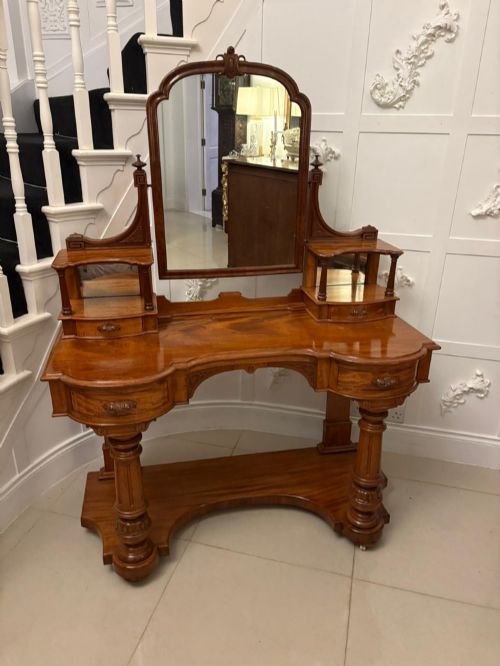
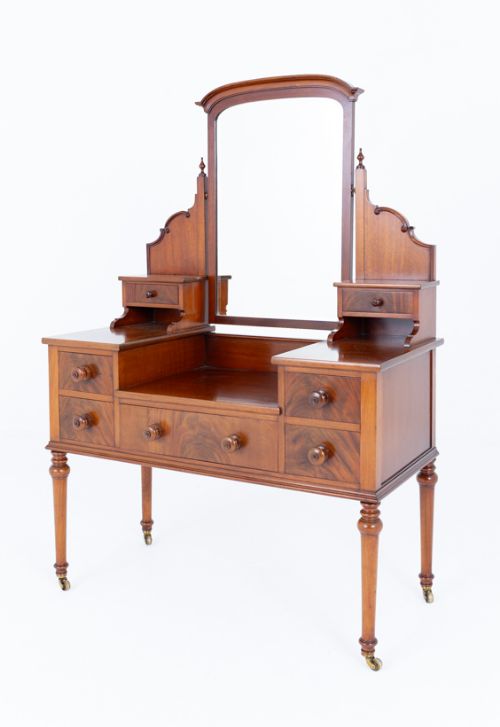
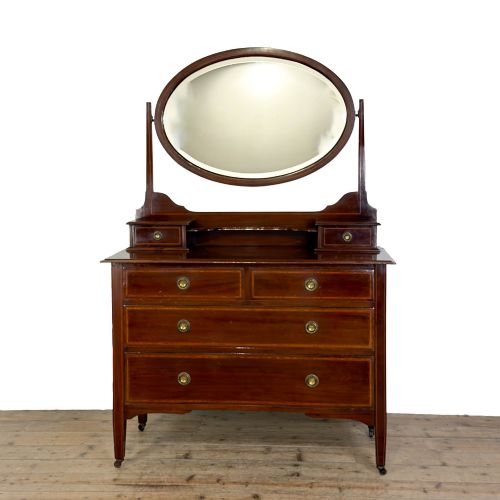
A duchess dressing table mirror sits atop a vanity or low chest, serving as the central glass for grooming and reflection in period bedchambers. These pieces frequently incorporate ornate swing mirrors supported by scrolling wooden arms.
The pieces appearing on this page stem largely from the Victorian and Edwardian eras, spanning the mid-nineteenth century into the early twentieth century. Walnut, mahogany, and pine form the core structural timbers of these surviving examples.
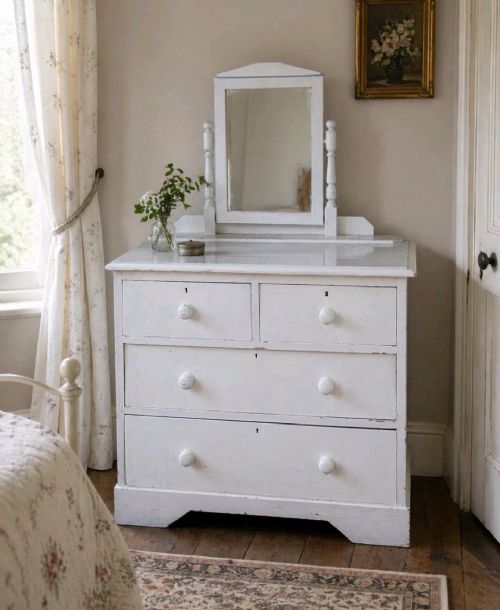
Buyers will encounter variations ranging from compact pine dressing chests to grand mahogany and burr walnut duchess tables equipped with multiple small drawers. The overarching form balances practical storage with ornamental carved woodwork.
How they were made
Cabinet makers utilised dense hardwoods such as mahogany and burr walnut, often applying flame veneers to achieve deep, figured grain patterns on the main body. Pine served as a sturdy secondary timber for internal framing and drawer construction.
Glass plates were silvered by hand in the nineteenth method, set into heavy wooden frames and mounted on pivoted brass or wooden scroll supports to allow angle adjustment. Carved ornamentation, marquetry inlay, and stencilled decoration completed the surfaces.
Some nineteenth-century makers hid secret compartments inside the small drawers of these dressing tables for private letters.
What varies in quality
The depth and crispness of carved wooden details distinguish finer pieces from standard workshop output. Hand-cut mouldings and symmetrical scrollwork on the mirror supports require significant cabinet-making skill.
The choice of primary timber dictates the visual weight of the object, with figured burr walnut and flame mahogany commanding attention through rich grain movement. Original stencilling, brass fittings, and intact mirror glass elevate the integrity of the surviving piece.
John Taylor of Edinburgh
The Duchess Dressing Table Mirror Glossary
- Duchess dressing table
- A large nineteenth-century vanity incorporating a central swing mirror, small storage drawers, and a lower table surface.
- Swing mirror
- A glass plate suspended within a frame on pivots, allowing the user to tilt the reflection angle.
- Burr walnut
- A prized timber harvested from walnut tree growths, producing intricate, swirling grain patterns.
- Flame mahogany
- A veneer cut from the fork of a mahogany tree, creating a flame-like visual effect across large surfaces.
- Pedestal dressing table
- A vanity design featuring banks of drawers on either side of a central kneehole space.
- Toilet mirror
- A smaller tabletop mirror designed to sit independently on a chest of drawers or dressing surface.
Duchess Dressing Table Mirror: Frequently Asked Questions
What is a duchess dressing table mirror?
A duchess dressing table mirror is the large swing glass attached to a nineteenth-century vanity, designed to assist with personal grooming.
These mirrors often feature elaborate carved frames and scroll supports, sitting above small accessory drawers.
How do I date a dressing table mirror?
Dating relies on identifying the prevailing timber choices, construction techniques, and stylistic revivals present in the woodwork.
Victorian examples often use heavy mahogany or burr walnut, while Edwardian pieces frequently employ lighter satinwood or painted pine.
Where were these dressing tables used?
These pieces belonged in the principal bedrooms of nineteenth and early twentieth-century homes, serving as the main vanity station.
They provided a dedicated space for morning routines, housing brushes, cosmetics, and small trinkets within their drawers.
Are the mirror glasses original?
Many surviving pieces retain their early mirror plates, which can show characteristic light foxing or speckling from age.
Replacement glasses do occur when older silvering degrades beyond functional reflection.