


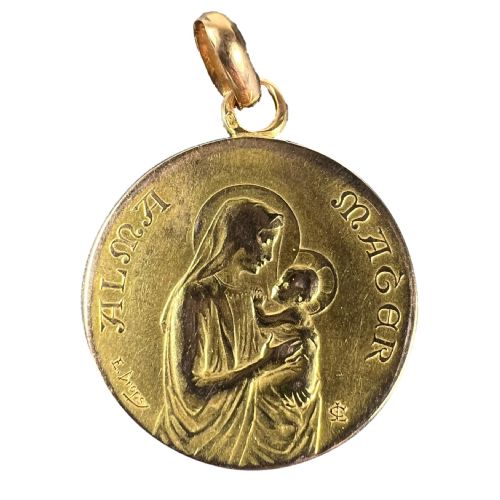


Dropsy Mary Medal
A dropsy mary medal brings French devotional artistry of the early twentieth century into daily wear through miniature golden relief.
Dropsy Mary Medal
A dropsy mary medal is a French religious pendant or charm typically featuring the Madonna and Child or the Virgin Mary. These pieces function as both wearable devotion and miniature works of medallic art.
Most examples found here hail from the early twentieth century, spanning the nineteen hundreds, nineteen tens, and nineteen twenties. They arrive predominantly in the form of pendants, charms, and combined pendant medals.
The style heavily reflects French Art Nouveau aesthetics, integrating flowing lines, delicate inscriptions such as Alma Mater, Ave Maria, or Virgo Gloriosa, and occasionally intricate openwork.
How they were made
These medals and charms are fashioned primarily from yellow gold, rose gold, and eighteen carat gold variants. The warm metal provides a rich ground for deeply struck figural relief.
Certain pieces incorporate vitreous enamel, specifically utilising the plique-à-jour technique to allow light through translucent coloured sections like stained glass. Piercing and openwork techniques also appear to define the borders and halos around the figures.
Dropsy Mary Medal Retail Price Guide 2026
Typical asking prices for dropsy mary medal among the pieces listed under this phrase on Sellingantiques today, from the lower quarter to the upper quarter. They describe what is for sale here now, not the wider market.
Wearers occasionally found Latin inscriptions like Virgo Gloriosa whispering faith directly from their collarbones.
What varies in quality
The distinction lies in the crispness of the medallic strike and the complexity of the surrounding metalwork. Signed pieces bearing specific artisan attribution command particular interest for their sculptural depth.
Enamelling technique introduces another tier of refinement, where translucent plique-à-jour work demands far greater skill than plain gold relief. Pierced and openwork borders likewise show varying degrees of hand-finishing finesse.
Emile Dropsy
The Dropsy Mary Medal Glossary
- Medal
- A flat piece of metal bearing an inscription or design, struck or cast to commemorate a person or event. In devotional contexts, these are worn close to the heart.
- Plique-à-jour
- An enamelling technique where enamel is applied in cells without a backing, resembling miniature stained glass. This method lets direct light pass through the coloured vitreous material.
- Art Nouveau
- An international style of art and architecture prevalent from the late nineteenth century until the First World War. It is characterised by motifs inspired by natural forms and curving lines.
- Pierced
- Work metal that has been cut through to create open patterns and negative space. This technique lightens the visual weight of heavy gold pendants.
- Devotional
- Relating to religious worship and personal prayer. These objects served as physical anchors for private faith.
Dropsy Mary Medal: Frequently Asked Questions
What is a dropsy mary medal?
A dropsy mary medal is a French religious pendant or charm usually made of eighteen carat yellow or rose gold. These pieces portray the Virgin Mary or the Madonna and Child.
The term refers directly to the medallic work associated with the French artist Emile Dropsy. They serve as historical devotional items from the early twentieth century.
How were these medals worn?
Original owners typically wore them suspended from fine gold chains around the neck as personal pendants. Alternatively, they functioned as charms attached to bracelets.
Their dual classification as pendants and charms means they adapt easily to modern jewellery configurations. They sit flat against the wearer due to their medallic construction.
What materials are used?
The primary material across the pieces is eighteen carat yellow gold, occasionally alongside rose gold accents. The rich alloy gives the miniatures a warm, enduring glow.
Some exceptional examples incorporate vitreous enamel, particularly plique-à-jour, which introduces vibrant translucent colour to the halos or backgrounds.
How do I date my medal?
Dating relies heavily on stylistic markers from the Art Nouveau period and French hallmarks stamped onto the gold rings or edges. Most documented pieces originate from the nineteen hundreds through the nineteen twenties.
Inscriptions like Alma Mater or Virgo Gloriosa alongside artist signatures help place the manufacture within this specific early twentieth century window.