



Drop Leaf Sewing Desk
A drop leaf sewing desk offers hinged leaves and fitted compartments designed for needlework and correspondence, combining compact proportions with clever storage.
Drop Leaf Sewing Desk
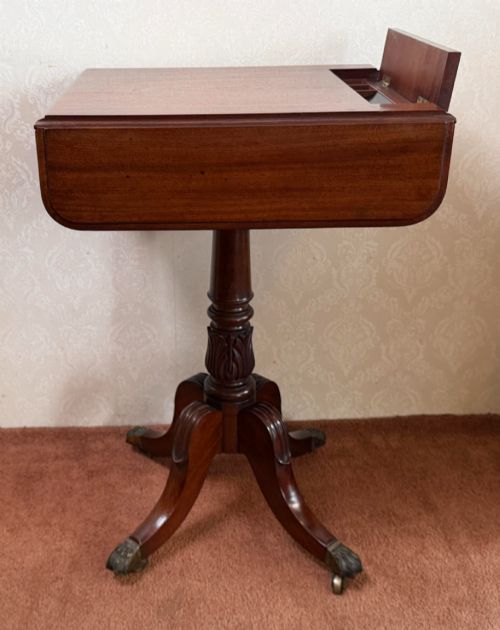
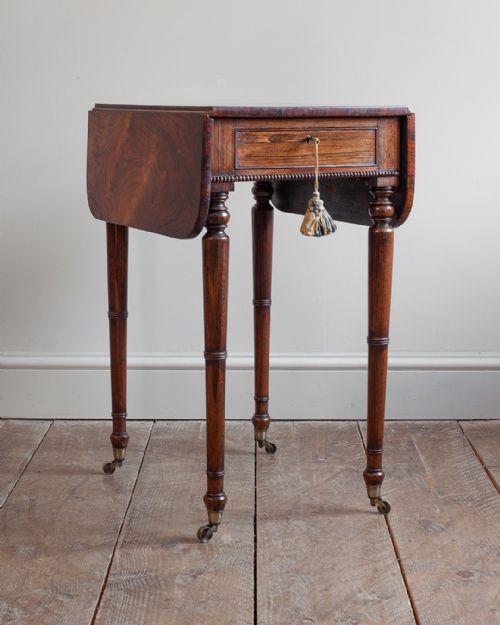
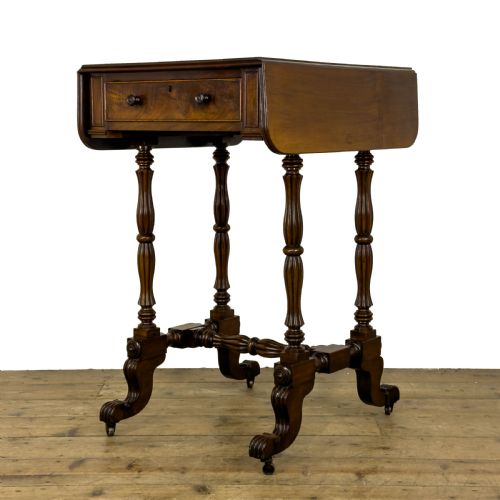
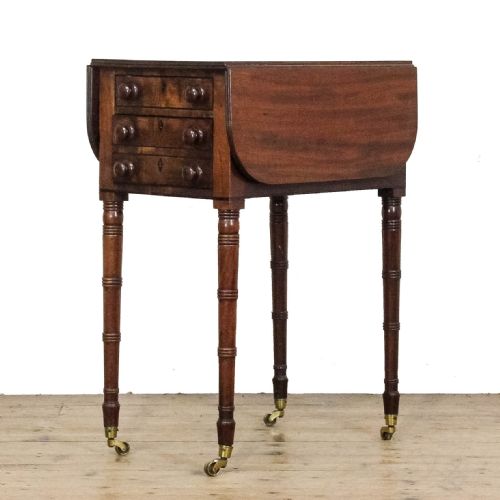
A drop leaf sewing desk, also known as a work table or pembroke work table, serves as a versatile piece of furniture designed for domestic crafts and writing. These tables typically feature drop leaves that extend the surface area when needed and fold down to save space.
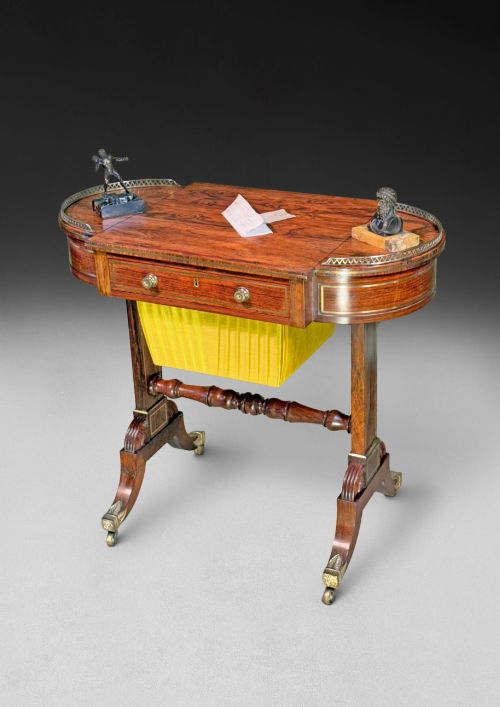
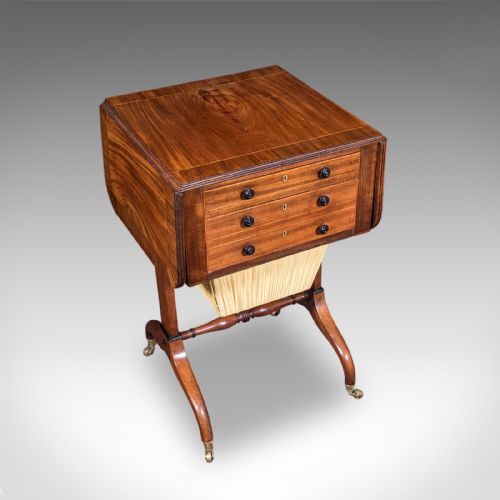
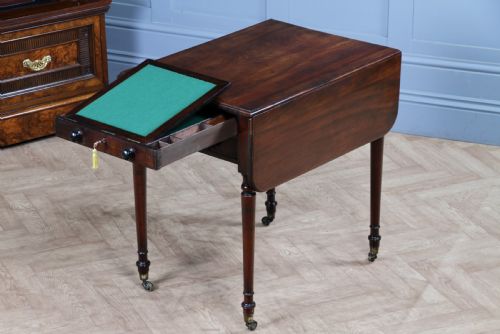
The examples seen here span the Georgian, Regency, William IV, and Victorian periods, with rosewood and mahogany being the predominant timbers. Many incorporate fitted drawers containing compartments for sewing implements, alongside pull-out fabric bags or baskets.
Buyers will most frequently encounter mahogany and rosewood variants from the nineteenth century, ranging from simple pedestal designs to elaborately fitted pieces by notable makers.
How they were made
Cabinet makers utilised dense hardwoods such as mahogany and rosewood, often enhanced with boxwood inlay, flame mahogany veneers, or burr walnut. These timbers provided a stable foundation capable of taking a high polish.
Internal components required precise joinery to construct fitted drawers, sliding compartments, and silk work bags. Brass fittings, including castors, hinges, and small locks, completed the construction of these multi-purpose pieces.
Drop Leaf Sewing Desk Retail Price Guide 2026
Typical asking prices for drop leaf sewing desk among the pieces listed under this phrase on Sellingantiques today, from the lower quarter to the upper quarter. They describe what is for sale here now, not the wider market.
Many of these tables managed to hide an entire haberdashery and a correspondence desk inside a footprint smaller than a small side chair.
What varies in quality
The distinction between standard domestic pieces and superior examples lies in the selection of timber veneers, such as figured flame mahogany or burr walnut, and the sophistication of the interior fittings. Better quality work tables feature comprehensive internal partitioning for threads and needles, sometimes retaining original fabric linings and fitted keys.
Construction details also dictate standing; fine turnings, crisp boxwood inlay, and robust pedestals separate workshop-produced furniture from basic utilitarian items.
Gillows of Lancaster·Gillow
The Drop Leaf Sewing Desk Glossary
- Pembroke table
- A small occasional table featuring two hinged drop leaves on opposing sides. It often includes one or more small drawers.
- Work table
- A multi-purpose piece designed for sewing, needlework, and light writing tasks. These incorporate internal compartments and frequently a suspended fabric bag.
- Secretaire
- A desk fitted with a pull-out writing drawer or drop-front flap concealing pigeonholes and small drawers. It combines a writing surface with storage.
- Boxwood inlay
- Narrow strips of pale boxwood inserted into contrasting dark woods to create decorative borders. It adds linear definition to table tops and drawer fronts.
- Flame mahogany
- A veneer cut from the fork of the mahogany tree where branches meet the trunk. This produces a characteristic flickering, flame-like grain pattern.
Drop Leaf Sewing Desk: Frequently Asked Questions
What is a drop leaf sewing desk used for?
These tables were designed primarily for domestic needlework, embroidery, and correspondence. The drop leaves provided extra surface space when open and folded down to occupy less room.
Inside the drawers, specialised compartments kept threads, pins, and sewing tools organised, while the suspended bag held unfinished textile projects.
How do I identify a Regency sewing table?
Regency examples typically date from the early nineteenth century and feature classical proportions influenced by Greek and Roman designs. Look for pedestal bases with sabre legs, brass paw castors, and dense rosewood or mahogany timbers.
Fitted interiors and brass stringing are also common characteristics of this period.
Are these tables suitable for modern writing desks?
Many work tables function well as compact writing desks or occasional tables in living spaces. The drawer configuration often includes a writing slide or compartment suitable for modern notebooks.
However, buyers should check the height of the kneehole or drawer clearance to ensure comfortable seating.
What woods were used for nineteenth century work tables?
Makers predominantly used mahogany and rosewood throughout the Georgian and Victorian eras. Burr walnut also appears on later nineteenth-century examples.
Inlays of lighter woods like boxwood provide contrast against these dark primary timbers.