

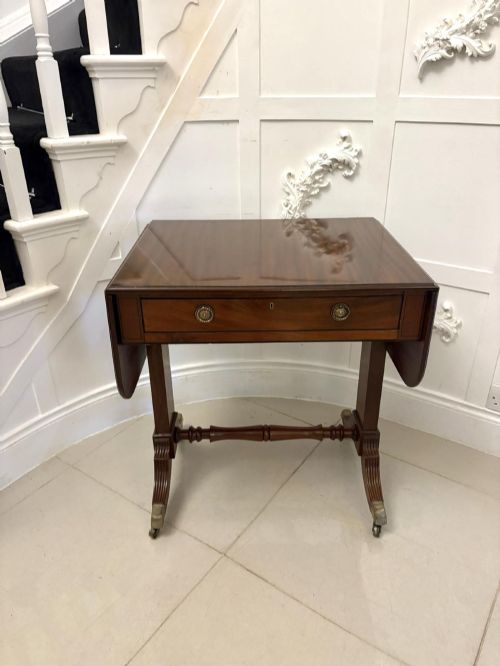

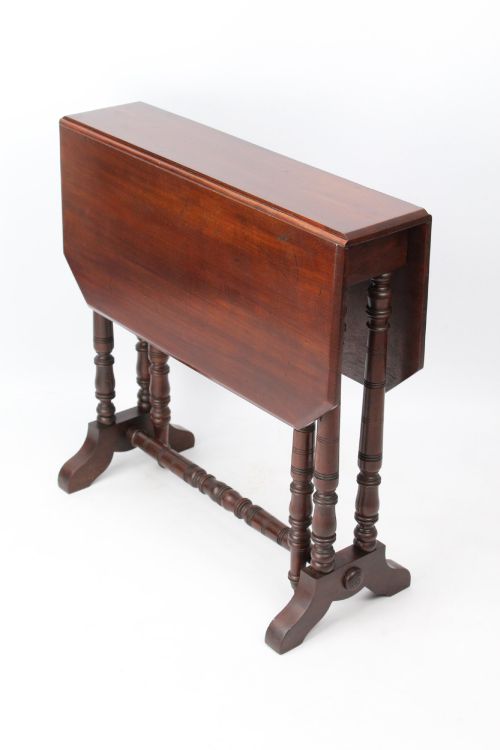
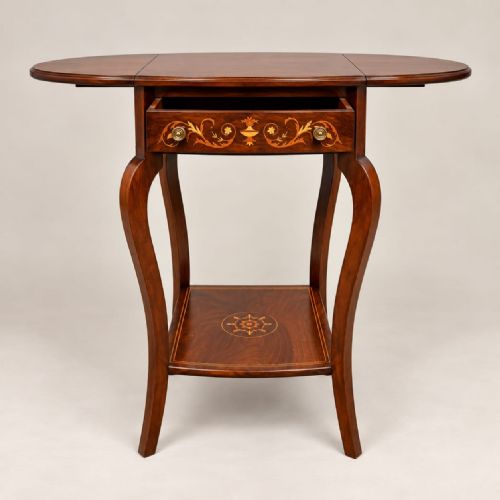
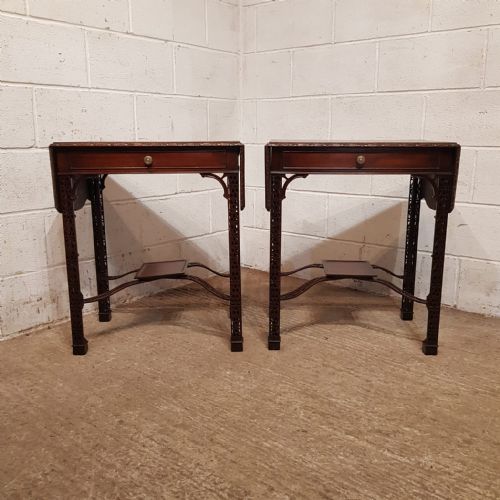
Drop End Occasional Table
A drop end occasional table provides a neat surface that extends when needed, combining compact daily utility with period timber work.
Drop End Occasional Table
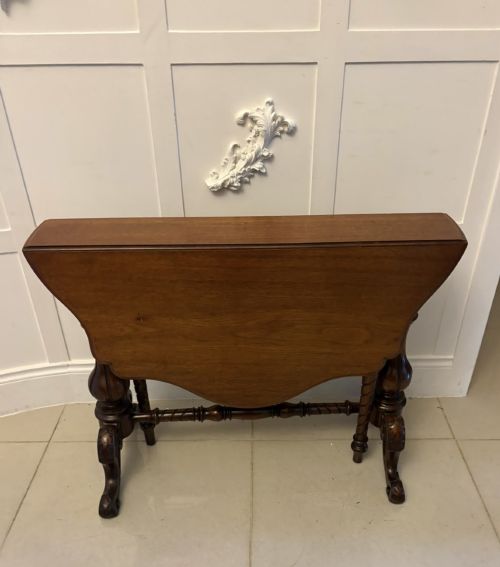
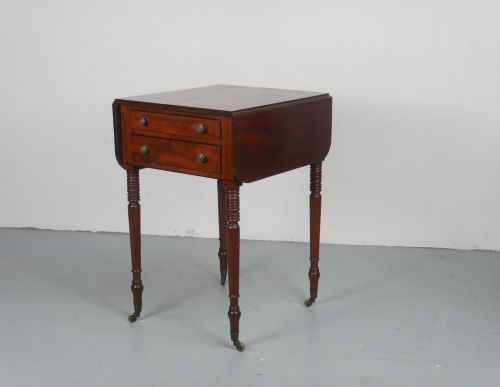
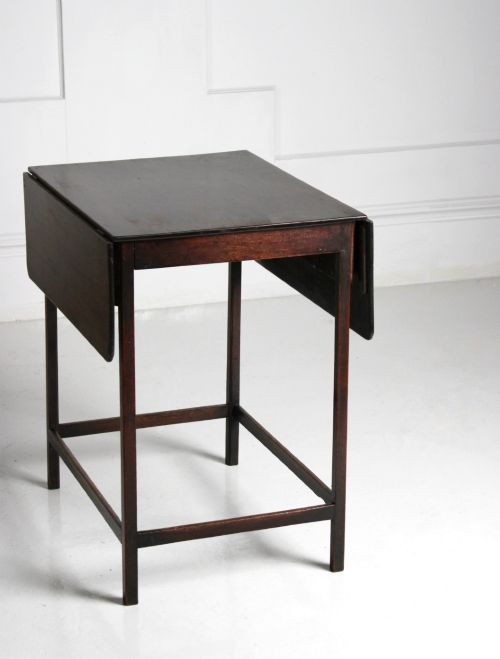
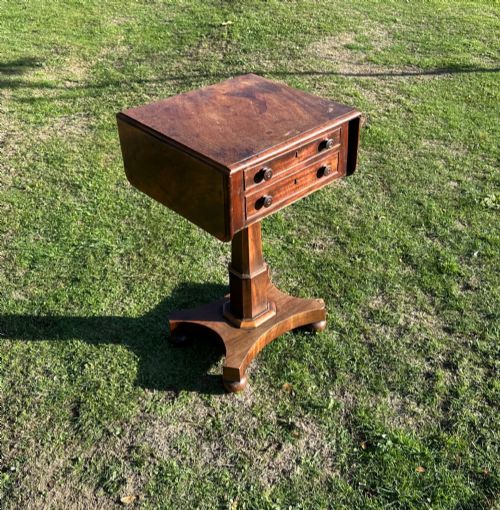
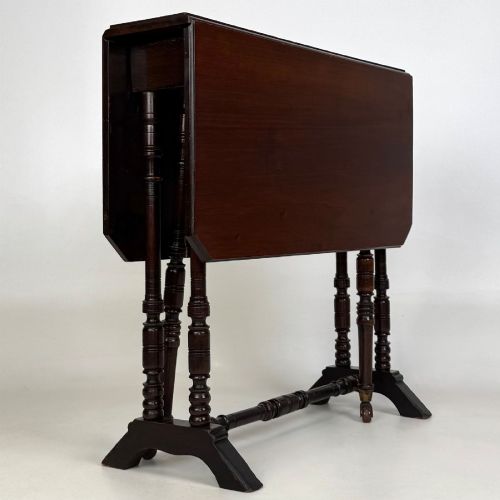
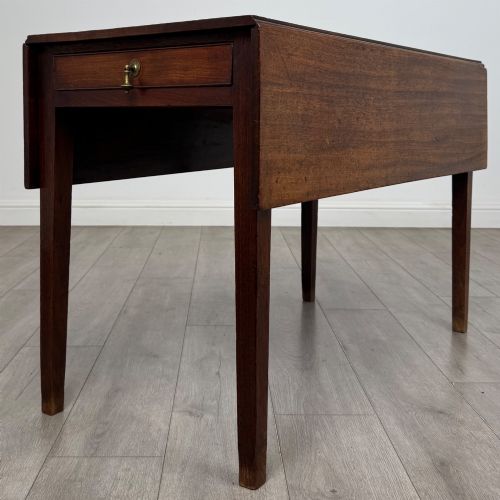
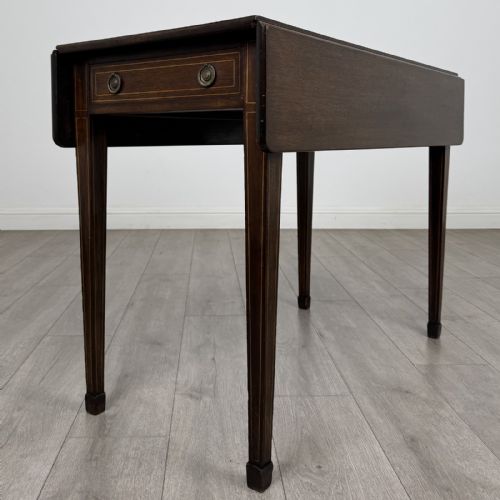
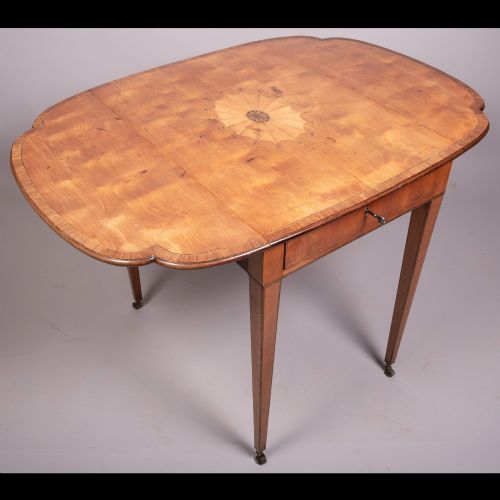
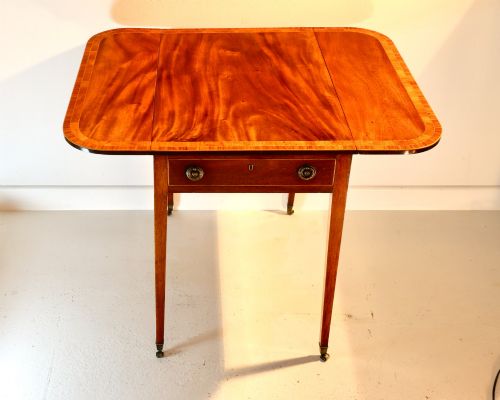
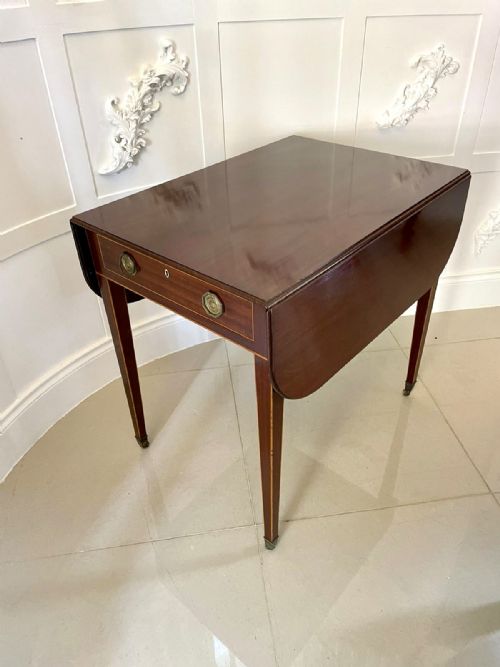
A drop end occasional table covers versatile forms such as Pembroke tables, sofa tables, Sutherland tables, and work tables that feature folding flaps. These items appear across the eighteenth, nineteenth, and early twentieth centuries, spanning periods from George III and Regency through to Victorian and Edwardian eras.
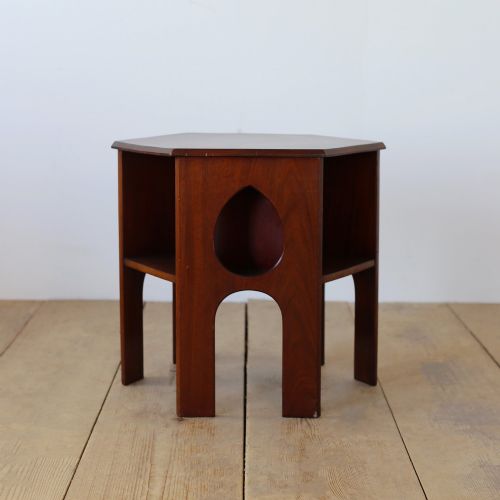
The selections on this page demonstrate how makers adapted these tables for multiple uses, including lamp tables, games tables, and small side pieces. Mahogany, rosewood, and walnut dominate the construction, often enhanced with satinwood or boxwood details.
Buyers encounter formats ranging in style from Georgian and Regency to Gothic Revival and Chippendale Revival. Each piece uses hinged leaves to alter its footprint depending on the room arrangement.
Materials and construction methods
Cabinet makers utilised dense hardwoods like mahogany, rosewood, and walnut for the primary frames and drop leaves. These timbers often display figured grain or marquetry inlay work.
Brass fittings, castors, and hinges support the folding leaves and mobile bases found on many sofa tables and work tables. Secondary woods and occasional ceramic or metal components support the internal structures.
Joinery techniques connect pedestal bases, gate legs, or slender pillars to the table tops. Drop flaps attach via specialised hinges that allow the leaves to hang flush or lock level with supports.
Drop End Occasional Table Retail Price Guide 2026
Typical asking prices for drop end occasional table among the pieces listed under this phrase on Sellingantiques today, from the lower quarter to the upper quarter. They describe what is for sale here now, not the wider market.
Object forms on this page range from Pembroke and Sutherland tables to specialised work tables and games tables with folding leaves.
Judging quality in drop end tables
The choice of timber grain and veneer determines visual distinction, with highly figured mahogany, burr walnut, and matched satinwood elevating a piece. Inlaid stringing and marquetry demand precise hand-cut execution.
Structural integrity relies on the stability of the drop leaf hinges and the smoothness of any operating drawers or extension mechanisms. Solid joints at the gate legs or pedestal bases ensure the table bears weight safely when extended.
Gillow
The Drop End Occasional Table Glossary
- Pembroke table
- A small rectangular table with two hinged flaps on opposite sides, popular from the eighteenth century onwards. It typically includes one or more small drawers.
- Sofa table
- A rectangular occasional table designed to stand in front of a sofa, featuring drop leaves at either end. They often stand on twin pedestals or trestle supports joined by a stretcher.
- Sutherland table
- A narrow drop leaf table where the leaves fold down almost vertically, supported by swinging gate legs. This design minimises floor space when the table is closed.
- Work table
- A small occasional table fitted with a drawer or fabric bag for needlework and small crafts. They frequently incorporate drop leaves for extra surface area.
- Marquetry
- Decorative patterns formed by inserting pieces of different coloured wood into a veneered surface. This technique creates complex floral or geometric motifs.
Drop End Occasional Table: Frequently Asked Questions
What is a drop end occasional table used for?
These pieces serve as flexible surfaces in sitting rooms and parlours where space changes throughout the day. The folding leaves allow the table to sit compactly against a wall or beside seating before extending for a lamp, book, or tea service.
Their compact proportions mean they adapt easily to smaller rooms while retaining the storage or display benefits of a larger cabinet piece.
How do I identify a Georgian drop end table?
Georgian examples often display characteristic timber choices like richly patinated mahogany or satinwood, paired with restrained classical proportions and fine inlay work. Details such as tapered legs or subtle bracket feet point toward eighteenth-century craftsmanship.
Later Victorian and Edwardian revivals often emulate these earlier forms but employ different interior construction methods and secondary timbers.
Where should I place a drop leaf table in my home?
A drop end table fits well beside a sofa, between armchairs, or against an empty wall as a lamp table. Keeping one leaf down allows the piece to hug the wall closely until extra surface area is required.
They also function effectively in bedrooms or hallways where a full-sized table would obstruct movement.