





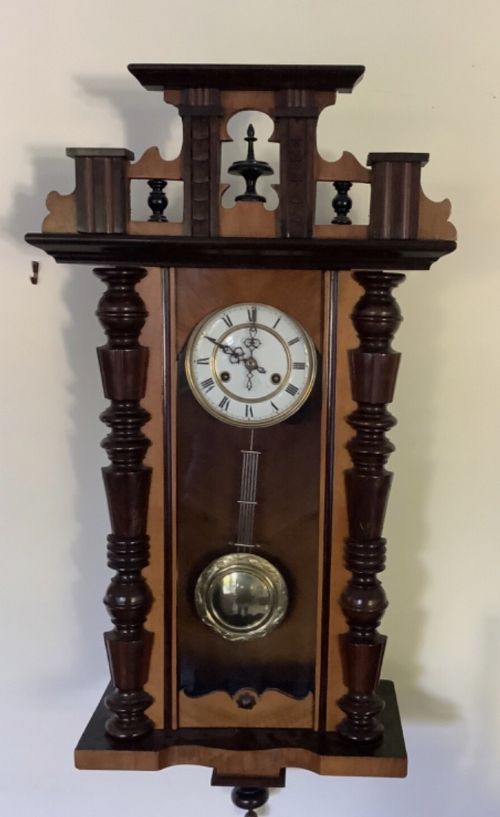

Drop Dial Pendulum Clock
A drop dial pendulum clock is a weight-driven or spring-driven timepiece designed to hang on a wall, combining a round dial with a lower trunk that houses the swinging pendulum.
Drop Dial Pendulum Clock
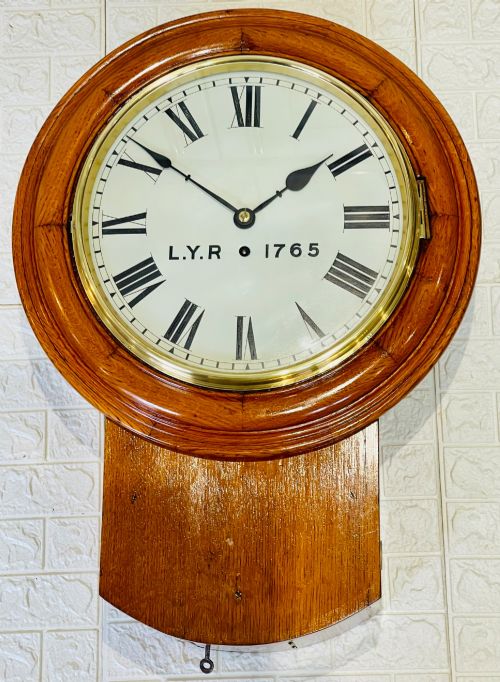
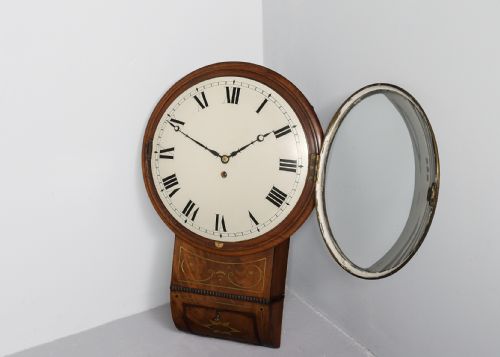
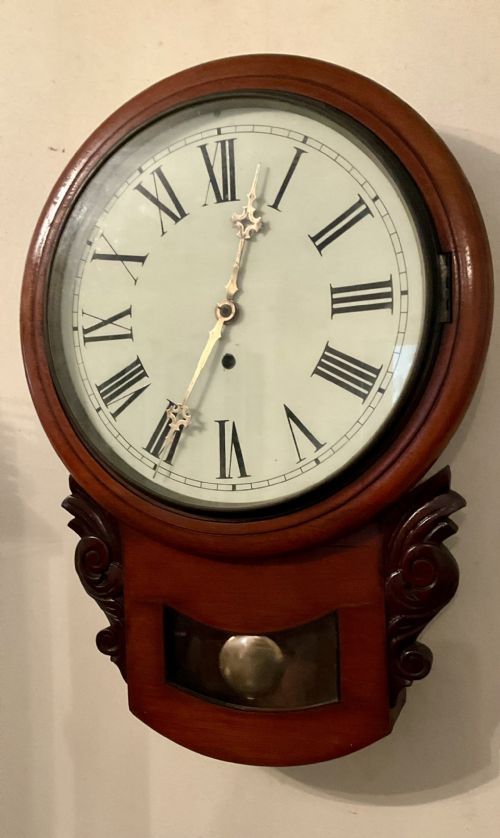
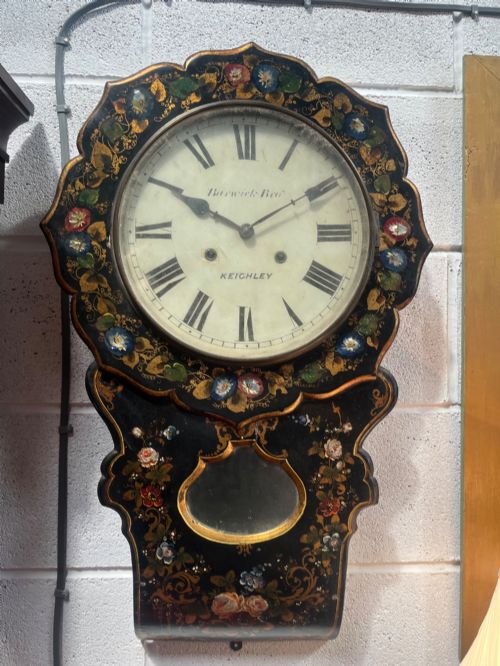
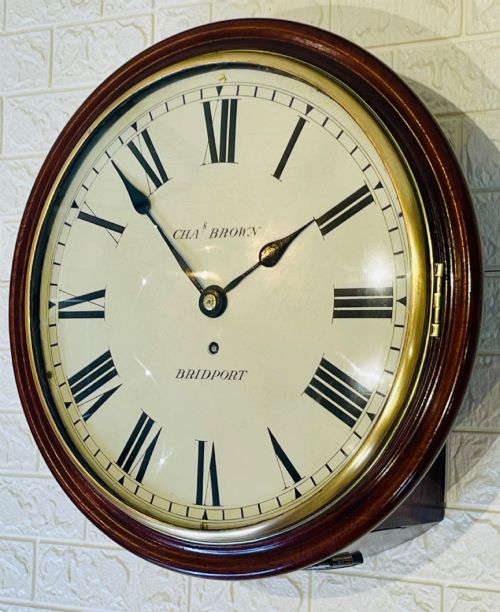
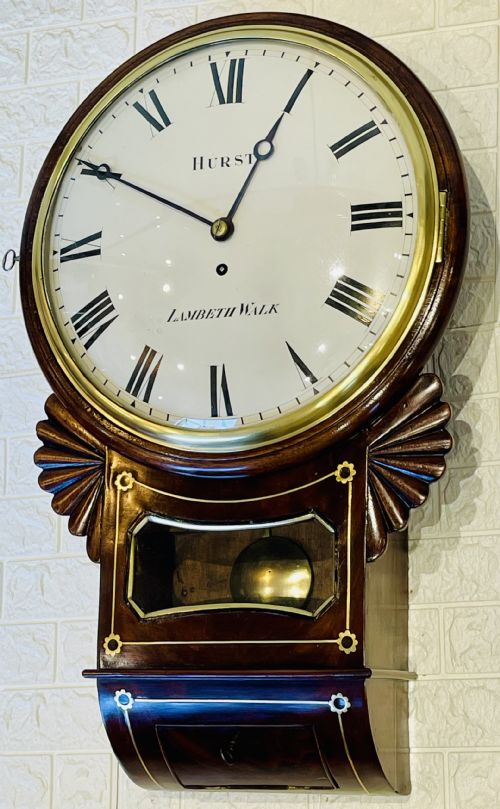
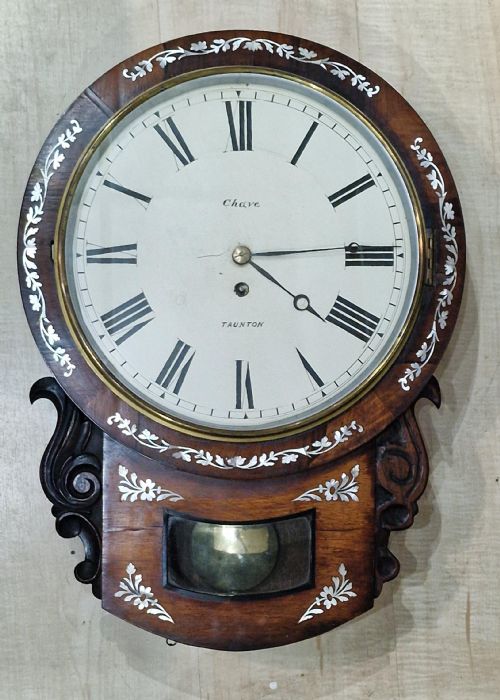
A drop dial pendulum clock, often referred to simply as a dial wall clock, is a distinct timekeeping form developed primarily for public houses, railway stations, offices and domestic halls. These timepieces combine a prominent upper dial for clear reading with an extended lower case, known as the drop, to accommodate the swing of the pendulum. Examples here span the Georgian, Regency, and Victorian eras, stretching into the early twentieth century.
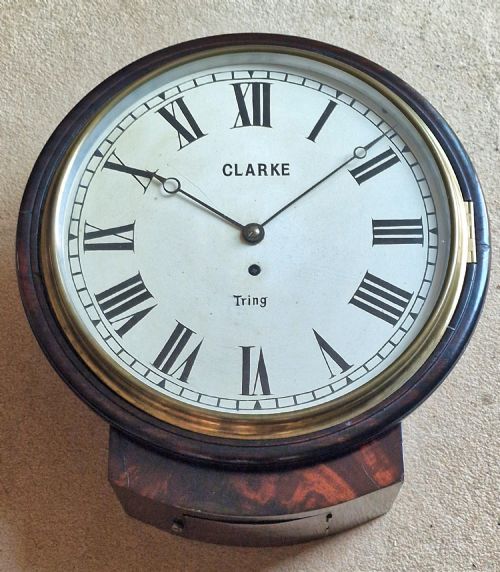
The version most commonly met on this page is the fusee wall clock housed in mahogany or rosewood. Many of these originated in railway contexts, such as the Great Western Railway or Lancs and Yorks Railway, while others bear the signatures of provincial makers on the dial face. Dial shapes vary from flat wood to convex and painted iron variants, mounted within cases that range from compact octagonal frames to grander inlaid designs.
How they were made
Makers constructed the timber cases predominantly from solid mahogany, rosewood, oak, and walnut, frequently selecting dense hardwoods to protect the delicate movement within. Inlaid examples incorporate brass wire and mother of pearl into the polished wood surfaces around the dial bezel and lower access door. Cases are built with side and bottom doors to allow easy access to the pendulum and fusee mechanism.
The mechanical heart of these clocks relies on brass gear trains driven by fusee or twin-fusee movements, which maintain even power to the escapement as the spring unwinds. Dials are fashioned from wood, painted metal, or convex iron, protected by heavy glass set into brass bezels. Dial faces typically display Roman numerals and carry the painted signature of the maker and the town of origin.
Listings span the Georgian, Regency, and Victorian periods, extending into the Edwardian era, with cases constructed from mahogany, rosewood, oak, and walnut.
What varies in quality
Quality in a drop dial pendulum clock is determined by the refinement of the movement and the integrity of the cabinetwork. High-tier examples utilise twin-fusee bell-striking mechanisms or precision pendulum regulation, contrasting with simpler single-fusee time-only movements. The precision with which the brass plates are cut and the escapement is finished marks the distinction between workshop standards.
Cabinet execution further separates the output of different makers. Superior pieces display carefully selected timber veneers, such as burr walnut or figured mahogany, matched with precise brass inlay and sound structural joinery in the drop case. The crispness of the painted numerals on the dial and the original weight of the cast brass bezel contribute to the overall merit of the piece.
George Clarke Tring·Chave Taunton·Samuel Chave Taunton·Halliday and Rich Bridgwater·Henry Lamb Windsor·Joseph Mansfield·John Walker South Molton Street London
The Drop Dial Pendulum Clock Glossary
- Fusee
- A conical pulley used in mechanical clocks to equalise the torque of the mainspring as it runs down. This device ensures consistent power delivery to the escapement throughout the duration of the wind.
- Drop dial
- A clock dial design featuring an extended lower case beneath the main circular face. This shape provides the necessary vertical space for the pendulum to swing freely while keeping the footprint compact.
- Convex dial
- A dial face curved outward toward the viewer rather than sitting flat. This curvature prevents glare from nearby windows and improves legibility from oblique angles in busy rooms.
- Bezel
- The metal rim that holds the glass protecting the clock face. It is typically hinged to allow access for setting the hands and winding the movement.
- Twin-fusee
- A movement utilising two separate fusee cones and gear trains, usually separating the timekeeping function from a striking train that sounds the hours on a bell.
Drop Dial Pendulum Clock: Frequently Asked Questions
Where were drop dial clocks hung?
These clocks were traditionally hung in spaces where clear timekeeping was required by many people at once. Railway stations, offices, and large domestic hallways suited their prominent dials and robust wall-mounting cases.
Domestic versions also appeared in parlours and kitchens, where the reliable fusee movement kept accurate time for the household without occupying surface space on a mantelpiece.
How do fusee movements work?
A fusee movement uses a conical pulley connected to the mainspring by a fine chain or cord. As the spring unwinds and loses tension, the chain moves to a wider part of the cone, maintaining steady force on the gear train.
This ingenious mechanism helps the clock maintain consistent timekeeping throughout its multi-day run between windings.
How can I tell a Regency clock from a Victorian one?
Regency examples often feature clean architectural lines, mahogany or rosewood cases, and frequently employ wooden dials alongside refined fusee movements. Their aesthetic tends toward classical restraint.
Victorian pieces frequently incorporate richer timber selections like burr walnut, more elaborate inlay work in brass or mother of pearl, and occasional bell-striking twin-fusee trains found in railway and station contexts.
What is a railway clock?
A railway clock is a specific utilitarian dial clock commissioned or utilised by transport networks such as the Great Western Railway. These pieces were built for absolute reliability in busy operational environments.
They often bear company lettering or inventory numbers painted on the dial or stamped into the wooden case, recording their former station provenance.