

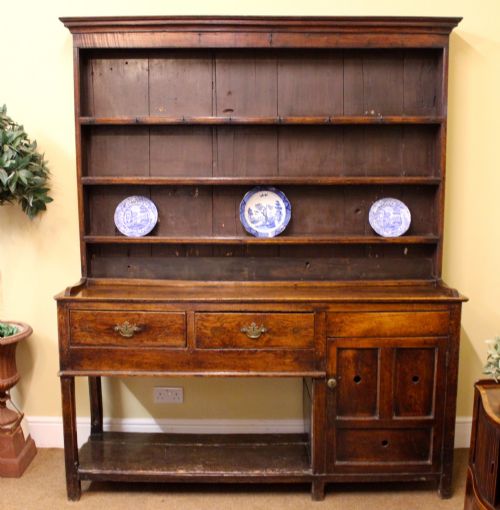
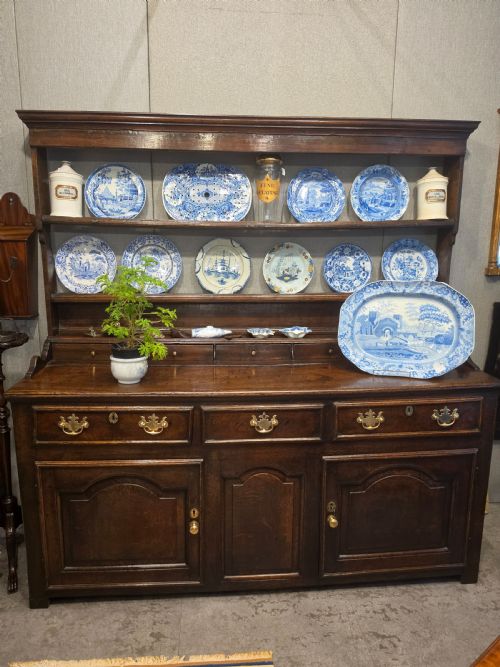
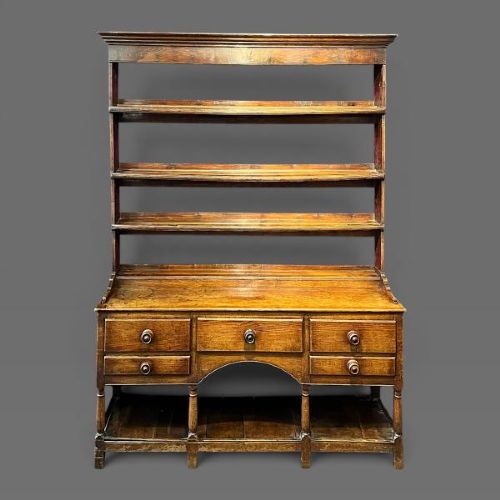
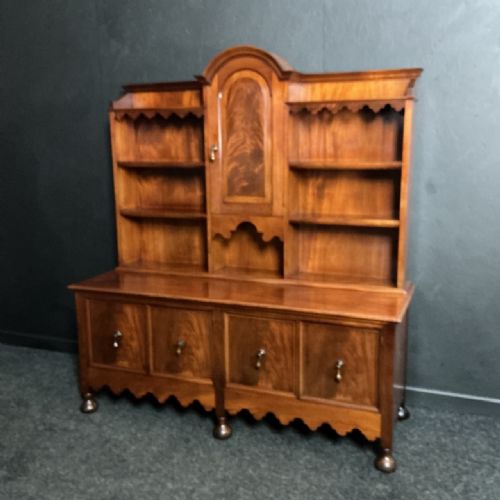
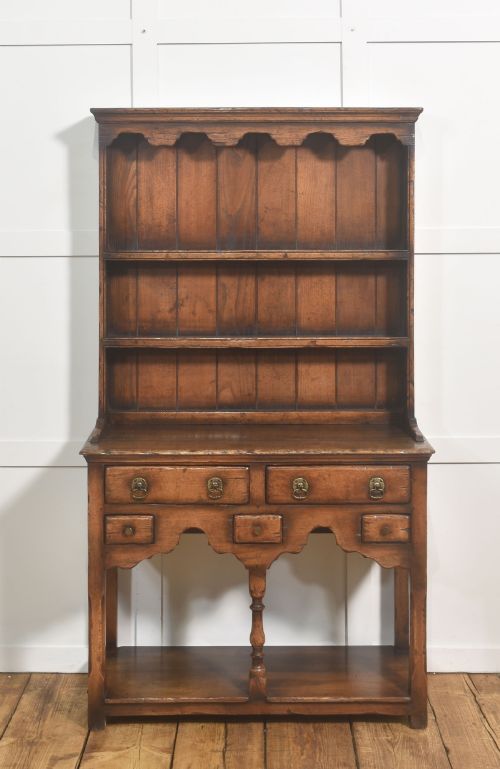
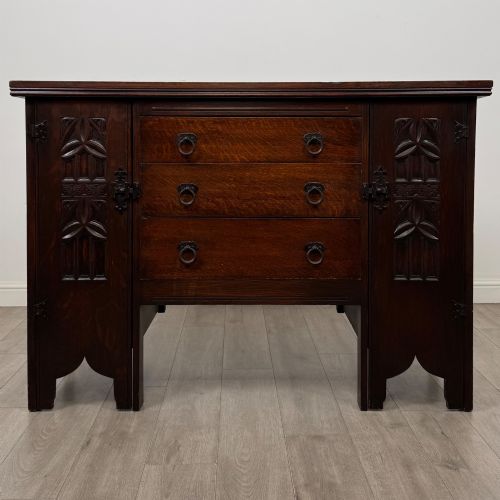
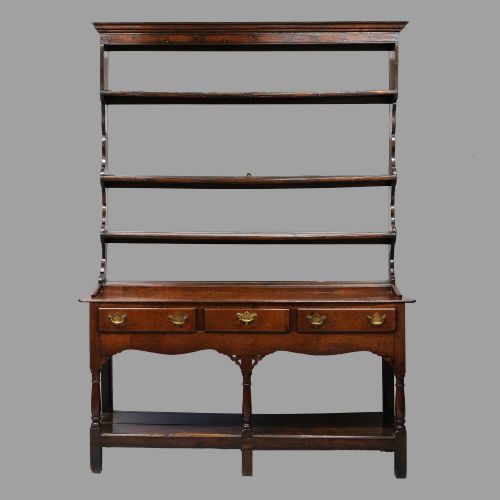


Dresser Base with Rack
A dresser base with rack combines deep storage below with open display above, offering both a sturdy work surface and shelving for everyday pottery.
Dresser Base with Rack
A dresser base with rack pairs a heavy timber lower section with an upper plate rack, forming a substantial storage unit traditionally used in kitchens and dining spaces.
Examples on this page span the eighteenth century through the Edwardian period, executed primarily in oak alongside mahogany, pine, and painted wood.
Common regional forms include English country and Welsh variations, incorporating potboards or cupboards in the base.
Materials and Construction
Makers relied heavily on native timbers, predominantly constructing these pieces in solid oak, with occasional examples in mahogany, flame mahogany, and pine.
Hardware such as brass handles and iron fittings secure the doors and drawers, while construction techniques encompass period joinery ranging from Georgian country craftsmanship to Edwardian carving.
Dresser Base with Rack Retail Price Guide 2026
Typical asking prices for dresser base with rack among the pieces listed under this phrase on Sellingantiques today, from the lower quarter to the upper quarter. They describe what is for sale here now, not the wider market.
Listings feature timbers in oak, mahogany, flame mahogany, pine, and painted wood, spanning the eighteenth and nineteenth centuries into the Edwardian era.
Evaluating Quality
Quality rests in the integrity of the timber, the proportion of the base to the rack, and the crispness of any period carving or inlay.
Earlier eighteenth-century and George III examples display robust native oak construction and simpler country joinery, whereas later Edwardian pieces may feature more decorative carved details.
The Dresser Base with Rack Glossary
- Potboard
- An open slatted lower shelf beneath the main base of a dresser, historically used for storing heavy pots and pans. This feature appears frequently on Georgian and 18th-century country pieces.
- Plate rack
- The upper superstructure attached to the dresser base, fitted with horizontal grooved shelves and wooden spars to hold plates upright. It allows utilitarian crockery to dry and display simultaneously.
- George III
- A British stylistic period spanning the mid to late 18th century, known for balanced proportions and quality cabinetmaking. Pieces from this era often utilise native oak with straightforward joinery.
- Welsh dresser
- A traditional regional form of dresser characterised by deep proportions and specific local styling. These often incorporate potboard bases or distinctive arrangements of drawers and cupboards.
Dresser Base with Rack: Frequently Asked Questions
How do I style a plate rack?
The upper rack is designed with horizontal grooves and wooden lips that hold ceramic plates safely upright against the backboards. You can arrange everyday earthenware, pewter platters, and bowls to create a traditional display.
Ensure the weight is distributed evenly across the shelves to maintain the structural balance of the upper framework.
Can these dressers fit in modern kitchens?
These pieces function well in contemporary settings by providing practical counter space and vertical storage for dinnerware. Their timber construction brings warmth and historical texture to modern rooms.
Measure your ceiling height and floor space carefully, as these units combine deep lower bases with tall upper racks.
How do I identify an 18th-century piece?
Eighteenth-century examples typically display heavy native oak construction, hand-planed surfaces, and period joinery without modern mechanical fasteners. They often exhibit regional country characteristics such as potboard bases and pegged frames.
Later Edwardian and 20th-century revivals tend to feature machine-sawn elements, decorative carving, or different timber selections like flame mahogany.