




Dragon Pedestal Table
These dragon pedestal table pieces bring carved hardwood and marble surfaces into a room.
Dragon Pedestal Table
A dragon pedestal table combines utilitarian surface space with intricate regional carving originating from Far Eastern and Victorian workshops. Buyers seek these items to introduce carved wood detail and substantial presence into a room.
The selections available here lean towards side tables, occasional tables, plant stands, and occasional desks originating from the nineteenth century up to the nineteen-twenties. These pieces function well as display stands for jardiniere pots or as central statement furniture.
The decorative schemes span Chinese Qing Dynasty export work, Anglo-Burmese production, and Aesthetic Movement interpretations. Most examples utilise dense timber and detailed surface relief to create a striking silhouette.
How they were made
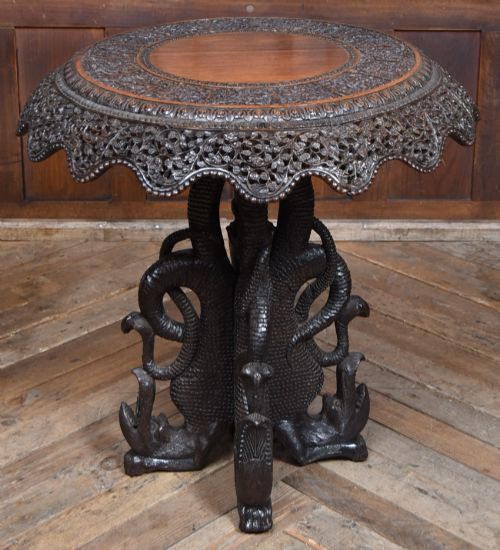
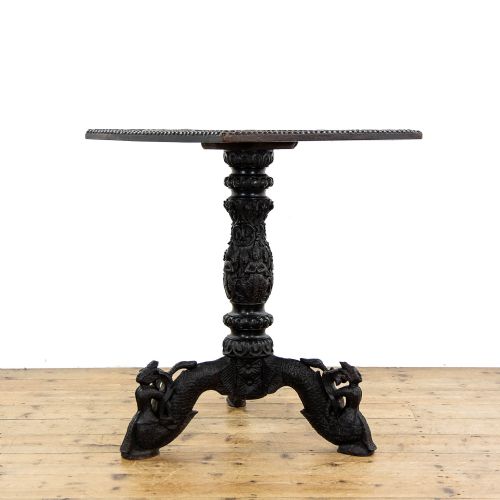
Construction relies heavily on dense timbers such as hardwood, rosewood, and teak, which provide a stable foundation for deep undercutting. Artisans manipulated these stubborn materials using hand chisels to render sinuous dragon motifs and organic relief.
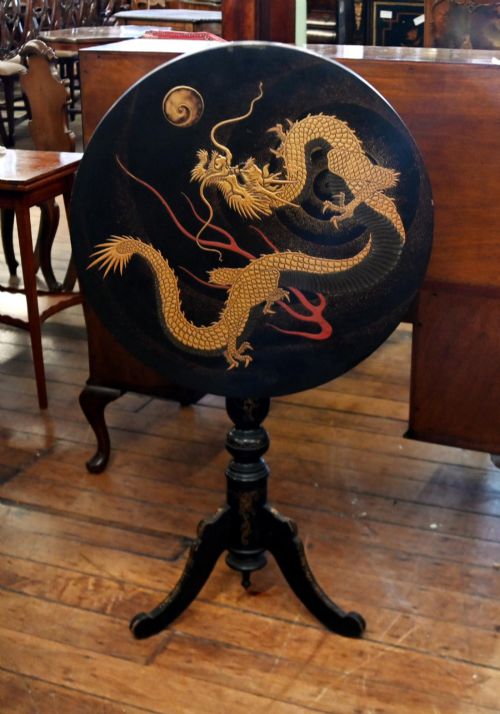
Many examples incorporate contrasting insets, notably rouge marble tops or sections of gold leaf and lacquer, which break up the heavy wood tones. These varied media demonstrate traditional joinery combined with regional surface finishing techniques.
Dragon Pedestal Table Retail Price Guide 2026
Typical asking prices for dragon pedestal table among the pieces listed under this phrase on Sellingantiques today, from the lower quarter to the upper quarter. They describe what is for sale here now, not the wider market.
The furniture styles represented include Chinese Qing Dynasty, Anglo-Burmese, Anglo-Indian, and the Victorian Aesthetic Movement.
What varies in quality
Materials also separate the grades, with heavy, figured rosewood or intact inset marble commanding greater presence than plain softwood frames. The integration of decorative elements like lacquer and gold leaf dictates how successfully the piece holds the eye.
The Dragon Pedestal Table Glossary
- Hardwood
- Dense timber derived from broad-leaved deciduous trees, offering exceptional resistance to wear and tear. This material forms the structural core of nearly every carved piece.
- Jardiniere Stand
- A tall table or pedestal specifically designed to elevate a heavy plant pot or floral arrangement. These stands often feature compact tops and sturdy pillar supports.
- Rouge Marble
- A deep red ornamental limestone with white and grey veining, frequently cut into slabs for table inserts. It provides a cool, durable surface that contrasts against dark wood.
- Aesthetic Movement
- A late nineteenth-century design ethos prioritising visual beauty over narrative function. Pieces in this style often incorporate Far Eastern motifs into Western furniture forms.
- Anglo-Burmese
- Furniture manufactured in Burma during British colonial rule, combining local timber and carving styles with European forms. It is characterised by deep relief work depicting traditional regional iconography.
Dragon Pedestal Table: Frequently Asked Questions
What is a dragon pedestal table?
A dragon pedestal table is a piece of furniture featuring carved depictions of dragons supporting a display or table surface. These items typically originate from nineteenth-century Far Eastern or colonial export workshops.
They serve multiple functions in a room, acting as side tables, coffee tables, or plant stands. The inclusion of carved motifs and dense timbers gives them a distinct decorative weight.
How do I date a carved wooden table?
Dating relies on examining the timber species, tool marks left by the maker, and the overall stylistic influence of the piece. Nineteenth-century examples often display hand-chiseled depth that differs from later mass-produced work.
Construction methods also provide clues, as older furniture uses traditional joinery without modern metal fasteners. Comparing the decorative vocabulary to known export periods helps narrow down the decade of creation.
Where were these tables made?
These tables emerge from various production centres across China, Japan, and Burma, alongside British colonial workshops. Many were created specifically for export to Western markets during the Victorian era.
As a result, the designs frequently blend Eastern motifs like dragons and floral reliefs with European furniture shapes. This cultural exchange defines the character of the category.
How do I care for marble-topped tables?
Marble inserts require gentle cleaning with a damp cloth and mild soap to preserve the polish without scratching the stone. Avoiding acidic liquids prevents etching on the sensitive calcareous surface.
The surrounding hardwood framework benefits from occasional application of appropriate furniture wax to keep the timber nourished. Maintaining stable room humidity protects both the stone and the wooden joints.