




Doulton Stoneware Pot
These doulton stoneware pot pieces are robust vessels from the Victorian and Arts and Crafts eras, offering tactile relief and rich glazes.
Doulton Stoneware Pot
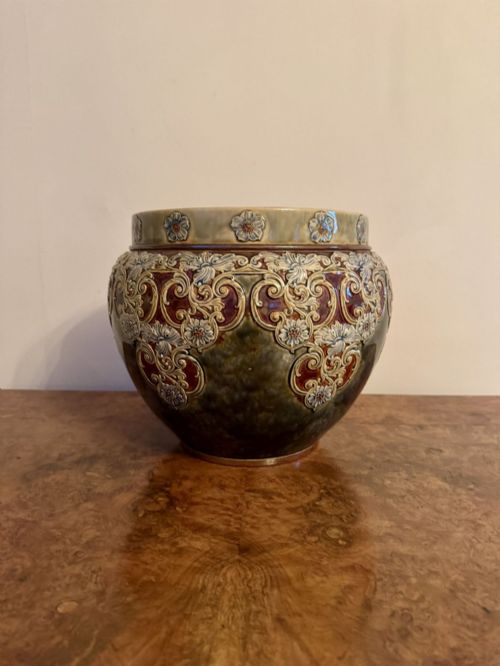
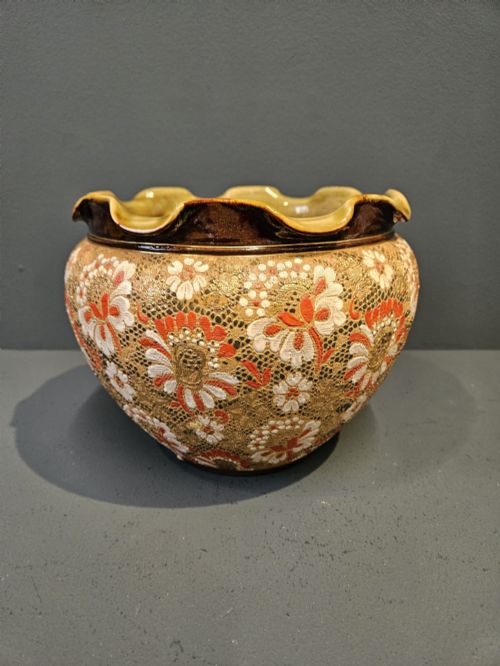
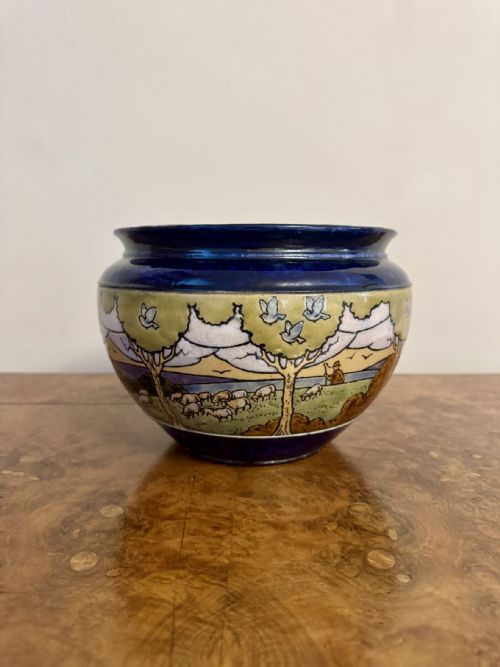
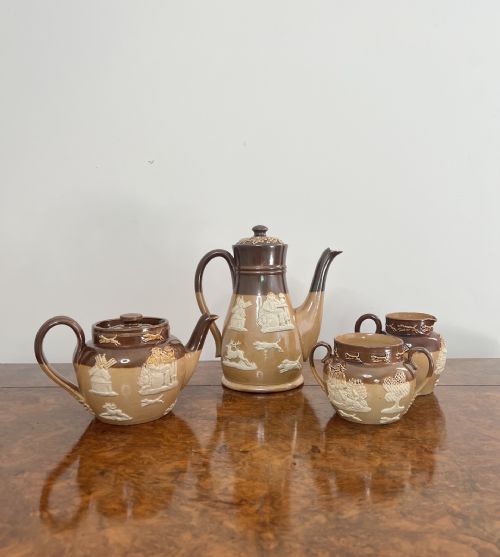
When you search for a doulton stoneware pot, you encounter practical and decorative vessels created during the nineteenth and early twentieth centuries. The selection on this page centres predominantly upon jardinieres, alongside vases, planters, a tea set, and tobacco jars.
Makers such as Doulton Lambeth and Royal Doulton produced these sturdy ceramic items during periods including the Victorian era, 1880, 1890, 1900, and 1920. Styles range from Victorian Art Pottery and Arts and Crafts to Art Nouveau.
The domestic and decorative forms reflect the changing tastes of English homes, moving from ornate Victorian designs towards simpler Arts and Crafts aesthetics. These heavy earthenware pieces were made to house plants or hold dry goods.
How they were made
Potters shaped dense stoneware and ceramic bodies, often applying textured surfaces and patterns using specialised tools before firing. Salt-glazing and rich ceramic glazes created durable, waterproof finishes across the bodies.
Many items incorporate enamel detailing and impressed motifs, sometimes accented with brass mounts. Workshops employed skilled decorators to paint or incise intricate foliage and geometric patterns into the damp clay.
Doulton Stoneware Pot Retail Price Guide 2026
Typical asking prices for doulton stoneware pot among the pieces listed under this phrase on Sellingantiques today, from the lower quarter to the upper quarter. They describe what is for sale here now, not the wider market.
Jam pots disguised as sturdy stoneware remind us that Victorian breakfast tables demanded both utility and charm.
What varies in quality
The distinction between ordinary and superior pieces rests upon the crispness of the impressed decoration and the depth of the glaze. Hand-painted examples by named artists demonstrate greater artistic ambition than standard factory output.
Proportion and the retention of original elements, such as matching tea set components or unblemished brass fittings, dictate the standing of an individual piece within the range.
Doulton Lambeth·Royal Doulton·Doulton Burslem·Ethel Beard·Maud Bowden
The Doulton Stoneware Pot Glossary
- Stoneware
- A type of pottery fired at high temperatures until vitrified and completely non-porous. It provides a heavy, durable body suitable for everyday use and outdoor planting.
- Jardiniere
- A large ornamental pot or stand designed to hold a live plant or flower arrangement. These vessels frequently feature elaborate relief decoration around the exterior.
- Slaterware
- A specific ceramic technique involving textured surfaces that imitate woven lace or fabric pressed into the wet clay before firing. This method was popular during the late nineteenth century.
- Arts and Crafts
- A design movement valuing handcraftsmanship, traditional materials, and simple utility over mass production. Pieces in this style emphasise natural textures and direct forms.
Doulton Stoneware Pot: Frequently Asked Questions
What is a doulton stoneware pot used for?
These robust vessels primarily function as jardinieres and planters for housing indoor or patio flora. Collectors also find tea sets and tobacco jars designed for domestic utility.
Their dense ceramic construction allowed them to hold damp soil safely without leaking moisture onto furniture. Today, many people continue to use them as plant holders or display them as decorative art pottery.
How do I date a doulton stoneware pot?
Dating relies upon factory stamp marks impressed into the base, alongside stylistic clues from the Victorian, Arts and Crafts, and Art Nouveau movements. Earlier pieces often carry specific Doulton Lambeth marks from the late nineteenth century.
Examining the glazing technique and decorative style helps narrow the decade of production. Pieces marked with specific artist signatures also connect directly to documented studio periods.
Are these pots suitable for outdoor use?
Stoneware is naturally frost-resistant and durable due to high-temperature firing, making certain heavy forms suitable for patios and orangery settings. However, antique pieces often warrant protection from severe winter weather to preserve their historical glazes.
Jardinieres and tree planter bases were historically built to handle soil and moisture in domestic interiors or sheltered garden rooms. Checking the specific wall thickness and base condition guides where best to place them.
What makes a piece Arts and Crafts style?
Arts and Crafts examples focus on visible craftsmanship, natural textures, and unpretentious forms inspired by traditional manufacturing methods. These items avoid excessive industrial ornamentation in favour of honest materials.
You spot this style through hand-incised foliage, matte glazes, and robust bonsai planters that highlight the physical properties of the clay. The aesthetic values utility and direct artistic expression.