


Double Strand Cultured Pearls
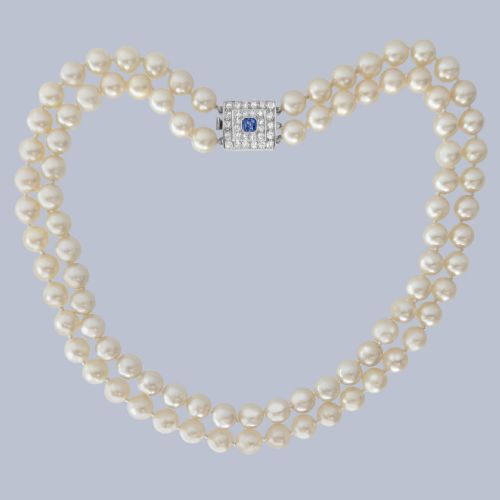
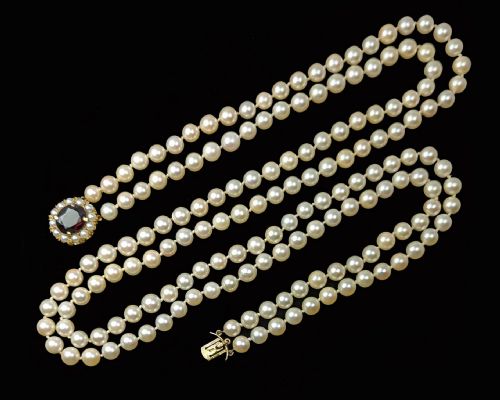
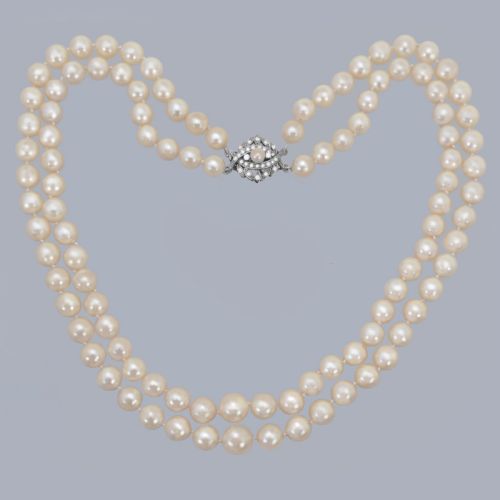
Double strand cultured pearls bring two full rows of lustrous organic gems to the neckline, secured by clasps set with diamonds, sapphires, garnets and gold.
Double Strand Cultured Pearls
Double strand cultured pearls span multiple decades of design, appearing in Edwardian silver mountings, Art Deco geometry, and mid-century modern clasps. These pieces take the form of necklaces and bracelets featuring two parallel strings of pearls paired with gemstone-set metal fastenings.
The most common version met on this page is the mid-century or vintage 1960s necklace fastened with a nine-carat gold clasp. Garnet, sapphire, diamond and turquoise cluster fasteners frequently anchor these multi-row designs alongside simpler floral and foliate gold work.
Earlier examples reach back into the Edwardian era and the 1920s Art Deco period, occasionally incorporating certified pearls or original presentation boxes. Twentieth-century iterations dominate the selection, balancing classic multi-strand stringing with coloured gemstones.
Materials and construction
Cultured pearls form the core material of these pieces, strung in dual parallel strands alongside precious metals including nine-carat and eighteen-carat gold, white gold, and silver. Master jewellers secured these pearls with structured clasps engineered to support the weight of two strands.
Clasps integrate faceted gemstones such as diamonds, sapphires, garnets, rubies, amethysts, tourmalines and turquoise into floral, foliate, daisy and abstract cluster motifs. Many pieces show evidence of specialist re-stringing to maintain the integrity of the dual rows.
Some clasps double as floral gardens in gold, holding tiny hidden gemstones just waiting to peek out from under a collar.
Quality and craftsmanship
The standard of a double strand cultured pearls piece rests upon the uniform lustre and matching of the pearls themselves, paired with the artistry of the metal clasp. Gemstone selection on the fastener, whether white gold and diamonds or nine-carat gold and garnets, dictates the refinement of the piece.
Construction details such as secure re-stringing, robust box clasps, and verifiable hallmarking or gemological certification elevate certain examples above standard mid-century output.
Mikimoto
The Double Strand Cultured Pearls Glossary
- Cultured pearl
- An organic gem created when an irritant is implanted inside an oyster to stimulate pearl production. These form the dual rows seen in mid-century and vintage necklaces.
- Box clasp
- A secure fastening mechanism where a curved metal tongue clicks into a decorative box housing. This style frequently holds multi-strand pearl necklaces safely.
- Foliate clasp
- A metal fastening shaped and engraved to resemble leaves and foliage. These often incorporate gemstones like diamonds or garnets.
- Hallmark
- An official stamp applied to precious metals indicating purity and origin. British examples provide precise dating for mid-century gold mounts.
- Choker necklace
- A short necklace style designed to sit high on the collarbone. These shorter multi-row designs sit closely around the neck.
Double Strand Cultured Pearls: Frequently Asked Questions
How do I wear a double strand necklace?
These multi-row necklaces sit high on the neckline and pair well with open collars or evening wear where the clasp can sit visibly at the back or front.
The dual strands provide a substantial presence compared to single-row variations, making them the primary focal point of an outfit.
Are these pearls natural or cultured?
The pieces utilise cultured pearls grown through human intervention inside oysters, spanning Edwardian, Art Deco and mid-century periods.
Certain items feature gem lab certificates verifying the nature of the pearls and gemstones set within the gold or silver clasps.
Do these necklaces come restrung?
Many vintage and mid-century examples have been professionally restrung to ensure the silk or thread holds the double strands securely.
Restringing maintains the proper drape of the dual rows and safeguards against breakage during regular wear.