

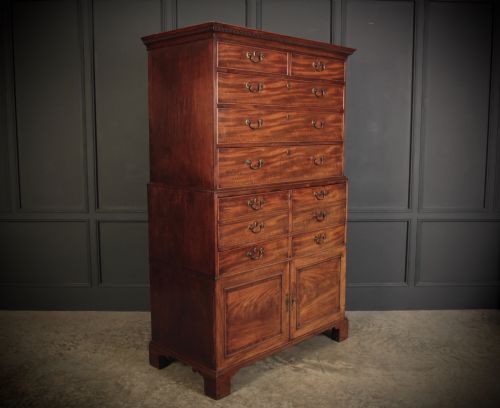
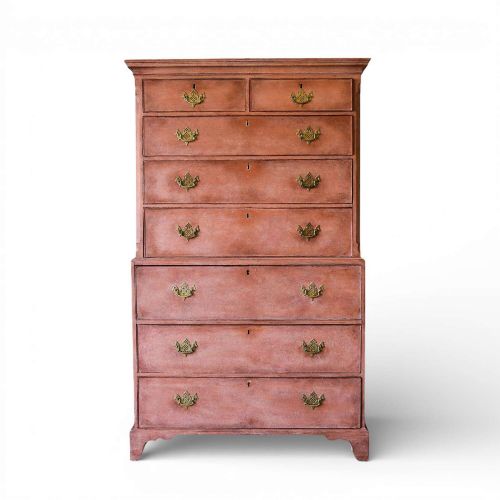


Double Secretaire Cabinet
A double secretaire cabinet is a substantial case piece offering a fitted writing drawer alongside deep storage, combining elegance with practical utility.
Double Secretaire Cabinet
When you search for a double secretaire cabinet, you encounter tall, tiered case furniture designed to house both a writing surface and extensive drawer storage within a single imposing structure.
The pieces appearing on this page span the 18th century, Georgian eras, and the Victorian period, manifesting primarily as chest on chest constructions, tallboys, and bureau bookcases.
Mahogany and walnut dominate the selection, frequently enhanced by brass hardware and leather inserts, reflecting the sophisticated domestic requirements of earlier centuries.
How they were made
Cabinet makers utilised dense hardwoods such as mahogany and walnut, occasionally selecting burr walnut to create highly figured surfaces on the primary facades.
Construction methods involved stacking upper and lower carcass sections, incorporating specialised joinery to support the fold-down secretaire drawers alongside standard drawer banks and glazed bookcase top sections.
Double Secretaire Cabinet Retail Price Guide 2026
Typical asking prices for double secretaire cabinet among the pieces listed under this phrase on Sellingantiques today, from the lower quarter to the upper quarter. They describe what is for sale here now, not the wider market.
Object forms span chests of drawers, chest on chests, tallboys, bureau bookcases, and secretaire cabinets originating across the 1750 to 1800 eras.
What varies in quality
Distinction across the range rests upon the choice of timber figure, particularly the grain selection in walnut or mahogany veneers, and the sophistication of the internal compartments within the secretaire drawer.
Proportion and scale dictate the visual success of the piece, where smaller proportions and restrained decorative carving or brass fittings separate standard regional work from finer cabinet making.
The Double Secretaire Cabinet Glossary
- Secretaire
- A drawer fitted with a drop-front that conceals a writing surface and small pigeonholes or drawers. It provides a concealed desk space within a tall chest or bookcase.
- Chest on Chest
- A tall storage unit formed by stacking one smaller chest of drawers directly upon a larger base chest. This two-part construction aids transport and maximises vertical room.
- Tallboy
- A traditional term for a tall chest of drawers, often synonymous with a chest on chest. These items provide generous storage without occupying excessive floor space.
- Bureau Bookcase
- A combination furniture form featuring a sloping desk front or secretaire drawer surmounted by glazed shelving doors. It merges a study workstation with a display cabinet.
- Burr Walnut
- Timber taken from the wart-like growth on a walnut tree, yielding complex, swirling grain patterns. Cabinet makers prized this material for high-status drawer fronts and panels.
Double Secretaire Cabinet: Frequently Asked Questions
What is a double secretaire cabinet?
It is a tall storage furniture piece incorporating a dedicated writing drawer with internal compartments alongside multiple larger drawers or upper bookcases.
These units combine the storage capacity of a traditional tallboy with the functional writing space of a bureau.
How were these cabinets used?
Owners stored correspondence, personal documents, and household linens within the deep drawers and upper shelving compartments.
The drop-front secretaire drawer provided a clean, private surface for writing letters without requiring a separate standalone desk.
How do I date an 18th-century piece?
Dating relies upon examining the timber species, construction joints, drawer lining materials, and overall stylistic vocabulary such as Chippendale or Georgian motifs.
Changes in hardware styles and cabinet proportions also offer clear indicators of the manufacturing decade.
Can walnut and mahogany pieces be mixed?
Yes, walnut and mahogany furniture from related periods sit comfortably together through shared warm brown tones and traditional craftsmanship.
The distinct timber grain adds textural variety while maintaining historical harmony in a room.