



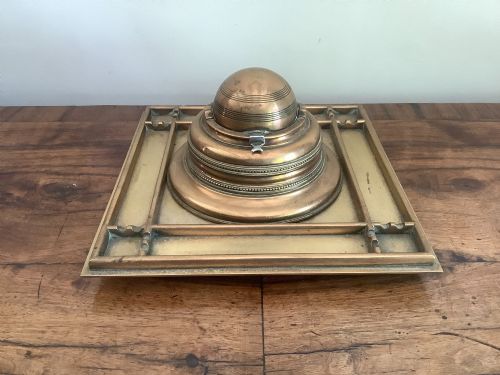


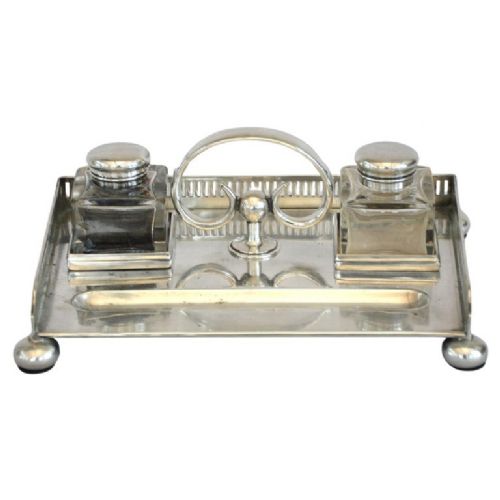
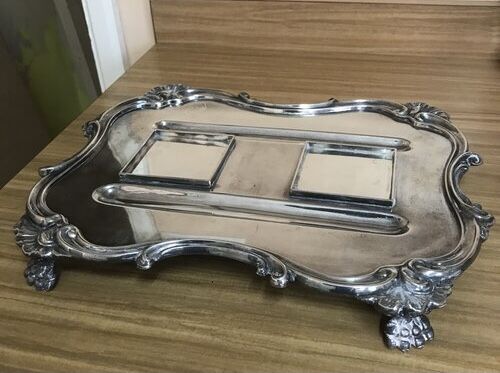


Double Inkwell Desk Accessory
A double inkwell desk accessory organises the writer's desk, holding twin reservoirs for ink alongside pen rests.
Double Inkwell Desk Accessory
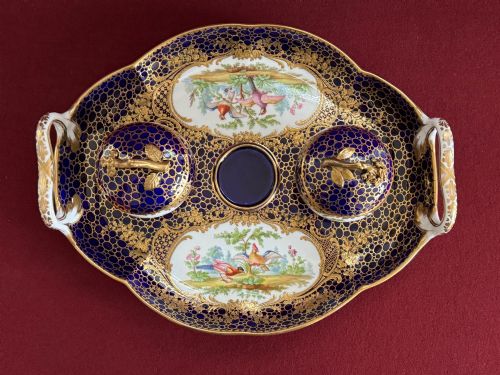
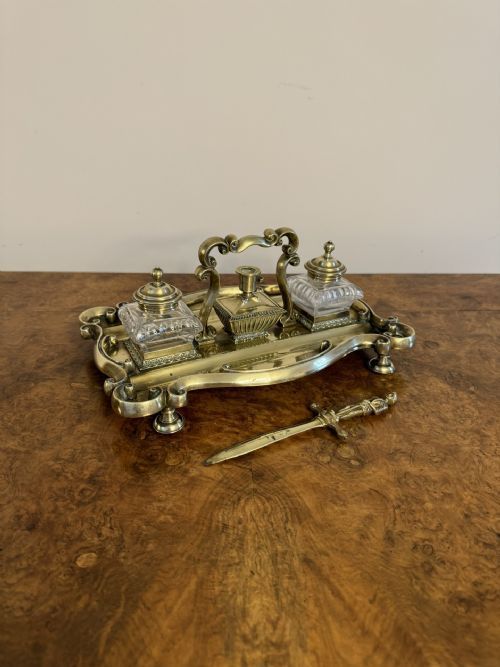
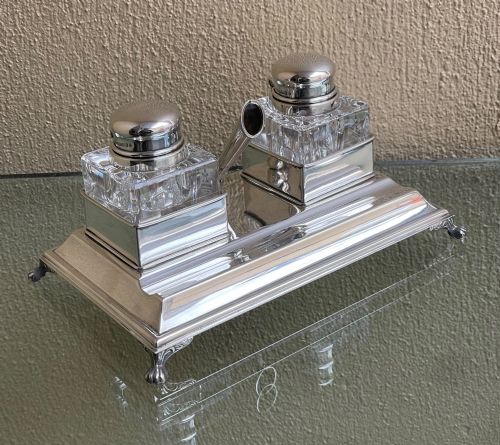
A double inkwell desk accessory brings together twin ink reservoirs on a shared stand, often accompanied by pen trays, stamps compartments, or chambersticks. Buyers searching for a double inkwell desk accessory encounter substantial nineteenth-century pieces in brass, silver plate, or carved wood, frequently dating from the Victorian and Edwardian eras. These items served a practical purpose in writing correspondence before the widespread use of fountain pens.
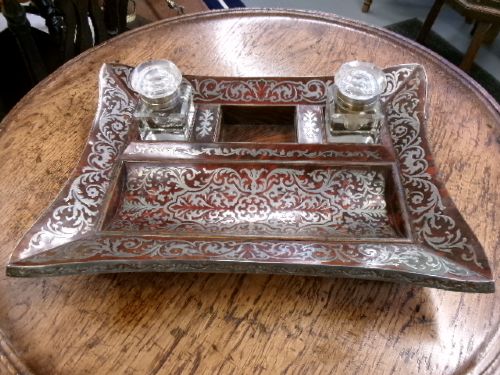
The most common examples on this page are nineteenth-century brass, silver-plated, and wooden stands that integrate two glass or ceramic ink pots. Many incorporate French or English styling, ranging from ornate cast-brass frames to inlaid boulle work and Black Forest carvings. Each piece reflects the formal writing habits of period studies and offices.
Materials and construction methods
Metalwork foundations utilise cast brass, ormolu, silver plate, and solid sterling silver, often shaped with ornate scrollwork, pierced galleries, or neoclassical motifs. Wooden variants employ burr walnut, mahogany, oak, and ebony, frequently paired with brass mounts, inlaid tortoiseshell, and brass stringing.
Glass ink inserts are typically heavy cut glass or moulded crystal, fitted with hinged brass or silver lids to prevent the ink from drying. Carved wooden examples, such as Black Forest pieces, showcase intricate hand-carving depicting animals and foliage integrated directly into the stationary stand.
Double Inkwell Desk Accessory Retail Price Guide 2026
Typical asking prices for double inkwell desk accessory among the pieces listed under this phrase on Sellingantiques today, from the lower quarter to the upper quarter. They describe what is for sale here now, not the wider market.
Design styles span Victorian, Edwardian, Art Nouveau, and French Empire aesthetics.
Distinctions in quality and execution
Quality rests upon the weight of the metal, the crispness of the casting or carving, and the integrity of the fitted components. Superior pieces feature heavy gauge brass, finely chased surface details, and original cut glass inserts that match the proportions of the stand.
Makers who invested in quality materials often incorporated secondary conveniences like hidden drawers, gallery rails, and hallmarked silver mounts. Poorer examples rely on thin pressed metal or replacement ink pots that lack the original fit of the housing.
Walker And Hall·Harrods·James Cartland And Sons·Daniel Holy·Minton
The Double Inkwell Desk Accessory Glossary
- Standish
- A portable tray or stand holding inkwells, pen holders, and sometimes sanders or wafer boxes for sealing letters. It acts as the primary desk accessory for writing equipment.
- Encrier
- The French term for an inkstand or inkwell. These pieces often display elaborate gilt bronze, ormolu, or painted faience decoration.
- Boulle work
- A form of marquetry using brass and tortoiseshell inlaid into wood, popular in French nineteenth-century decorative arts. It provides a striking patterned surface on luxury desk sets.
- Sheffield plate
- An early form of composite metal made by fusing a sheet of silver to a copper base before rolling. This technique precedes modern electroplating and appears on eighteenth and early nineteenth-century stands.
- Chamberstick
- A short candlestick attached to a shallow pan with a handle, occasionally incorporated into large desk stands for sealing wax or illumination.
Double Inkwell Desk Accessory: Frequently Asked Questions
What is a double inkwell desk accessory used for?
These accessories held two types or colours of ink, typically black and red, for drafting and correcting correspondence. The integrated tray kept nibs and pens close at hand.
They sat permanently on writing tables in studies, libraries, and offices during the nineteenth and early twentieth centuries.
How do I date a brass desk stand?
Dating relies on casting techniques, screw types, and stylistic indicators such as Art Nouveau curves or Victorian ornamentation. Heavy sand-cast brass and hand-cut screws usually point to earlier nineteenth-century production.
Later pieces often feature machine finishing and standard threading on the inkwell collars.
Are the glass inserts usually original?
Many surviving stands retain their original heavy cut glass or moulded crystal inkwells, though replacements are common due to breakage. Original inserts fit the apertures precisely and match the age and wear of the main stand.
Checking the interior rim and base helps determine if the glass matches the period of the metalwork.
How do I clean an antique brass inkstand?
Dusting with a soft, dry brush preserves the aged patina that collectors value on nineteenth-century metalwork. Aggressive polishing removes surface character and historical darkening.
Wooden sections benefit from occasional application of microcrystalline wax to nourish the grain without leaving a sticky residue.