
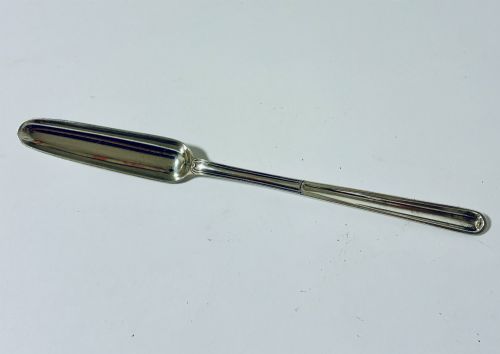
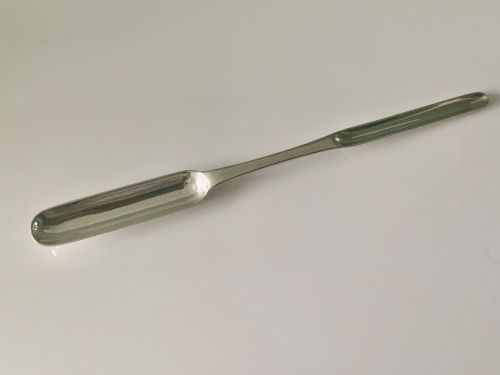
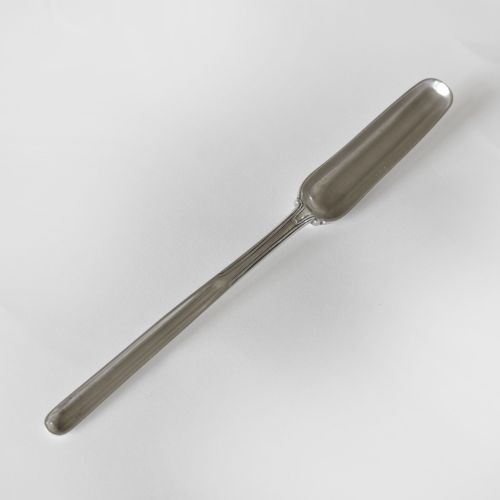
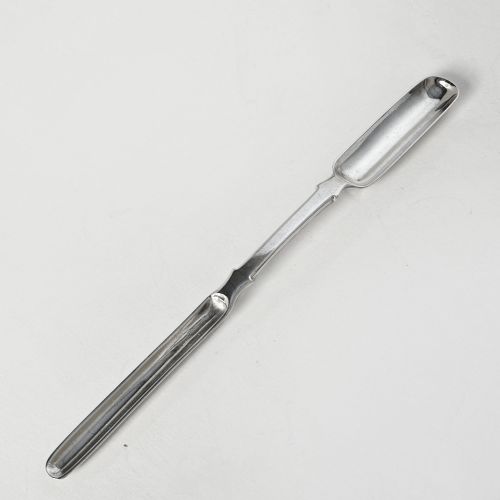
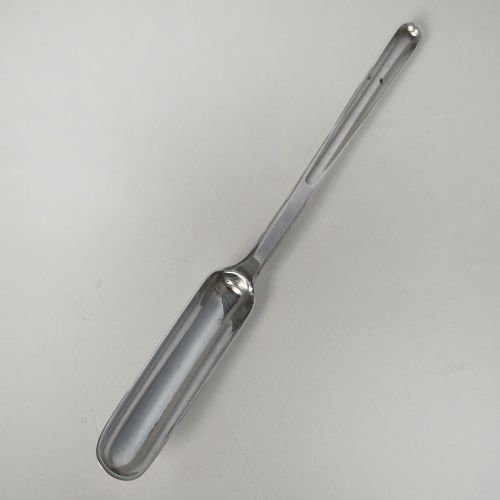


Double Ended Silver Scoop
These double ended silver scoop examples are Georgian and nineteenth-century silver flatware designed for marrow, combining deep bowls and slender troughs in solid silver.
Double Ended Silver Scoop
A double ended silver scoop is a specialised piece of cutlery historically used at the dining table for extracting marrow from bones. These items appear across the Georgian and nineteenth-century periods, including specific examples from the seventeen-hundreds up to the nineteenth century.
The form typically comprises a larger scoop at one end and a smaller trough at the other, fashioned in sterling silver or solid silver. Most pieces met on this page belong to the broader categories of flatware, silverware, and marrow scoops, reflecting English and Irish origins.
Materials and construction
These items are constructed from solid silver and sterling silver, shaped by hand using traditional silversmithing techniques. The metal is hammered and formed into the characteristic double-ended profile featuring a larger bowl and a narrower extension.
Makers shaped the silver to ensure balanced handling, incorporating structural reinforcement along the central stem to withstand the pressure of scraping bone.
Some nineteenth-century examples feature a fiddle pattern handle, proving that even bone marrow utensils could not escape the latest interior trends.
Factors of quality
Quality in these objects is determined by the crispness of the hallmarks, the thickness of the silver at the points of greatest wear, and the retention of clean lines along the troughs. Pieces that maintain their original weight and structural integrity display superior craftsmanship.
The finesse of the transition between the two ends and the clarity of any engraved crests or patterns further distinguish finer examples from standard production.
Edward Power·Jonathan Hayne·Thomas Johnson·Benjamin Davis·Orlando Jackson·Garrard and Co·Solomon Hougham·Christopher and Thomas Barker
The Double Ended Silver Scoop Glossary
- Marrow scoop
- A piece of dining silver featuring a narrow trough at one end and a small spoon or scoop at the other. It was designed specifically for serving bone marrow during formal meals.
- Flatware
- Table cutlery made of silver or other metals, including spoons and forks. This category encompasses all forms of marrow scoops.
- Sterling silver
- An alloy consisting of ninety-two point five percent silver and seven point five percent other metals, typically copper. It provides the standard composition for these items.
- Hallmark
- An official stamp applied to precious metals indicating the standard of purity, the assay office, and the date letter. These marks are essential for dating each piece.
- Fiddle pattern
- A nineteenth-century flatware style characterised by a stem that widens towards the end in the shape of a violin. This pattern appears on specific double-ended examples.
Double Ended Silver Scoop: Frequently Asked Questions
What is a double ended silver scoop?
A double ended silver scoop is a piece of antique dining cutlery featuring a scoop at each end, designed for extracting bone marrow. They are predominantly found in Georgian and nineteenth-century styles.
These utensils formed part of formal dining services, allowing guests to serve marrow efficiently before the practice declined in popularity.
How do I date a silver scoop?
Dating relies on the hallmarks stamped directly onto the silver, which indicate the assay office, the maker, and the specific year of production. Stylistic details also provide clues to the period.
Comparing the shape of the bowls and the overall weight helps place the piece within the eighteenth or nineteenth century.
Were these scoops used for dining?
Yes, they were used at the dining table during formal meals when marrow was a prized delicacy served from roasted bones. The two different ends accommodated bones of varying sizes.
Over time, changing dining habits shifted their role from active table use to decorative collection items.
What is the difference between sterling and solid silver?
Sterling silver denotes an alloy containing a specific high proportion of pure silver combined with strengthening metals. Solid silver generally refers to items made entirely of silver metal rather than plated wares.
Both terms describe the substantial metal construction typical of antique marrow scoops.