
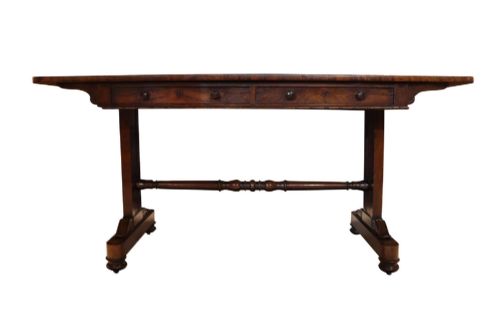
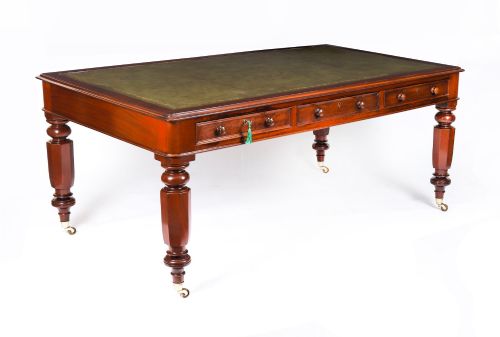
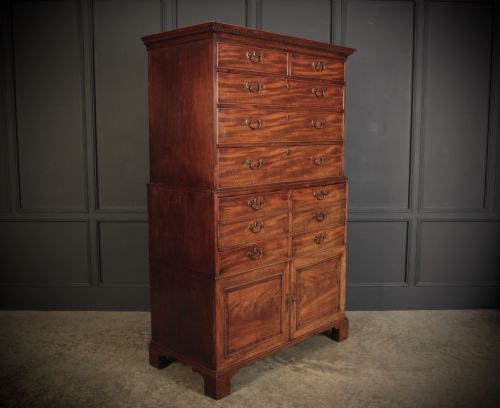


Double Drawer Desk
A double drawer desk brings traditional compartmentalised storage and writing space together, and you want one for practical daily use.
Double Drawer Desk
When you search for a double drawer desk, you encounter large partners desks, tallboys with secretaire compartments, and bureau bookcases spanning the Georgian and Victorian eras. These items serve as substantial writing surfaces equipped with multiple drawers for storage.
The pieces on this page originate predominantly from the eighteenth and nineteenth centuries, including specific periods like George III, George II, and the Victorian age. Forms range from library tables to oak partners desks and burr walnut veneer cabinets.
Buyers frequently find large nineteenth-century partners desks alongside eighteenth-century mahogany secretaire chests on chest. Each configuration provides distinct drawer arrangements suited to organising correspondence and documents.
What varies in quality
The standard of timber selection and veneer matching defines the upper tier of these desks. Grain continuity across multiple drawers and the crispness of carved details indicate superior workshop output.
Construction methods, including the thickness of secondary drawer linings and the precision of dovetail joints, separate standard utility pieces from fine cabinetwork. Original brass hardware and intact leather inserts further distinguish the finer examples.
Listings feature eighteenth and nineteenth-century pieces constructed from mahogany, walnut, oak, and burr walnut veneer with brass and leather fittings.
The Double Drawer Desk Glossary
- Secretaire
- A desk disguised as a chest of drawers or bookcase, featuring a drop-front writing flap that conceals small drawers and pigeonholes. This form maximises vertical storage while providing a dedicated writing surface.
- Partners Desk
- A large double-sided writing table designed for two people to work opposite one another, featuring banks of drawers on both long sides. These were traditionally used in libraries and counting houses.
- Tallboy
- A tall chest of drawers made in two sections, where a smaller chest sits atop a larger base. Eighteenth-century versions often incorporate a secretaire drawer within the upper chest.
- Bureau Bookcase
- A two-part piece combining a sloping writing flap or secretaire drawer above with enclosed shelving behind glass doors below. They house books and correspondence within a single tall cabinet.
- Standish
- A portable or stationary desk tidy designed to hold inkwells, sanders, and pens. These metal or wooden trays often incorporate a small drawer for nibs.
Double Drawer Desk: Frequently Asked Questions
What is a partners desk?
A partners desk is a large freestanding writing table featuring drawers and cupboards on both sides so two people can sit opposite each other. They were commonly utilised in large country houses and offices.
These pieces offer substantial workspace and generous storage capacity within a central room setting rather than against a wall.
How do I identify a secretaire chest?
A secretaire chest resembles a standard tall chest of drawers, but the top drawer pulls down or folds forward to reveal a fitted writing interior. This reveals small pigeonholes and hidden compartments behind the main drawer facade.
This design combines the vertical storage of a tallboy with the functionality of a bureau.
What woods were used for Georgian desks?
Georgian cabinetmakers relied primarily on mahogany and walnut, frequently employing figured veneers for visual depth. Oak served extensively for secondary structural elements and drawer linings.
These dense timbers provided the stability needed for intricate joinery and deep drawer construction.
Where were these desks used?
These pieces originally occupied libraries, studies, and drawing rooms of large country houses, as well as institutional offices. Partners desks stood in the centre of rooms, while bureau bookcases lined the walls.
Today, they function as focal points in home studies or living spaces, accommodating modern writing tasks.