

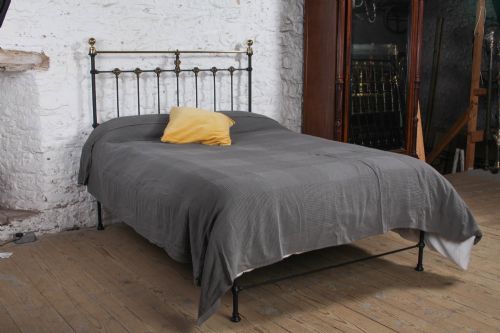
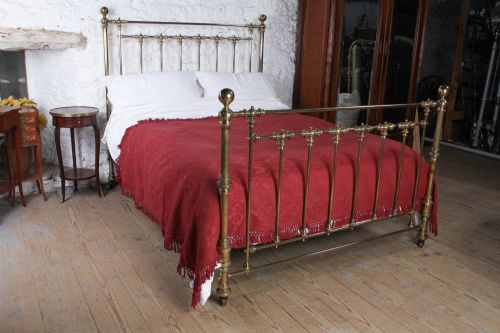
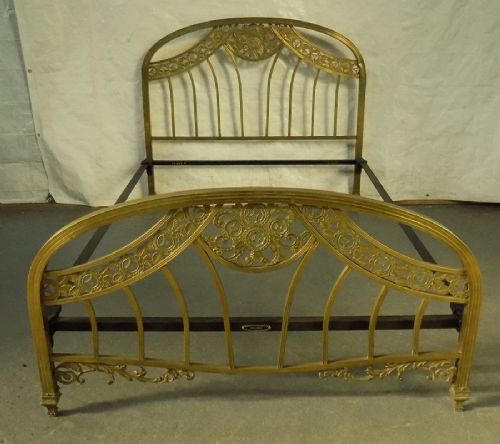
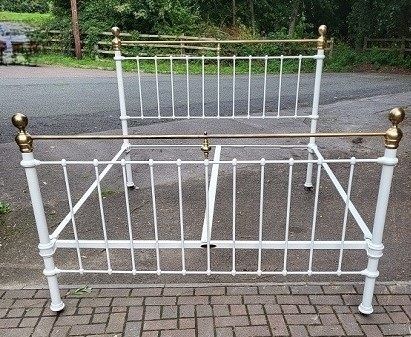
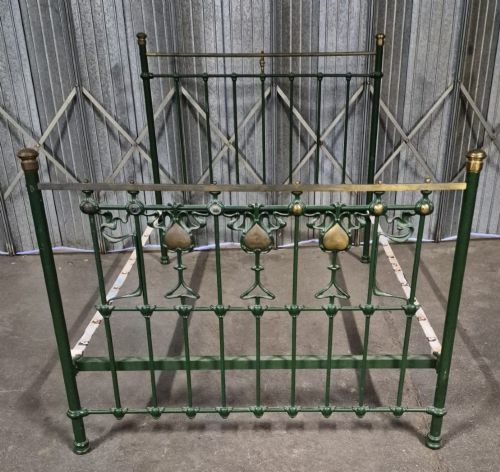
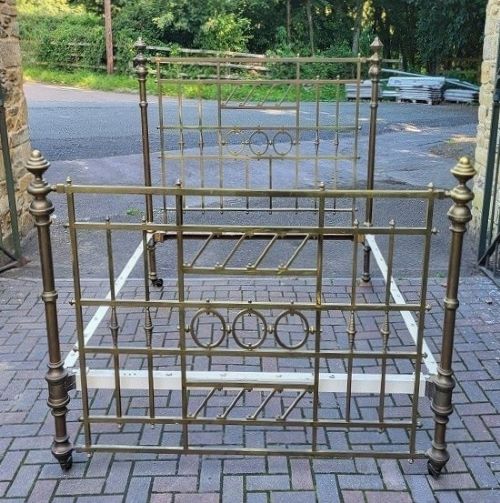
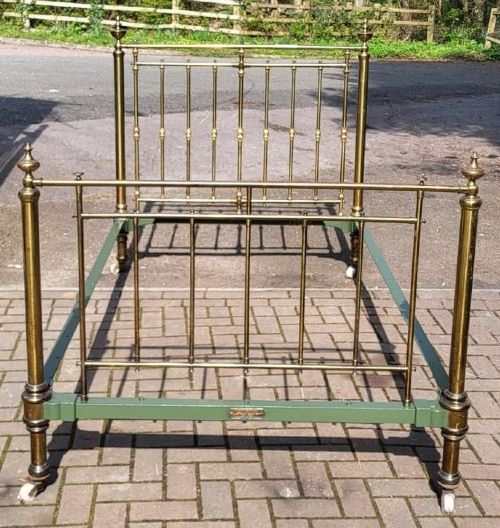
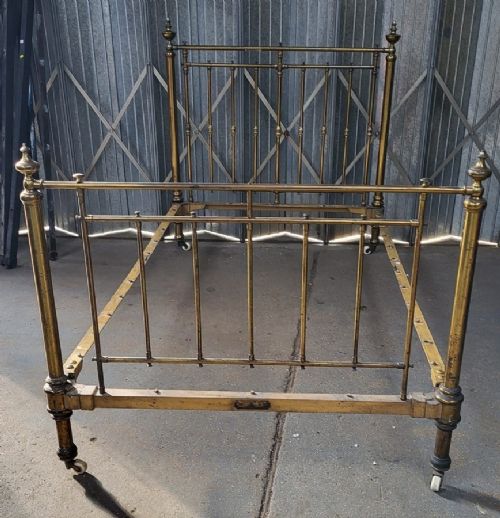
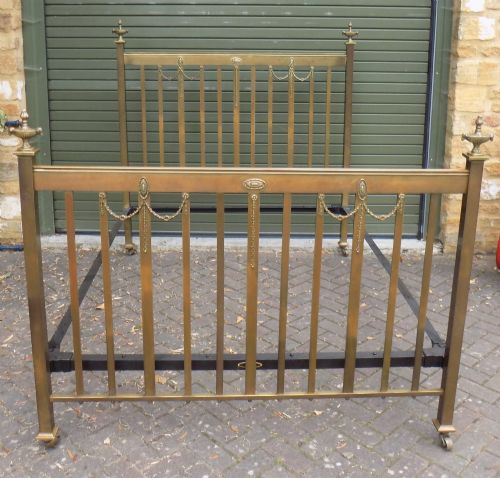
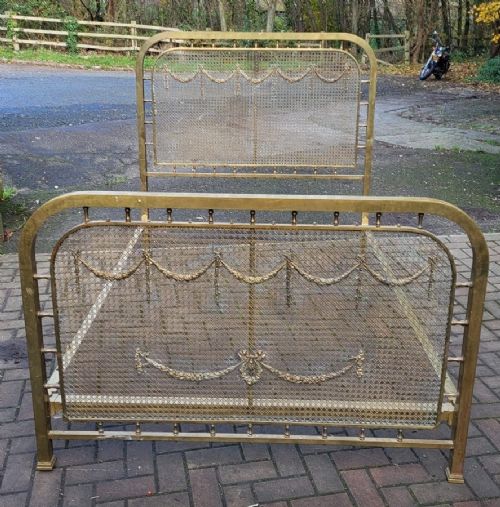
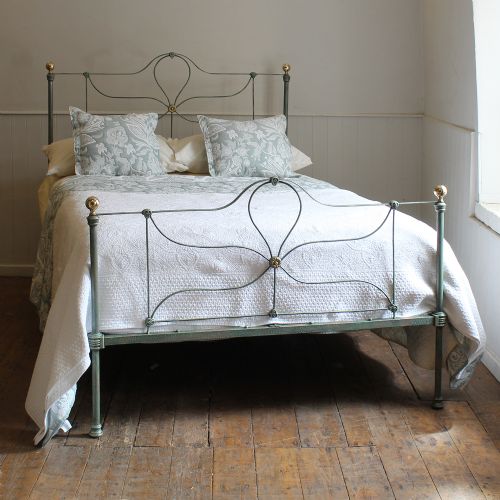
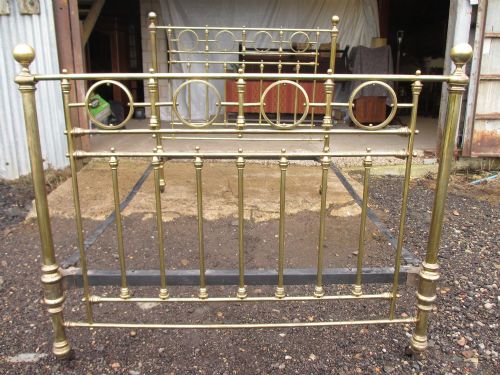
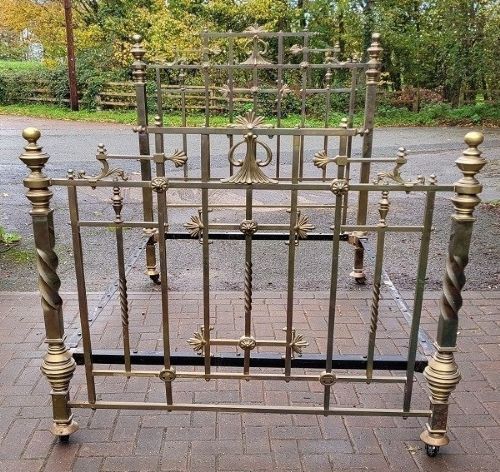
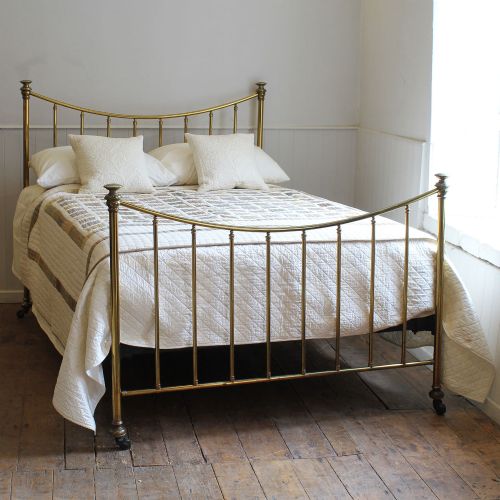
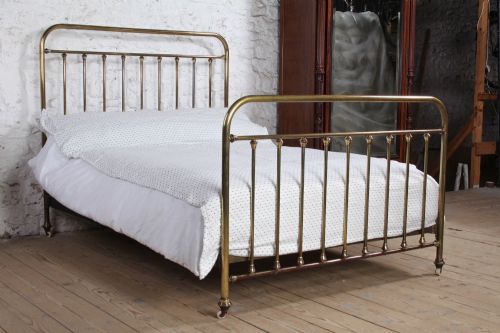
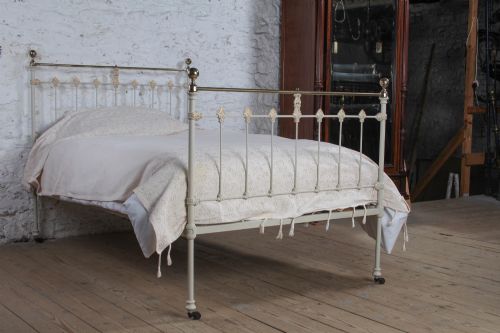
Double Brass Headboard
A double brass headboard brings warmth and period character to a bedroom through polished metal and substantial nineteenth-century framing.
Double Brass Headboard
A double brass headboard forms the striking focal point of a traditional bedstead, combining polished metal framework with sturdy iron support. These pieces emerge predominantly from the Victorian era and the early twentieth century, spanning decades of robust metalwork manufacture.
Most examples originate from British and French workshops, ranging from simple domestic designs with modest brass detailing to ornate exhibition pieces. Buyers encounter both complete antique bedframes adapted for modern use and standalone components salvaged from larger bedsteads.
Distinctions in quality
Quality reveals itself in the weight and thickness of the brass tubing, the crispness of the cast decorative details, and the integrity of the structural iron framework. Superior pieces display intricate chasing on brass mounts and substantial casting work rather than thin plated surfaces.
Exhibition quality examples demonstrate ambitious proportions, such as half-tester canopies or complex tapering posts, combined with refined finishing. Simpler vernacular pieces rely on clean lines and functional joining methods without decorative excess.
Double Brass Headboard Retail Price Guide 2026
Typical asking prices for double brass headboard among the pieces listed under this phrase on Sellingantiques today, from the lower quarter to the upper quarter. They describe what is for sale here now, not the wider market.
Some Victorian iron frames still roll smoothly on their original castors, ready to glide across bedroom floors after a century of rest.
RW Winfield·Maple & Co.·Harrods
The Double Brass Headboard Glossary
- Bedstead
- A framework of a bed supporting the mattress and springs, distinct from modern modular divan bases. These metal structures typically incorporate head and foot sections linked by iron side rails.
- Ormolu
- Gilded bronze or brass applied as decorative mounts and embellishments. This technique adds bright metallic contrast to darker iron or mahogany components.
- Verdigris
- A green patina formed naturally on copper, brass, or bronze through atmospheric oxidation over long periods. Some collectors prize this weathered surface finish for its authentic antique appearance.
- Half Tester
- A bed style featuring a partial canopy extending from the headboard over the upper portion of the bed. Such designs often incorporate elaborate brass framework to support drapery.
- Art Nouveau
- An international style of art and design characterised by flowing, organic lines and asymmetrical natural motifs. In metalwork, this translates to sinuous framing and plant-inspired brass castings.
Double Brass Headboard: Frequently Asked Questions
How do I fit an antique headboard to a modern bed?
Most antique metal headboards use original iron slot-in frames that require specific side rails and compatible mattress supports. Adaptations often involve attaching modern brackets to secure the historic framework safely to standard divan bases.
Consulting a specialist restorer ensures the structural integrity of the antique joints remains undisturbed while meeting current safety requirements.
Can I polish brass headboards safely?
Original brass surfaces respond well to gentle cleaning with non-abrasive metal creams and soft cloths to remove accumulated tarnish. Avoid aggressive chemical dipping that strips natural age patinas and historical mellowing from the metal.
Regular dusting preserves the lustrous finish without wearing down thin brass plating found on certain nineteenth-century variants.
What is the difference between solid brass and brass plated iron?
Solid brass construction utilises thick metal tubing and heavy castings throughout the primary structural columns and decorative finials. Plated examples feature a thin layer of brass applied over a cheaper iron or steel substrate.
A magnet helps distinguish the two, as it adheres strongly to iron cores while having no magnetic pull on solid brass components.
How do I date a Victorian brass bedstead?
Dating relies on stylistic clues, such as the flowing organic curves typical of Art Nouveau pieces from the late nineteenth century. Simpler geometric forms and heavy castings usually point toward earlier mid-Victorian production dates.
Maker stamps, registry marks, and construction methods stamped into the iron rails provide precise chronological evidence.