



Document Box with Lock
A document box with lock holds papers safe, combining stout timbers and clever mechanisms that collectors prize for everyday use.
Document Box with Lock
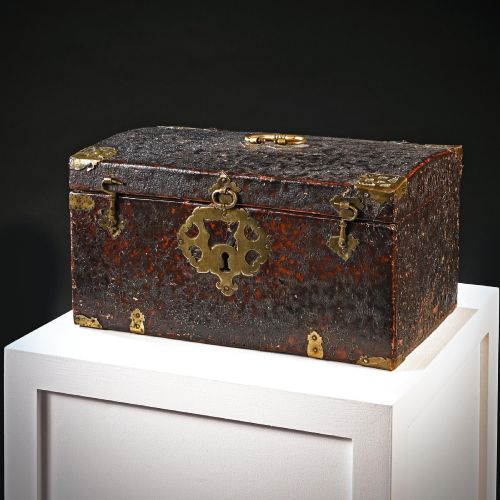
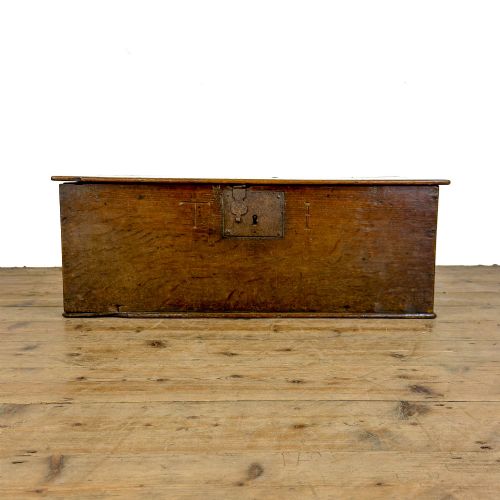
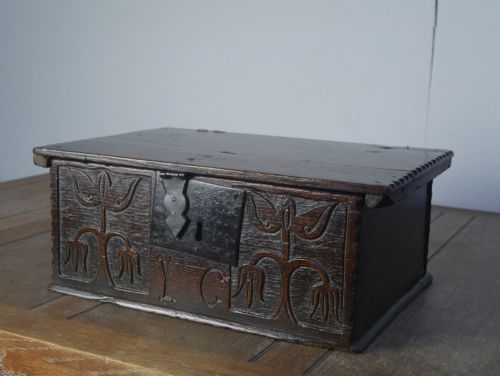
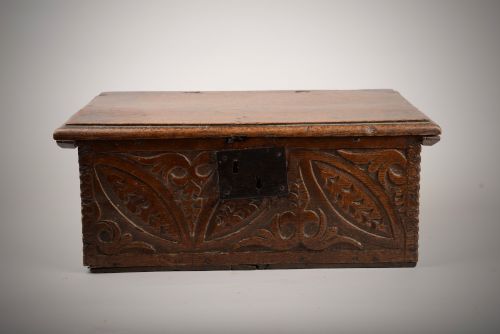
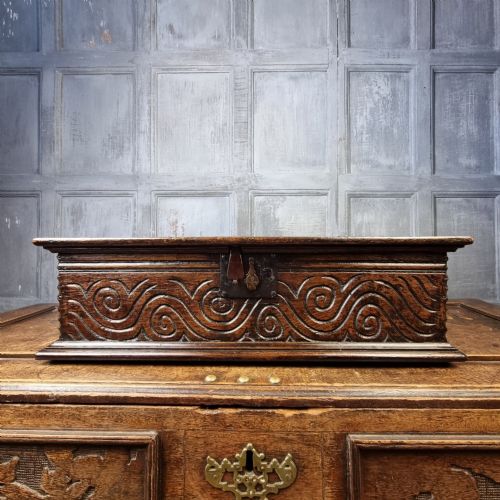
A document box with lock takes many forms on this page, appearing primarily as oak bible boxes, writing slopes, and caskets. These pieces span centuries from the seventeenth through the nineteenth, reflecting the changing ways people stored papers.
The seventeenth-century oak examples show heavy carving and sturdy construction, while later Victorian and Georgian pieces introduce fine veneers like burr walnut and mahogany alongside specialised locking systems. You are most likely to meet oak bible boxes and walnut writing slopes here.
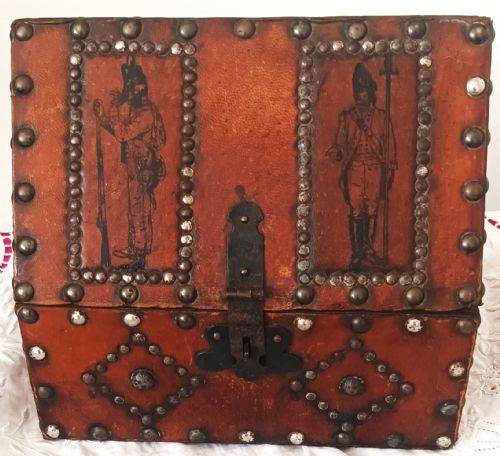
Origin varies across the selection, with English oak pieces sitting alongside Spanish walnut and leather-bound European caskets. Each serves the same core purpose of securing letters and deeds away from prying eyes.
Materials and construction methods
Makers relied on durable hardwoods such as oak, walnut, and mahogany, often shaping panels with hand carving or smoothing them to show rich grain patterns. Brass and iron feature heavily in the hardware, forming hinges, escutcheons, and structural strapping.
Document Box with Lock Retail Price Guide 2026
Typical asking prices for document box with lock among the pieces listed under this phrase on Sellingantiques today, from the lower quarter to the upper quarter. They describe what is for sale here now, not the wider market.
Object forms on this page include bible boxes, writing slopes, caskets, and presentation boxes.
Assessing quality and craftsmanship
Quality rests on the integrity of the timber selection and the sophistication of the locking mechanism. Finer pieces display carefully chosen burr walnut veneers or crisp, deep carving on solid oak panels.
The presence of original working locks and keys with working internal secret drawers elevates a piece considerably. Simpler utilitarian boxes lack these refined touches, relying on basic spring mechanisms or plain timber boards.
The Document Box with Lock Glossary
- Bible box
- A small desk-top box with a sloping or flat lid, historically used to hold family Bibles and important documents. These pieces date largely to the seventeenth and eighteenth centuries in solid oak.
- Bramah lock
- A patented high-security lock invented in the late eighteenth century utilising cylindrical keys. They are found on superior nineteenth-century writing slopes.
- Writing slope
- A box with a hinged sloping lid that opens to reveal a desk surface and stationery compartments. They often feature brass binding and secret drawers.
- Escutcheon
- A protective plate surrounding the keyhole, usually made of brass or iron. It prevents the wood from splitting around the lock.
- Casket
- A decorative box for valuables, sometimes leather-bound or metal-mounted. These objects often display continental European influences.
Document Box with Lock: Frequently Asked Questions
What did people store in a document box with lock?
These boxes protected valuable papers, land deeds, letters, and family records before the widespread use of bank vaults and filing cabinets.
Owners kept the keys close at hand to ensure complete privacy for their personal and business correspondence.
How do I care for antique wooden boxes?
Keep wooden boxes out of direct sunlight and away from sudden temperature changes to prevent the timber from splitting. Feed the dry wood periodically with appropriate wax polish.
Avoid placing damp items directly onto antique interior surfaces or leather linings.
How can I tell a seventeenth-century box from a Victorian one?
Seventeenth-century pieces are typically made of heavy carved oak with simple hand-forged iron hinges. Victorian boxes often feature smooth exotic veneers like burr walnut and brass binding.
Early pieces rely on basic box locks, whereas Victorian examples frequently use patented mechanisms.