

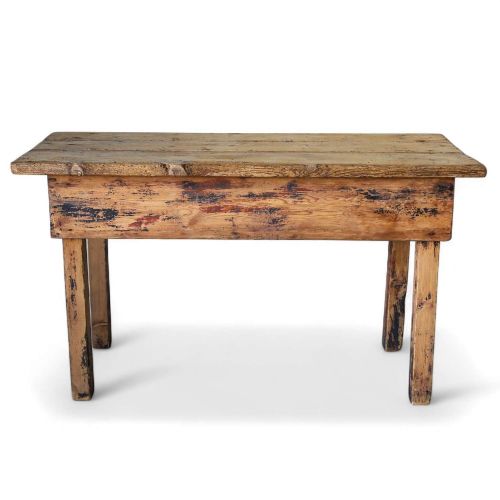
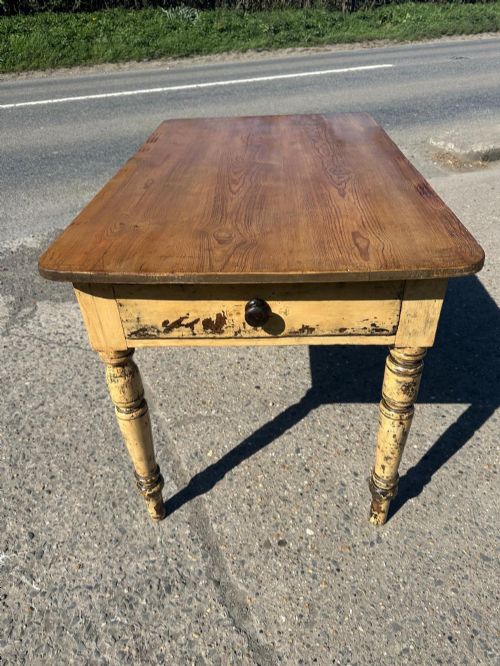


Distressed Work Table
A distressed work table brings centuries of practical domestic history and honest utility straight into a modern interior.
Distressed Work Table
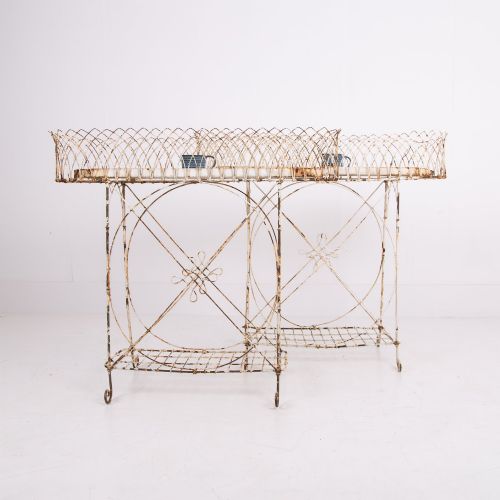
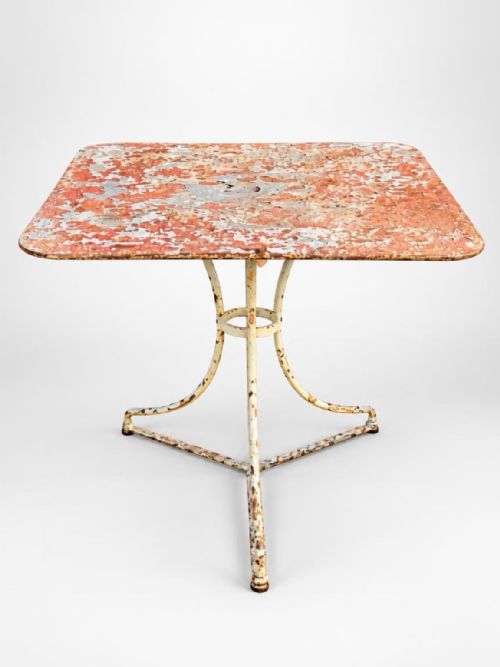
A distressed work table is a utilitarian surface designed for heavy daily use, found here in forms ranging from kitchen prep tables and side tables to console and garden pieces. These items carry the physical evidence of past labour, bearing the marks of preparation, writing, and baking rather than polite parlour use.
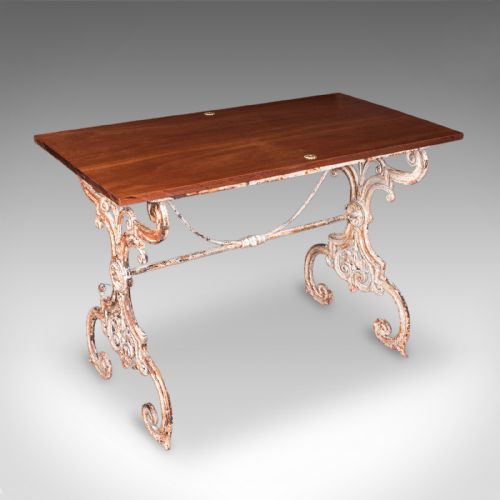
The versions most common on this page date from the nineteenth century through the early twentieth century, spanning Victorian Britain, provincial France, Sweden, and Wales. They arrive in sturdy woods like pine and teak, often paired with iron and brass framework or retaining layers of original paint.
Buyers seek these pieces to anchor a room with genuine age, using them as dining surfaces, kitchen islands, or sideboards. Their character lies in surfaces weathered by decades of physical work.
How they were made
Construction relies heavily on durable softwoods and hardwoods like pine, teak, and mahogany, shaped into trestles, drawers, and servers designed for stability. Carpenters utilised robust joinery to withstand rigorous daily handling in kitchens, bakeries, and workshops.
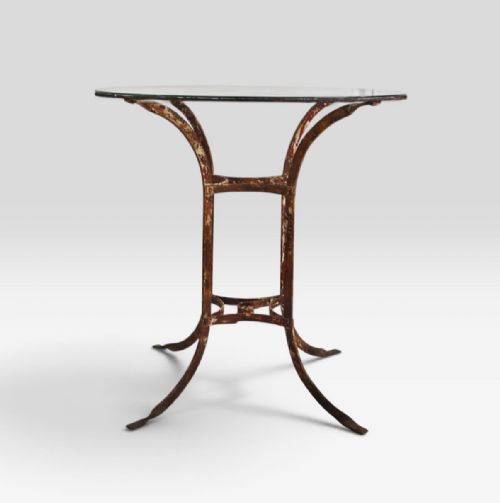
Many examples incorporate cast iron, wrought iron, and brass for structural support, particularly in garden and industrial pieces from the early twentieth century. Surfaces often received practical finishes of paint or bare wood, which weathered naturally over years of service.
Distressed Work Table Retail Price Guide 2026
Typical asking prices for distressed work table among the pieces listed under this phrase on Sellingantiques today, from the lower quarter to the upper quarter. They describe what is for sale here now, not the wider market.
Some nineteenth-century baking tables still carry stray flour dust trapped deep within their scrubbed pine grain.
What varies in quality
Proportional balance and sturdy structural framing distinguish superior examples from ordinary utility furniture. The harmony between aged materials and functional design determines the lasting appeal of each piece.
The Distressed Work Table Glossary
- Prep table
- A heavy-duty surface traditionally utilised in country houses and kitchens for food preparation. These items feature sturdy wooden tops designed for chopping and kneading.
- Trestle table
- A table consisting of two or more support frames connected by a beam, allowing for maximum legroom. This form provides exceptional stability for heavy domestic work.
- Painted pine
- A softwood construction coated in historical layers of paint that have worn down over decades. The pigment often survives in recesses and legs, adding visual depth.
- Baking table
- A specialised surface constructed for rolling dough and pastry, frequently originating from Scandinavian workshops. These pieces often incorporate deep drawers for utensils.
Distressed Work Table: Frequently Asked Questions
How do I use a work table at home?
A work table serves as an ideal kitchen island, a rustic dining surface, or a hall console. Its generous proportions and sturdy build accommodate daily domestic tasks with ease.
Positioning the table in a living space introduces immediate warmth and historical character. The worn surfaces tolerate heavy use without demanding delicate maintenance.
Are these tables suitable for outdoor use?
Many examples on this page originated as garden or conservatory furniture constructed from iron and weather-resistant wood. These pieces transition well onto sheltered patios.
Exposing antique wooden tables to prolonged damp weather degrades the timber and original paint. Interior placement remains the safest choice for painted pine and antique teak.
How do I identify a nineteenth-century table?
Nineteenth-century tables exhibit hand-cut joints, timber shrinkage, and surface wear consistent with decades of manual labour. Tool marks and traditional fixings offer reliable clues to their age.
Regional variations in timber choice, such as Baltic pine or British hardwoods, further help date and localise the piece. Original paint layers often display a craquelure developed naturally over time.
What is the difference between a console and a prep table?
A prep table is built for heavy physical tasks, often featuring thicker timber tops and deep drawers for tools or ingredients. A console table is typically shallower, designed for display against a wall.
Prep tables prioritise functional utility over delicate aesthetics, whereas console tables serve decorative purposes in hallways and reception rooms.