



Distressed White Shelves
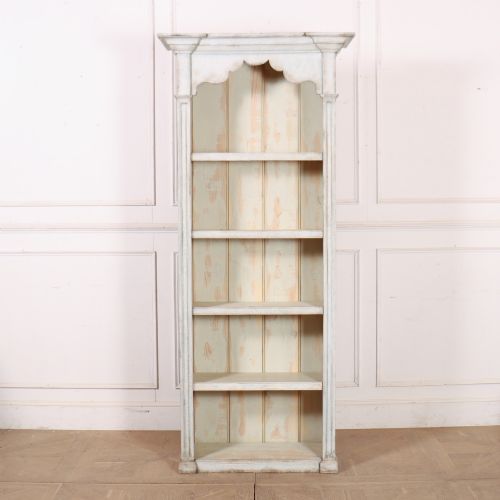
These distressed white shelves bring practical storage and weathered character to a room.
Distressed White Shelves
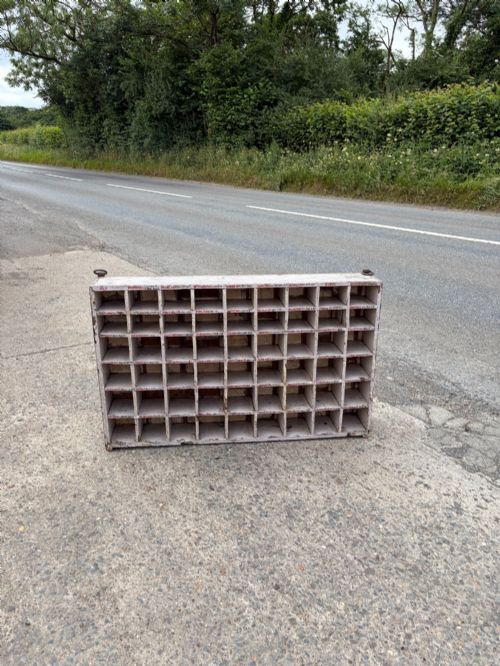
Distressed white shelves cover a varied group of storage and display pieces including bookcases, wall shelves, and pigeon holes. These items often originate from the nineteenth century up to the early twentieth century, spanning French country, Swedish Gustavian, and English country styles.
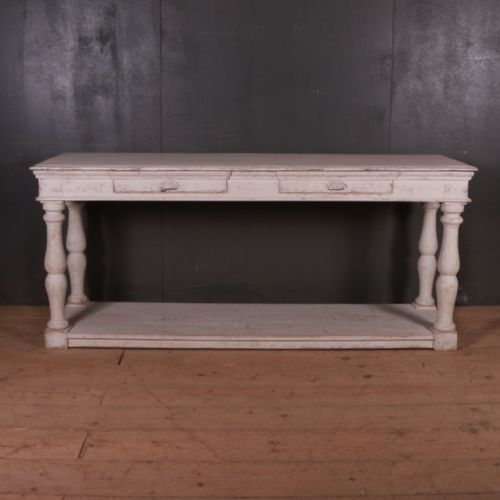
The pieces appearing on this page lean heavily towards painted bookcases and wall-mounted console shelves. Buyers often encounter French Provincial and French Chateau influences alongside utilitarian industrial pigeon holes and prep tables.
How they were made
Makers utilised timber such as pine and oak to construct these items, applying paint finishes that have weathered over decades. Iron and cast iron components appear in hardware or structural elements, adding durability to tables and shelving units.
The construction relies on traditional joinery methods suited to domestic and commercial furniture of the period. Surface treatments involve layered paint applications which create the characteristic distressed aesthetic seen across French and English examples.
Dust from nineteenth-century French workshops still hides in the deepest corners of these pigeon holes.
What varies in quality
The distinction between standard examples and superior pieces rests on the integrity of the timber and the character of the original painted surface. Finer items display balanced proportions and sophisticated stylistic details, such as those found in Swedish bookcases or French decorative bookcases.
Construction depth and the harmony of the painted finish determine the overall presence of a piece. Pieces with honest, aged patination outshine those with heavy-handed modern alterations, reflecting genuine age and purposeful workshop execution.
The Distressed White Shelves Glossary
- Pine
- A softwood commonly used for carcases and shelving in country furniture. It takes paint well and develops a soft patination over time.
- Pigeon holes
- Small compartments grouped together for sorting documents or small items. Early twentieth century examples often serve decorative wall storage roles.
- Gustavian
- A Swedish neoclassical style characterised by light colour palettes and restrained ornamentation. It provides a distinct contrast to heavier Gothic Revival forms.
- Console table
- A table designed to stand against a wall, frequently supported by wall brackets or console legs. They appear in nineteenth century French and English interiors.
Distressed White Shelves: Frequently Asked Questions
Where do these painted shelves work best?
These items suit kitchens, hallways, and living spaces where open storage is practical. Their neutral painted finishes blend easily with diverse interior backgrounds.
Wall-mounted options save floor space while freestanding bookcases offer generous display capacity for books and ceramics.
How do I identify a French country piece?
French country furniture typically displays softer decorative flourishes and lighter timber construction compared to heavier English country pieces. Look for subtle carving and pale painted surfaces.
These characteristics reflect regional provincial workshops rather than formal Parisian cabinet-making traditions.
Are pigeon holes suitable for modern homes?
Pigeon holes offer practical compartments for organising mail, stationery, or small collections in a study or hallway. Their compartmentalised structure provides immediate visual order.
Early twentieth century versions bring functional industrial character into contemporary domestic settings.
What is Swedish Gustavian style?
Swedish Gustavian style draws inspiration from French neoclassical design but simplifies the ornamentation for Nordic tastes. The aesthetic focuses on light colours and clean structural lines.
Pieces from this tradition maintain an airy feel that complements muted interior colour schemes.