


Distressed Pine Dining Table
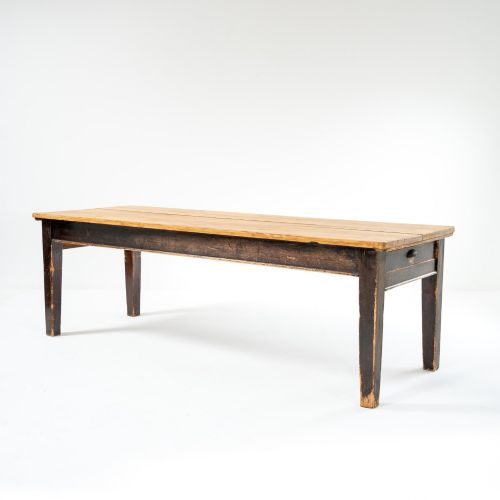
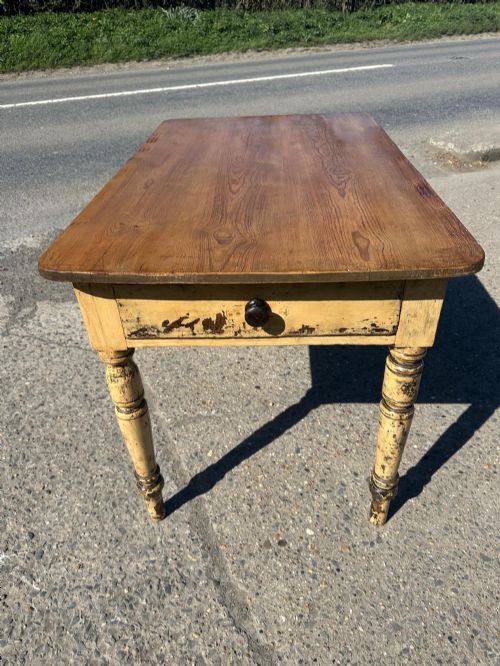
A distressed pine dining table brings tactile warmth and history to a room through weathered painted finishes and honest timber construction.
Distressed Pine Dining Table
When you search for a distressed pine dining table, you encounter practical surfaces built for everyday domestic labour, now repurposed for gathering. The examples available here span the nineteenth century through the early twentieth century, taking the form of robust kitchen tables, harvest tables, and drop-leaf gateleg designs.
Origins vary across English, French, and Scandinavian traditions, encompassing rustic farmhouse and Gustavian aesthetics. These tables frequently display traces of original paint or multiple historical layers of surface colour, reflecting decades of active use in rural settings.
Forms range from standard rectangular dining proportions to large proportions designed to seat multiple guests. Accompanying seating such as long dining benches also appears, sharing the same utilitarian heritage and softwood construction.
How they were made
Construction relies on solid softwood timber such as pine, selected for accessibility and utility in traditional workshops. Carpenters built these tables with sturdy frames, occasionally incorporating functional drawers for storage beneath the top.
Surfaces were frequently finished with paint, ranging from original single coats to accumulated layers applied over generations. Iron fixings and drop-leaf mechanisms added practical adaptability to Swedish and English formats alike.
Listings feature pieces spanning the nineteenth century up to nineteen twenty, constructed primarily from pine and softwood with painted finishes.
What varies in quality
Quality in these tables rests upon the integrity of the original timber and the character of the surface finish. Pieces retaining original painted legs or undisturbed historical paint layers hold greater visual depth than those stripped down to bare wood.
Proportion and scale also dictate distinction, particularly in unusually large formats or clever gateleg mechanisms. The distinction between a standard utility table and a finer example lies in the preservation of its authentic working history.
The Distressed Pine Dining Table Glossary
- Pine
- A softwood commonly utilised in historical furniture construction for its workability and availability. It forms the primary structural material for these tables.
- Gateleg table
- A drop-leaf table featuring hinged legs that swing out to support the extended leaves. This design allows for flexible surface area in domestic spaces.
- Harvest table
- A long dining table traditionally utilised for seasonal communal meals on farms. These pieces offer extended lengths suitable for large gatherings.
- Gustavian
- A Swedish neoclassical style characterised by lighter painted finishes and restrained ornamentation. It informs the aesthetic of several Scandinavian pieces found here.
Distressed Pine Dining Table: Frequently Asked Questions
How do I clean a distressed pine table?
Wipe the surface gently with a damp cloth to remove everyday dust and debris. Avoid harsh chemical cleaners that might strip away fragile historical paint layers.
Dry the timber thoroughly immediately after cleaning to protect the soft grain. Regular mild maintenance preserves the character of the aged finish.
Are these tables suitable for daily dining?
These tables were originally built for heavy domestic labour and kitchen use, making them naturally robust for modern meals. Their durable softwood construction handles daily family life with ease.
Using placemats helps protect vulnerable historic surfaces from excessive moisture and heat. The existing marks and wear only add to their utilitarian charm.
How do I identify a Swedish pine table?
Swedish tables often feature distinctive drop-leaf mechanisms or pale painted finishes associated with Gustavian and Scandinavian country traditions. Their proportions tend to reflect regional domestic requirements of the nineteenth century.
Look for specific construction details like gateleg supports and layers of old paint. These elements distinguish them from English harvest or French provincial equivalents.
What is the difference between a kitchen table and a harvest table?
Kitchen tables typically offer standard proportions suited for everyday household tasks and smaller dining spaces. They often include practical additions such as built-in drawers.
Harvest tables are significantly longer, designed originally to accommodate large groups during seasonal farm work. Both share a utilitarian pine construction but serve different spatial scales.