

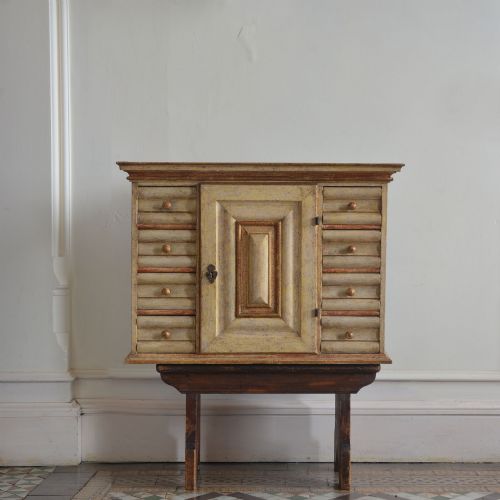
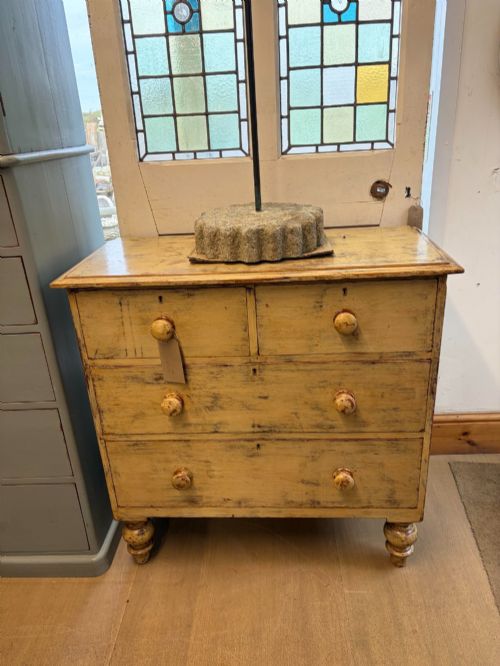
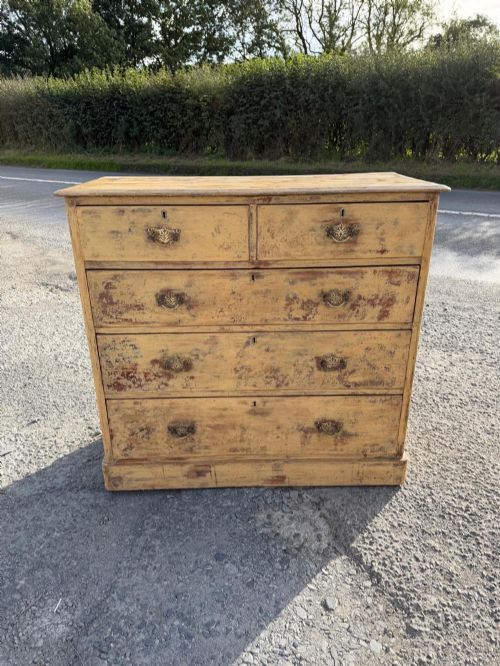
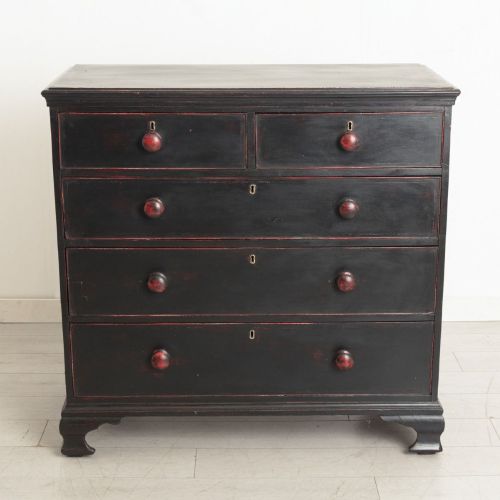



Distressed Pine Chest Drawers
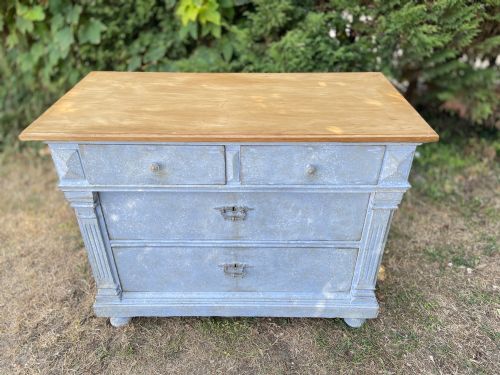
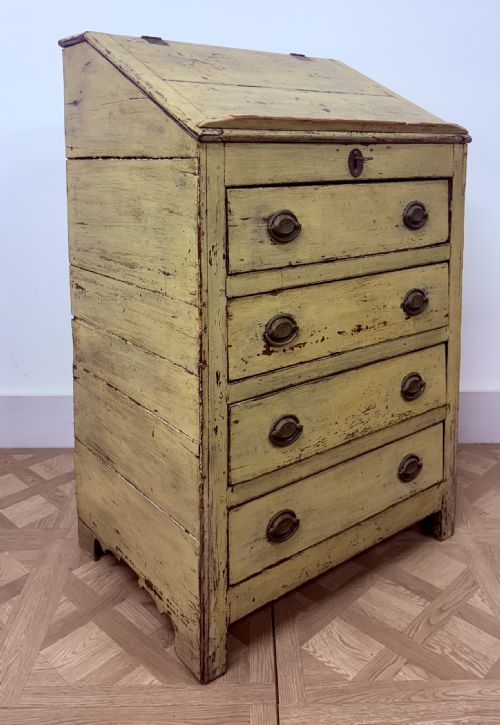
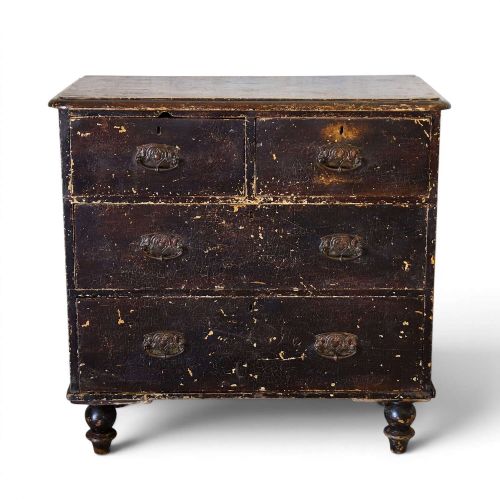
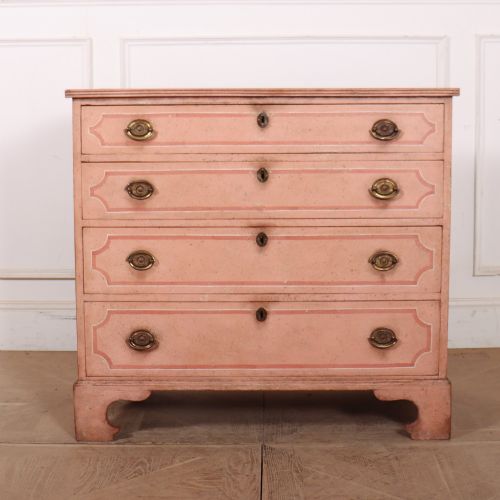
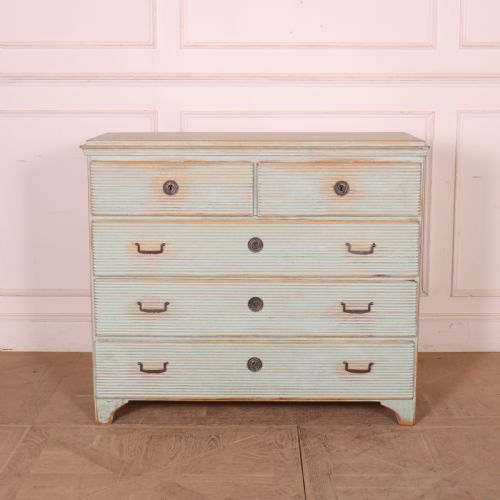
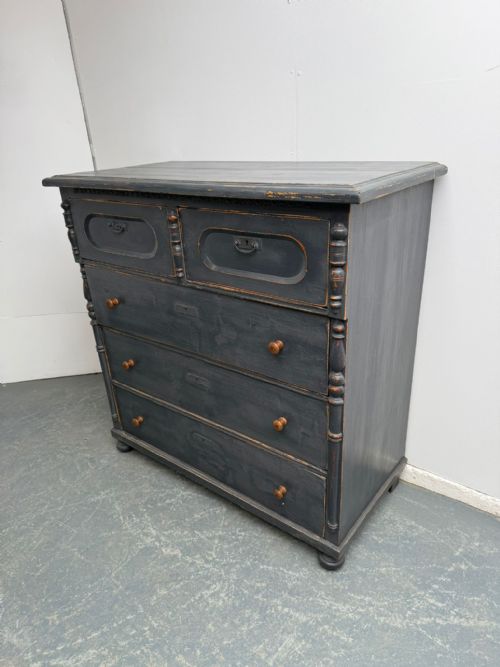
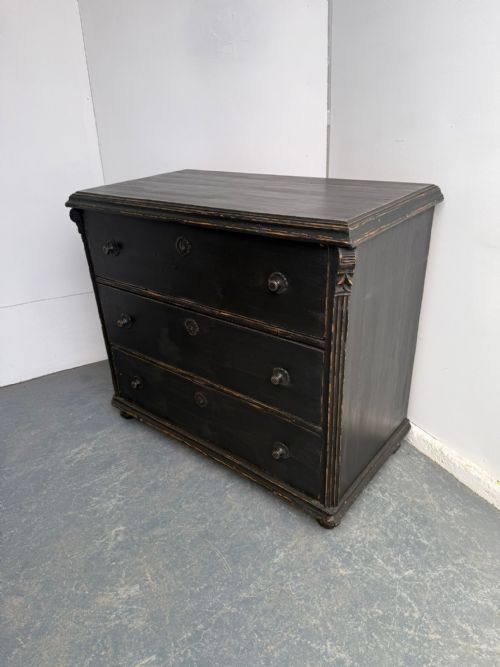
These distressed pine chest drawers bring practical surface utility and softened character to a room through painted timber.
Distressed Pine Chest Drawers
A distressed pine chest drawers search leads you directly to painted storage furniture originating primarily from the nineteenth century, alongside Georgian and Regency examples. These pieces span English country workshops and continental traditions including Swedish, Austrian, and French styles.
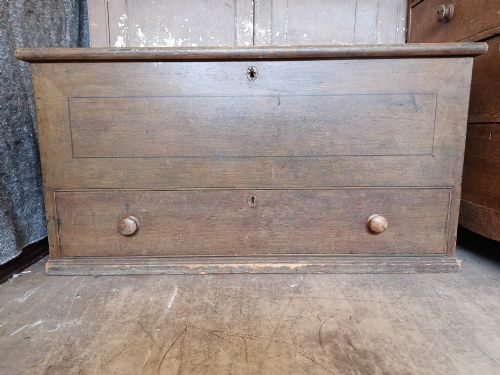
You meet storage configurations ranging from standard two-over-three drawer arrangements to larger five-drawer formats, alongside commodes, mule chests, and side cabinets. Many retain their original scumble, light grey, black, or multi-layered painted surfaces acquired over generations of domestic use.
The aesthetic balances rustic utility with regional decorative traits, such as fluted drawer fronts or diamond-point moulding. Buyers select these items to anchor bedroom or living spaces with tangible history and functional compartment storage.
Materials and construction
Pine forms the structural carcass and drawer components of these items, frequently paired with secondary hardwoods like oak where added durability is required. Iron and brass hardware, including drop handles and key escutcheons, secure the functional parts.
Surface treatments rely on oil-based, scumble, or lead paints applied over bare timber, often weathered and worn through decades of handling. Joinery methods utilise traditional drawer dovetails and tongue-and-groove backboards suited to solid softwood construction.
Distressed Pine Chest Drawers Retail Price Guide 2026
Typical asking prices for distressed pine chest drawers among the pieces listed under this phrase on Sellingantiques today, from the lower quarter to the upper quarter. They describe what is for sale here now, not the wider market.
Listings feature pieces spanning the eighteenth, nineteenth, and early twentieth centuries, constructed primarily from pine with painted finishes.
Distinctions in quality
The integrity of the original paint surface distinguishes superior examples from later repainted surfaces, with untouched scumble or layered historical pigment holding greater aesthetic weight. Untouched patination reflects the genuine age of the piece rather than modern decorative distressing.
Structural honesty and the retention of original brass or iron hardware elevate a piece, as does the balance of regional proportions. Pieces constructed in two distinct parts, such as larger Regency chests, demonstrate sophisticated modular cabinet-making.
The Distressed Pine Chest Drawers Glossary
- Scumble paint
- A translucent glaze applied over a lighter base coat and manipulated with combs or rags to simulate grain. This technique appeared frequently on late nineteenth-century pieces to enrich plain softwood.
- Commode
- A decorative set of drawers or low cabinet originating from continental traditions. These pieces often feature shaped drawer fronts or specialised hardware.
- Mule chest
- A storage chest fitted with one or two bottom drawers beneath the main lift-lid compartment. This hybrid form bridges the transition from traditional blanket boxes to standard drawer chests.
- Dovetail
- A joint formed by interlocking wedge-shaped fingers that secures drawer corners together. Hand-cut variations indicate older cabinet-making methods prior to mass-produced machinery.
Distressed Pine Chest Drawers: Frequently Asked Questions
How do I clean painted pine?
Dust surfaces regularly with a dry, soft cloth to prevent particulate accumulation on the aged paint layers. Avoid harsh chemical solvents or abrasive cleaners that lift historical pigment.
Apply a microcrystalline wax sparingly if the surface feels dry, buffing gently with a clean cloth. This protects the underlying timber and existing paint without altering the matte finish.
Are these drawers suitable for daily use?
Solid pine construction and dovetailed joints provide robust storage capable of handling everyday clothing and household items. Runners and drawer bases operate best when kept clean and occasionally waxed for smooth sliding.
Allow for natural wood movement caused by seasonal changes in humidity, which can occasionally make drawers firmer to pull in damp weather. Proper indoor climate control preserves both the drawers and the outer painted skin.
What does original paint mean?
Original paint refers to the earliest decorative or protective coating applied to the timber when the piece was first built. Over decades, this layer develops natural wear, chips, and softer tones that cannot be replicated artificially.
Distinguishing original finishes involves inspecting paint layers for consistency of age, underlying oxidation, and integration into the grain. Such surfaces provide authentic historical character sought by collectors.
How do I date an antique chest?
Examine the construction methods of the internal drawers, noting whether the dovetails are hand-cut or machine-made. Backboards and secondary timbers also offer clues regarding period manufacturing techniques.
Compare stylistic markers such as bracket feet, turned legs, or brass hardware against known regional designs. Hardware placement and timber shrinkage patterns further clarify the era of manufacture.