



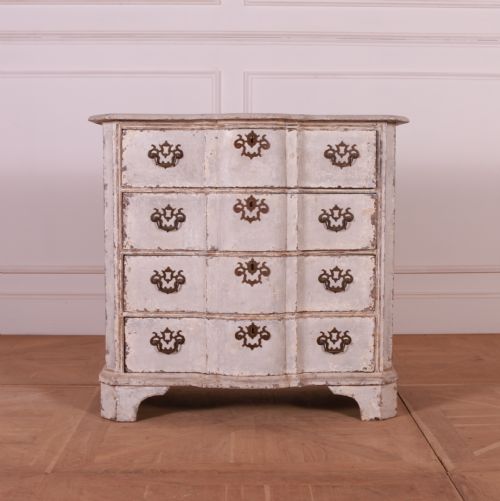


Distressed Grey Commode
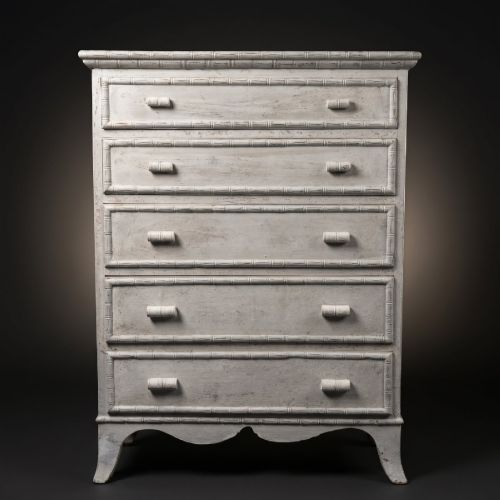
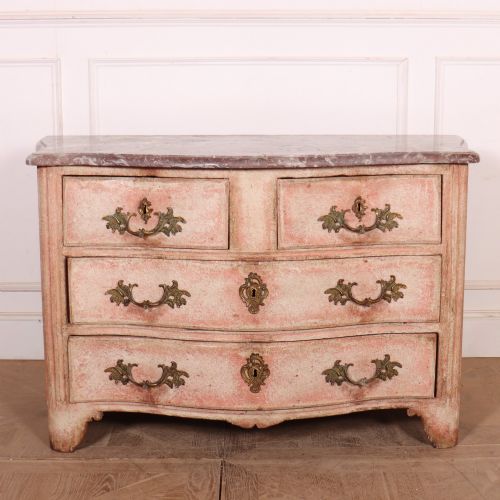
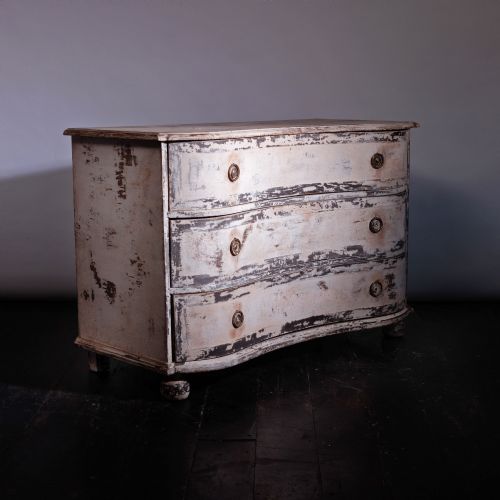
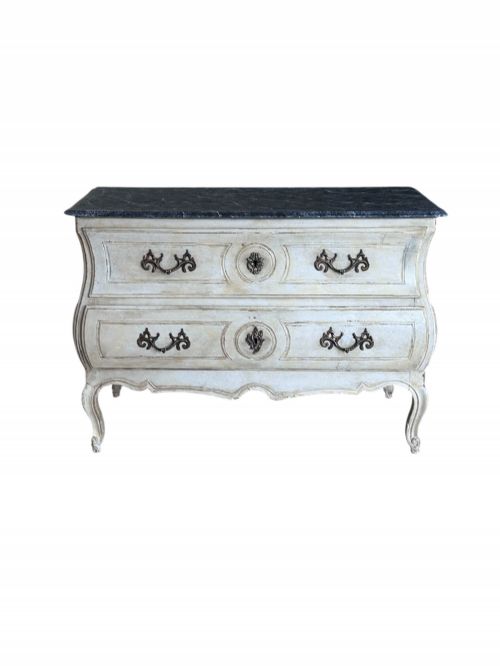
A distressed grey commode brings functional storage and muted painted charm to a room, drawing on French, Swedish and Dutch provincial traditions.
Distressed Grey Commode
When searching for a distressed grey commode, buyers encounter low chests of drawers spanning the eighteenth, nineteenth and early twentieth centuries. These storage pieces originate mainly from French, Swedish and Dutch workshops, taking the form of serpentine, bombe or straight-fronted chests.
The most common examples on this page are French and Swedish painted commodes from the nineteenth century. These items typically feature multiple drawers and worn painted timber surfaces that suit traditional and contemporary interiors alike.
Materials and construction
Cabinetmakers built these commodes using timber carcasses of oak, pine and general painted wood or timber. Surfaces received layers of paint, often applied over earlier finishes to achieve the decorative painted skins seen today.
Hardware details such as brass handles and pulls complement the timber construction. Selected pieces incorporate marble or faux marble tops above the drawer tiers.
Distressed Grey Commode Retail Price Guide 2026
Typical asking prices for distressed grey commode among the pieces listed under this phrase on Sellingantiques today, from the lower quarter to the upper quarter. They describe what is for sale here now, not the wider market.
Listings span the eighteenth century to the early twentieth century, incorporating oak, pine, marble and brass elements.
Distinguishing quality
Quality rests in the precision of the cabinetwork, seen in the joinery of the drawer boxes and the execution of serpentine or bombe contours. Eighteenth-century examples demonstrate more complex shaping compared to later nineteenth-century interpretations.
The integrity of the painted surface matters significantly. Original or early paint layers that show natural wear outrank modern decorative treatments applied to plain timber carcasses.
Edwards and Roberts
The Distressed Grey Commode Glossary
- Commode
- A low chest of drawers or cabinet designed for domestic storage. Originating in France, the form became widespread across Europe in the eighteenth century.
- Serpentine
- A front profile shaped with a central convex curve flanked by concave sections, or vice versa. This undulating contour requires skilled woodworking.
- Bombe
- A swollen, bulging chest shape with curved sides and fronts. Makers achieved this profile through advanced framing and shaping techniques.
- Gustavian
- The Swedish neoclassical style spanning the late eighteenth and early nineteenth centuries. It is characterised by restrained ornamentation and pale painted finishes.
Distressed Grey Commode: Frequently Asked Questions
How do I spot an eighteenth century commode?
Examine the drawer construction for hand-cut dovetails and inspect the timber framing inside the carcass. Eighteenth-century pieces frequently display heavier oak or pine construction beneath the paint.
Check the silhouette and carving details against regional styles from France or the Netherlands. Earlier pieces show hand-shaped contours rather than mass-produced uniformity.
Where should I place a commode?
These chests work well in bedrooms as primary storage or in hallways as decorative console alternatives. Their shallow depth allows them to fit narrow circulation spaces.
Keep them away from direct heat sources and strong sunlight to protect the painted timber surfaces. Placing lamps or decorative objects on top enhances their function.
What is a serpentine front?
A serpentine front is a cabinet face shaped with a convex curve in the middle and concave curves at the sides. This rhythmic line adds visual movement to the piece.
Cabinetmakers had to shape solid timber or apply curved veneers carefully to maintain structural stability. It denotes a finer grade of craftsmanship.
Are Swedish commodes different from French ones?
Swedish pieces often adopt brighter, paler painted finishes influenced by neoclassical Gustavian design. They tend to feature simpler linear carvings and restrained mouldings compared to their continental counterparts.
French commodes, especially those from provincial regions or under Louis XV influence, frequently employ more pronounced curves and decorative hardware. Both traditions relied on local pine and oak.