

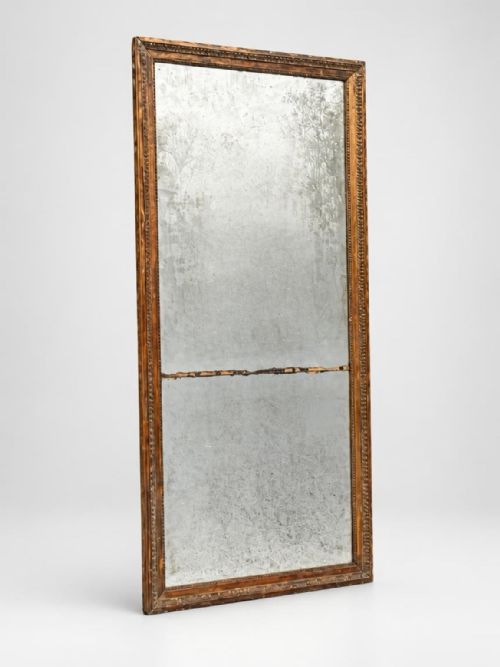
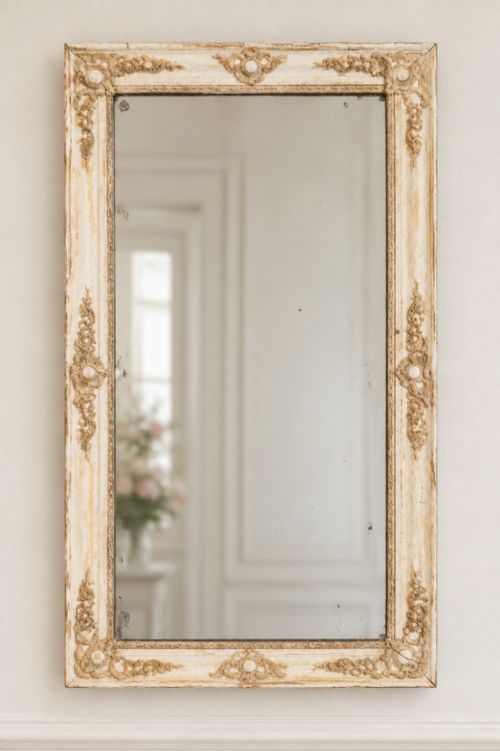
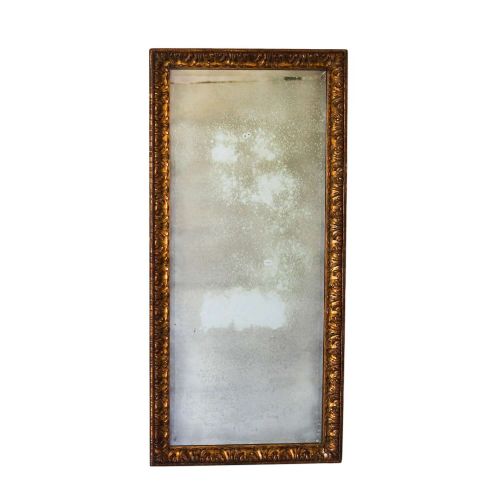
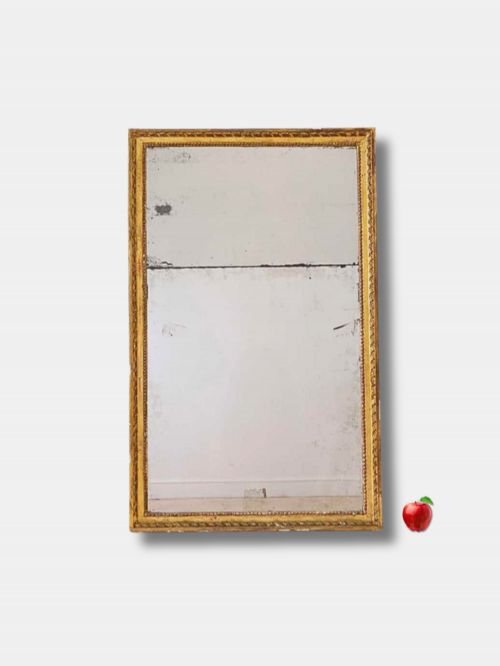


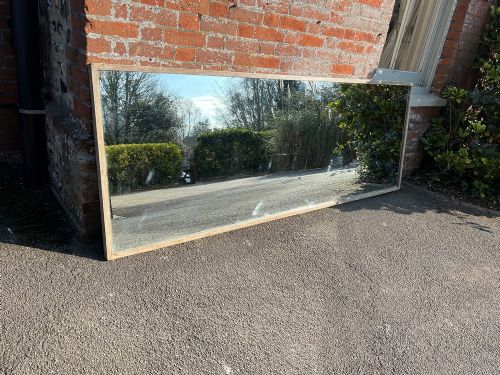


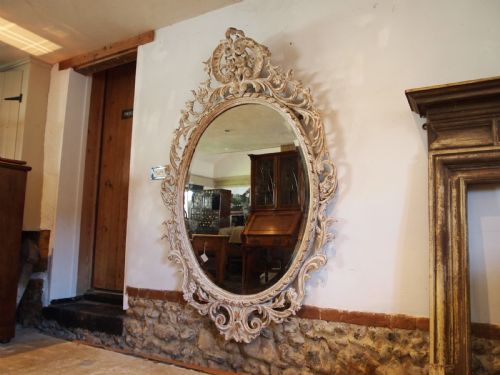
Distressed Glass Pier Mirror
A distressed glass pier mirror brings distinct historic character and mottled reflection to a room, offering the aged patina that collectors prize.
Distressed Glass Pier Mirror
A distressed glass pier mirror combines tall proportions with an aged, weathered reflective plate designed to hang between windows or above mantelpieces. These antique pieces date predominantly from the eighteenth and nineteenth centuries, spanning Regency, Louis XVI, and Victorian periods.
The most common version met on this page is the large French wall mirror, often featuring carved wood and gesso frames with original painted or gilt surfaces. Italian Rococo and English country examples also appear, offering varied regional interpretations of the traditional wall mirror.
Tall bistro and trumeau formats feature prominently among the selections, providing vertical presence for narrow wall spaces. Original mercury glass plates supply the characteristic dark speckling and mottled silvering that define these decorative antiques.
Materials and construction techniques
Carpenters constructed the structural frames using carved wood, applying layers of gesso to build up intricate scrollwork and moulded details before finishing the surface with paint or giltwood. This traditional layering technique allowed artisans to achieve deep relief on arched and shaped tops.
Makers utilised mercury glass for the reflective plates, a historic manufacturing method that produced a warmer, softer reflection prone to natural oxidation over time. Paint and gilt layers were frequently distressed or over-painted to create the weathered appearance seen across French Chateau and provincial styles.
Distressed Glass Pier Mirror Retail Price Guide 2026
Typical asking prices for distressed glass pier mirror among the pieces listed under this phrase on Sellingantiques today, from the lower quarter to the upper quarter. They describe what is for sale here now, not the wider market.
Materials recorded across current pieces include carved wood, gesso, paint, giltwood, and original mercury glass.
Evaluating quality and authenticity
The integrity of the original plate separates superior examples from later replacements, with genuine mercury glass showing authentic degradation and organic clouding rather than chemical simulation. Original backing boards and undisturbed frame construction further indicate an untouched piece.
Carved gesso and wood frames demonstrate craftsmanship through the crispness of the relief work and the subtlety of the historical paint or gilt surfaces. Pieces retaining their original silvering and unblemished structural proportions command greater appreciation among collectors.
The Distressed Glass Pier Mirror Glossary
- Pier glass
- A tall mirror specifically designed to hang on the narrow pier of wall between two windows. It frequently matches the height of adjacent architectural joinery.
- Mercury glass
- A double-walled glass blown with a silvering mixture containing mercury, creating a mottled reflection as the backing degrades. This process was common before nineteenth-century chemical silvering methods.
- Gesso
- A plaster-like mixture applied to wood frames to provide a smooth base for gilding or painting. Artisans carved intricate decorative motifs directly into this dried compound.
- Trumeau mirror
- A decorative wall mirror incorporating a painted panel or oil painting above the glass plate. These pieces often integrated into historic wall panelling.
- Giltwood
- Timber coated with fine gold leaf applied over a prepared gesso ground. It provides a luminous finish that catches ambient room light.
Distressed Glass Pier Mirror: Frequently Asked Questions
What is a pier mirror?
A pier mirror is a tall, narrow looking glass originally built to hang on the wall space between two windows. These pieces elongate rooms by reflecting natural light.
In historic interiors, they often sat above low pier tables. Surviving examples now function as striking standalone wall mirrors in hallways and living spaces.
Where should I hang a tall mirror?
These tall mirrors suit high-ceilinged rooms where their vertical proportions can command the wall without feeling cramped. Placing them opposite a window maximises the reflection of natural daylight.
They also work effectively above mantelpieces or in entrance hallways where the elongated format creates an immediate sense of space.
Are French and English mirrors different?
French mirrors from this selection frequently showcase elaborate carved wood and gesso frames with arched tops, drawing on Louis XVI and Rococo styles. Painted or gilt finishes tend to be highly decorative and ornate.
English pieces often present a slightly more utilitarian or restrained proportion, incorporating painted wood frames suited to country house aesthetics.