

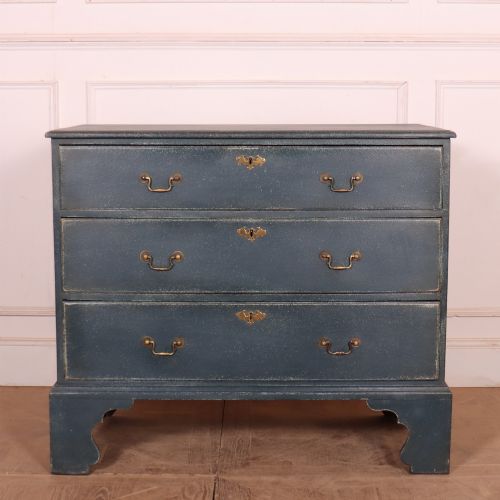
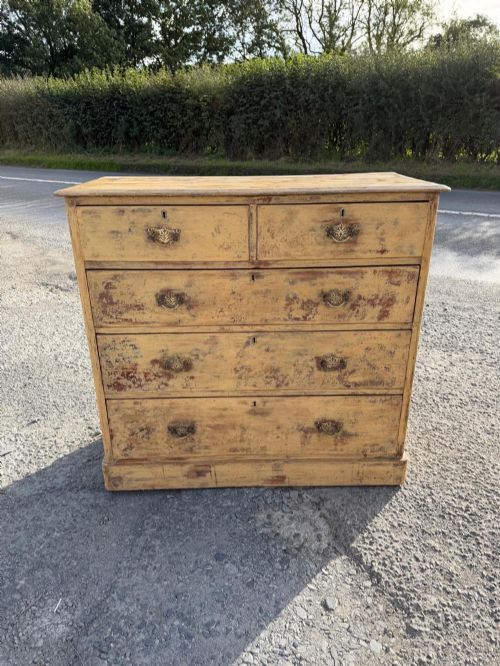
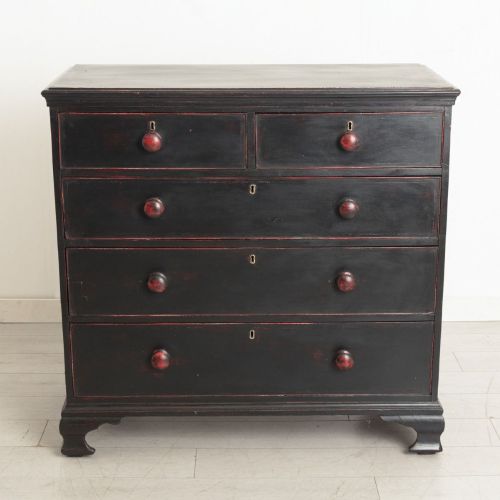
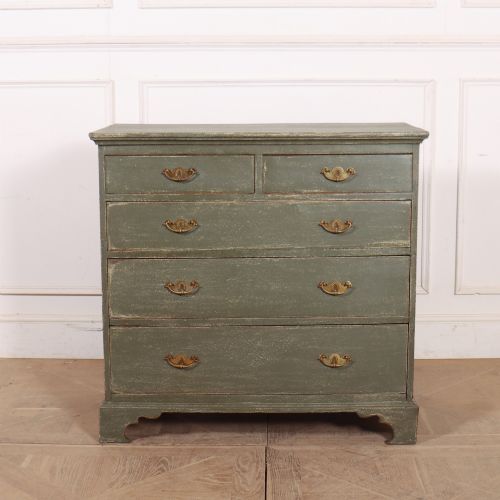
Distressed Chest of Drawers
These pieces known as a distressed chest of drawers bring aged painted surfaces and utilitarian charm to a room, offering practical storage with distinct character.
Distressed Chest of Drawers
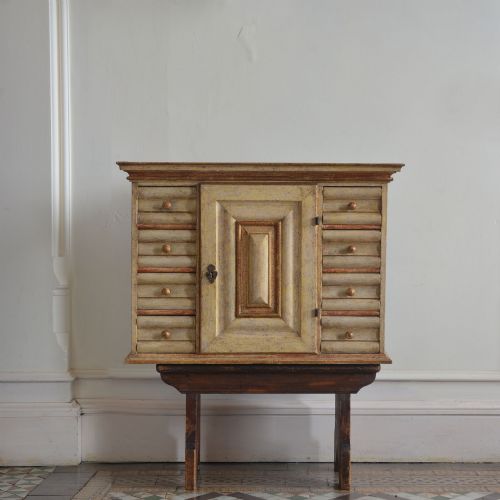
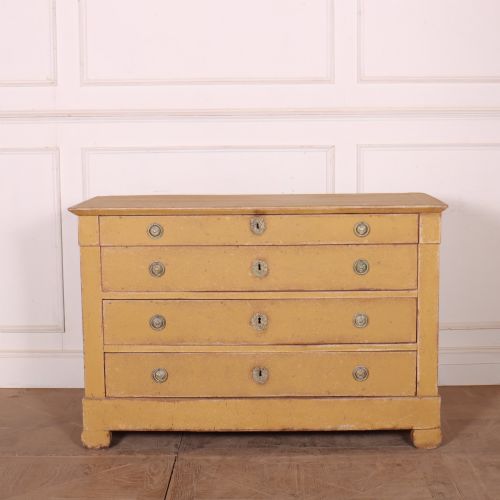
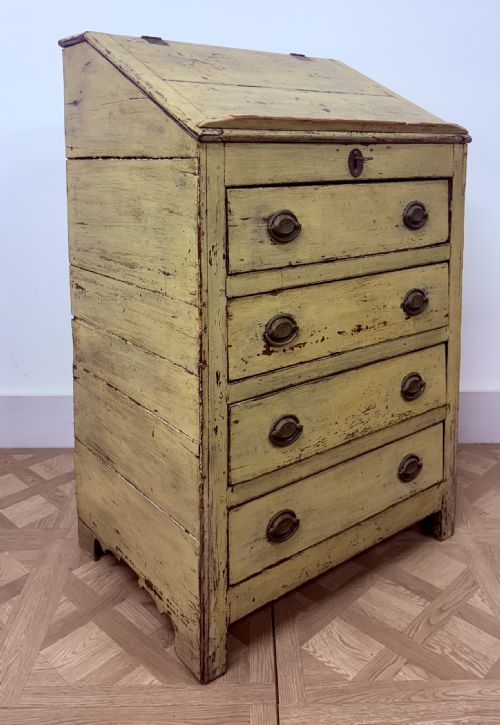
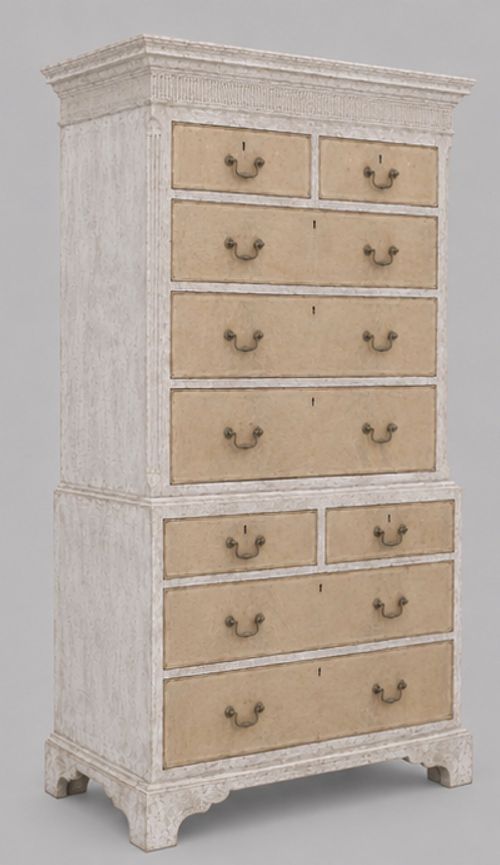
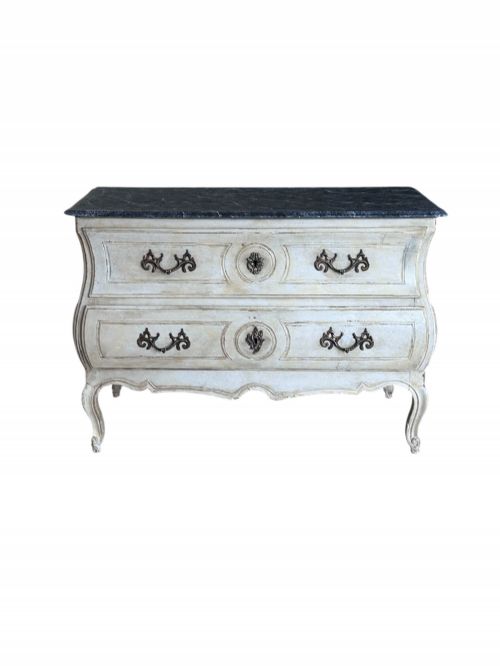
A distressed chest of drawers spans utilitarian storage forms from the eighteenth and nineteenth centuries, including tall upright chests, commodes, and miniature apprentice pieces. Pieces emerge from diverse regional traditions across England, France, Sweden, Germany, and Italy, reflecting local cabinet-making habits and domestic needs of past centuries.
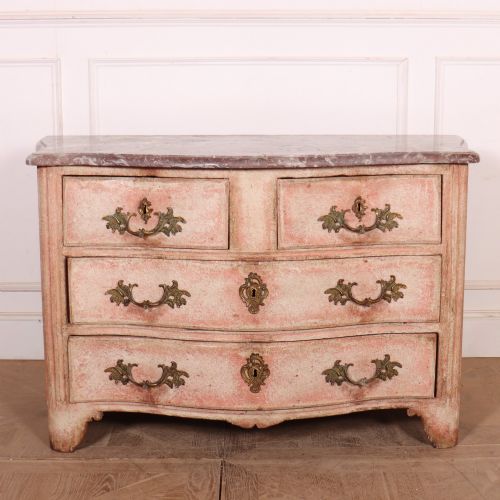
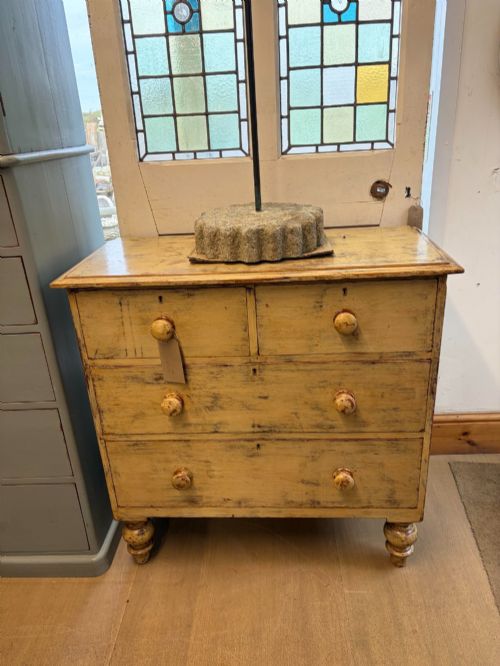
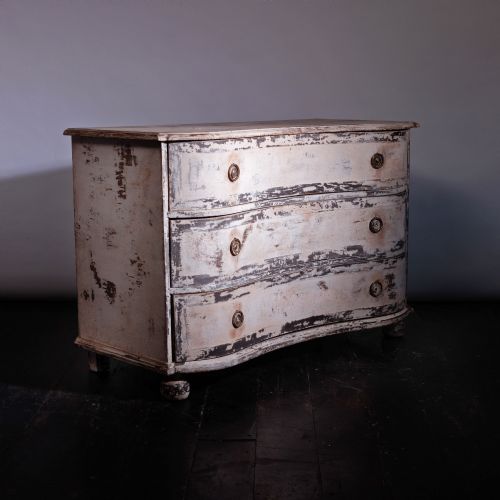
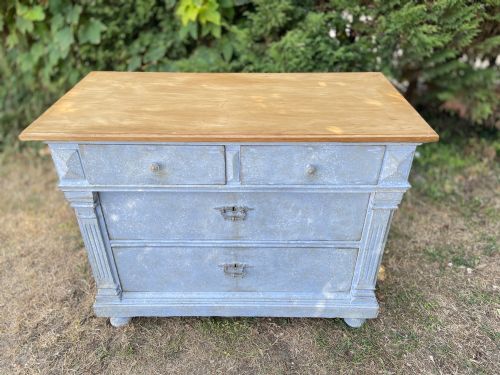
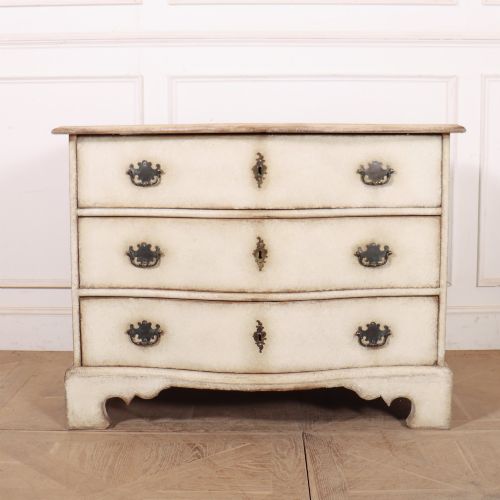
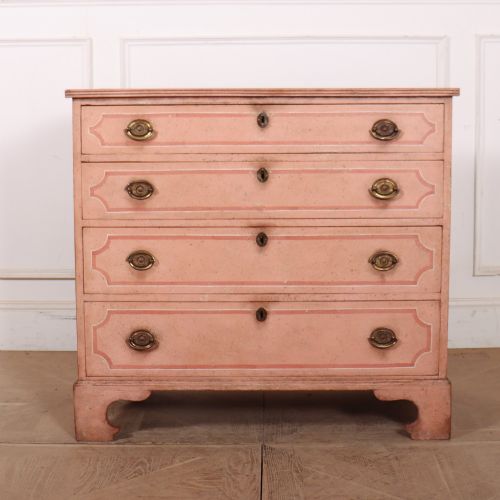
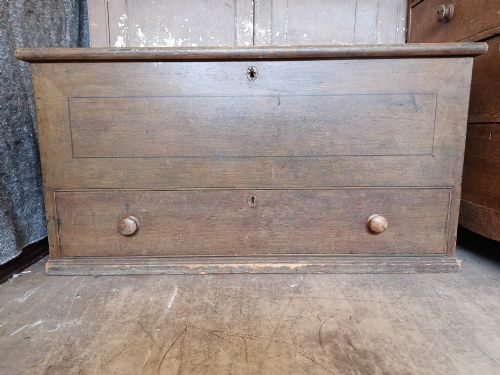
The most common examples on this page are nineteenth-century and Victorian pine or painted wood chests, often displaying original or later painted finishes. Forms range from simple two-over-three drawer layouts to sophisticated serpentine fronts, bowfronts, and provincial commodes with distinct regional silhouettes.
How they were made
Makers utilised solid timbers such as pine, oak, and mahogany, constructing carcasses with traditional joinery designed to withstand decades of daily domestic use. Surfaces received layers of paint, scumble finishes, or specialised treatments like faux marble tops and diamond-point carvings.
Hardware played an essential role in construction, with brass handles, key escutcheons, and iron fittings secured to drawers that operated in stacked configurations or divided sections. Paint finishes aged naturally through handling or were applied with decorative intent using techniques specific to English, French, and Scandinavian workshops.
Distressed Chest of Drawers Retail Price Guide 2026
Typical asking prices for distressed chest of drawers among the pieces listed under this phrase on Sellingantiques today, from the lower quarter to the upper quarter. They describe what is for sale here now, not the wider market.
Regional styles on this page include English Country, French Provincial, Gustavian, and Scandinavian Country forms.
What varies in quality
The integrity of the painted surface dictates much of the distinction between examples, separating genuine original patination from modern decorative treatments. Original scumble paint, early provincial brushwork, and untouched historical layers hold greater authority than later applied distressing.
Structural honesty and regional detail define the upper tier of pieces, where proportions remain balanced and historical hardware stays intact. Cabinet-making finesse, such as well-fitted drawer linings and cleanly executed serpentine fronts, separates standard utility furniture from sophisticated provincial or continental commodes.
Edwards and Roberts
The Distressed Chest of Drawers Glossary
- Scumble paint
- A translucent glaze layered over a lighter base coat and manipulated with combs or rags to simulate wood grain or create textured patterns.
- Bowfront
- A convex, curved front profile popular on nineteenth-century case furniture that softens the rectilinear appearance of a standard chest.
- Serpentine front
- A shaped drawer front featuring a convex central section flanked by concave curves, commonly found on eighteenth-century commodes.
- Commode
- A low chest of drawers or cabinet originating in France, typically possessing decorative painted surfaces and elegant proportions.
Distressed Chest of Drawers: Frequently Asked Questions
What is a distressed chest of drawers?
A distressed chest of drawers is a storage cabinet featuring aged, weathered, or painted wooden surfaces accumulated through decades of use. These pieces combine utilitarian drawer arrangements with decorative finishes characteristic of specific historical periods.
They originate from various European traditions, displaying regional traits in their timber choices, handles, and painted decoration. The term encompasses everything from simple pine bedroom chests to formal continental commodes.
How were these chests used historically?
These chests served primarily for storing clothing, linens, and personal possessions within domestic bedchambers and living spaces. Larger formats stood against walls in farmhouses and townhouses alike, while miniature versions functioned as apprentice pieces or desktop organizers.
Provincial examples often acted as the central storage hub in a room, combining practical capacity with decorative regional style. Their durable construction allowed them to move between generations within households.
How do I live with a painted chest?
Living with a painted chest involves integrating its aged surface and historical character into modern interior schemes. Their weathered finishes provide a tactile focal point in hallways, bedrooms, or living rooms without demanding overly formal surroundings.
Placement should account for natural light levels, which highlight the nuances of scumble paint and original brushstrokes. Standard dusting and gentle care preserve the historical surface without stripping away its accumulated patina.
How do I tell periods apart?
Distinguishing periods relies on observing construction methods, hardware styles, and overall proportions. Eighteenth-century pieces often feature hand-cut dovetails and specific regional shaping, such as serpentine fronts or elaborate commode bases.
Nineteenth-century and Victorian examples tend toward sturdier pine builds, standard drawer configurations, and distinct paint treatments like scumble or faux marble. Comparing structural details against documented regional characteristics clarifies the likely era of origin.