

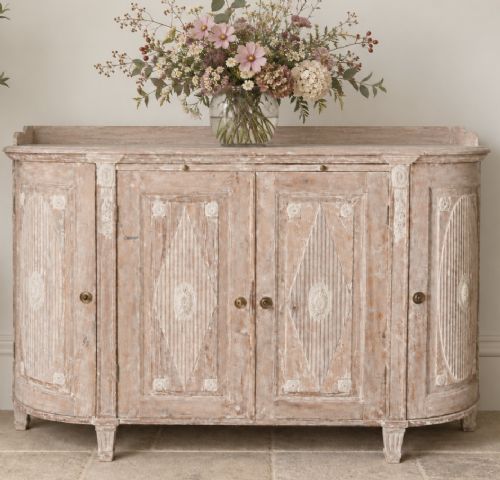
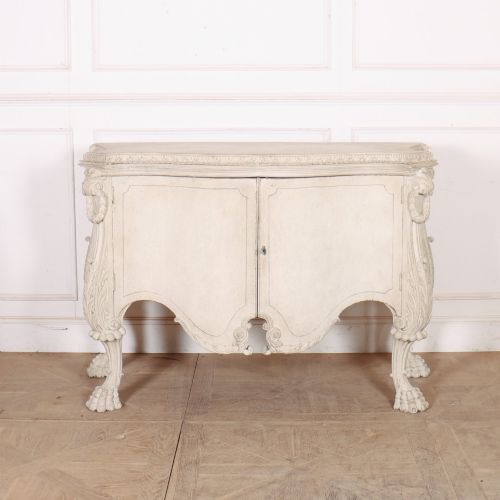
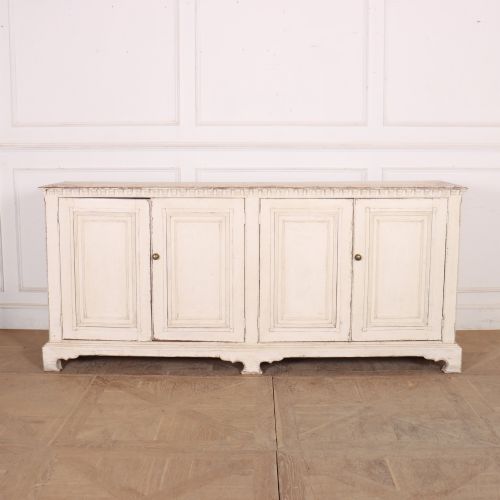
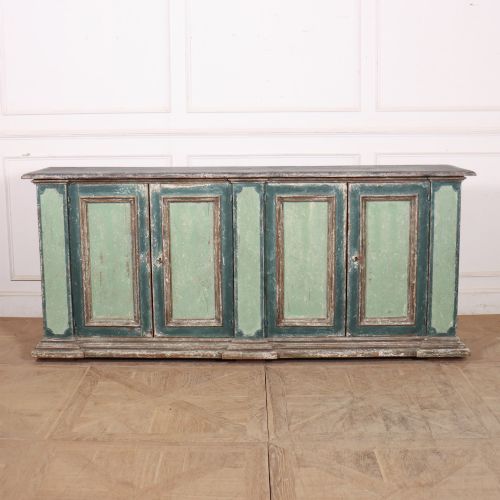


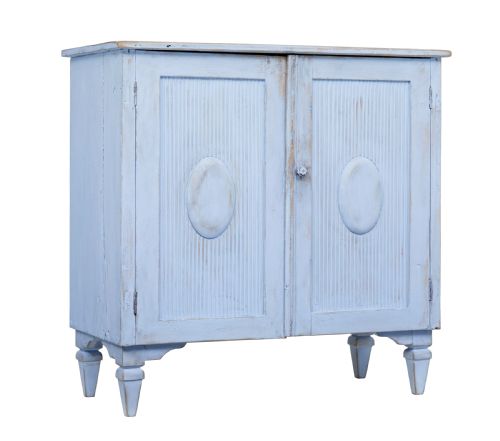


Distressed Buffet Cabinet
These distressed buffet cabinet pieces offer practical storage with weathered character, drawing on 18th and 19th-century country and provincial traditions.
Distressed Buffet Cabinet
A distressed buffet cabinet combines utility with age, taking the form of sideboards, enfilades, linen cupboards, and kitchen dresser bases. These items provide substantial storage while serving as a focal point in a dining room or kitchen.
The pieces listed here lean heavily towards 19th-century and 18th-century examples, with particular representation from Scandinavian country, French provincial, and Italian provincial traditions.
Buyers will most frequently encounter painted wood and pine constructions showing historical wear, alongside specific regional forms such as the buffet de corps or Swedish painted cupboards.
How they were made
Makers utilised solid timbers like pine and oak, building robust side cabinets and dressers designed for daily domestic service.
Surfaces were frequently finished with paint, often retaining original coats that have acquired natural distress and patina over the centuries.
Hardware elements in brass and iron were fitted to doors and drawers, providing functional utility that matches the utilitarian roots of these provincial pieces.
Distressed Buffet Cabinet Retail Price Guide 2026
Typical asking prices for distressed buffet cabinet among the pieces listed under this phrase on Sellingantiques today, from the lower quarter to the upper quarter. They describe what is for sale here now, not the wider market.
The selection includes pieces spanning the 18th century through to the late 19th century, constructed primarily in pine, oak, and painted wood.
What varies in quality
Quality rests in the integrity of the original timber and the authenticity of the surface finish, particularly where original paint layers survive intact without later heavy-handed restoration.
Proportion and regional detail distinguish finer provincial cabinetry, from the balanced lines of Italian neoclassical sideboards to the simpler vernacular of Scottish dresser bases.
The degree of structural preservation in drawers, cornices, and panelled doors dictates how well a piece maintains its character while remaining fit for modern use.
The Distressed Buffet Cabinet Glossary
- Buffet de corps
- A tall, two-part French dining room piece featuring a lower buffet section surmounted by an upper cabinet. This form provides substantial display and storage space.
- Enfilade
- A long sideboard or cabinet designed with a series of doors along the front, traditionally used in European dining rooms for serving and storage.
- Dresser base
- The lower section of a kitchen dresser, featuring cupboards and drawers beneath a flat top. These sturdy pieces function independently as sideboards.
- Gustavian
- The Swedish interpretation of French neoclassical design, characterised by lighter proportions, pale painted finishes, and restrained carved detail.
- Original paint
- A surface finish applied during the period of manufacture that has not been stripped or modernly repainted. Collectors prize this for its authentic historical texture.
Distressed Buffet Cabinet: Frequently Asked Questions
Where should I place a buffet cabinet?
These pieces suit dining rooms, kitchens, or large hallways where their storage capacity and surface area can be fully utilised for serving or display.
Ensure you measure the depth of the room carefully, as provincial sideboards and enfilades often have generous proportions that require adequate clearance.
How do I care for original painted wood?
Dust gently with a dry, soft cloth and avoid chemical cleaners that might lift or soften the historical paint layers.
Keep the timber away from direct heat sources and strong sunlight to prevent the dry, weathered paint from further cracking or fading.
How can I tell a 18th-century piece from a 19th-century one?
Earlier 18th-century pieces often display heavier timber construction, hand- forged ironwork, and joinery techniques typical of regional European workshops.
Nineteenth-century examples, such as those from the Gustavian or Victorian country traditions, may show lighter proportions and different regional moulding profiles.