

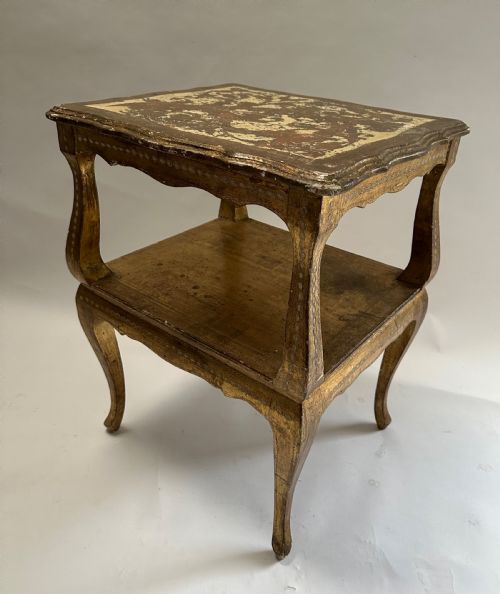
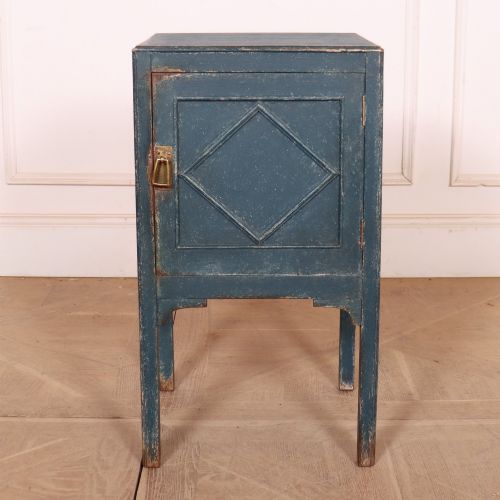
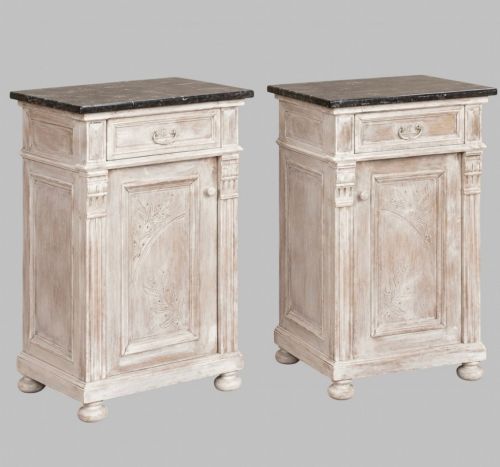
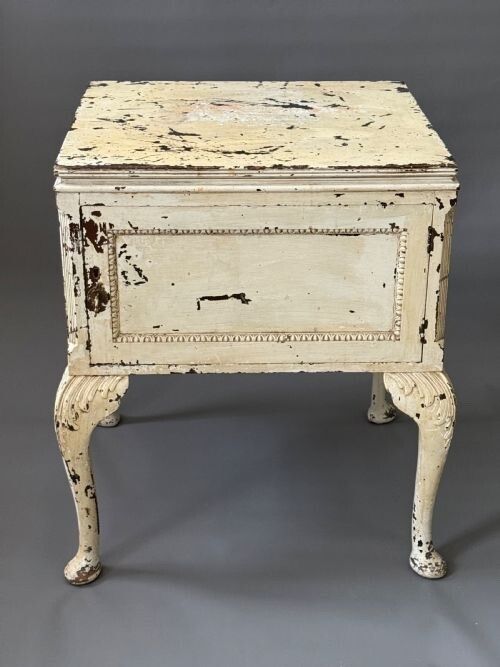
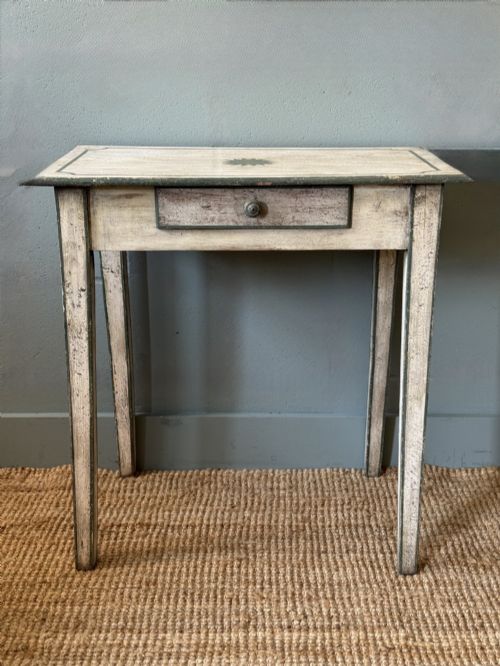
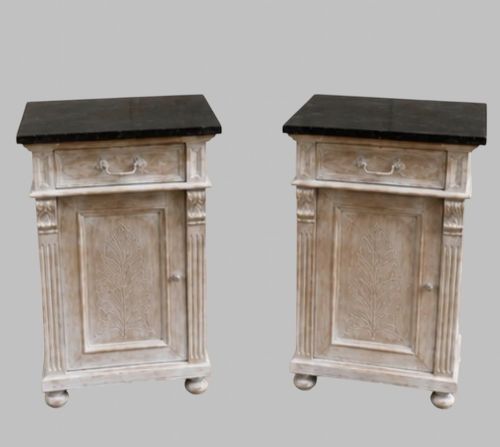
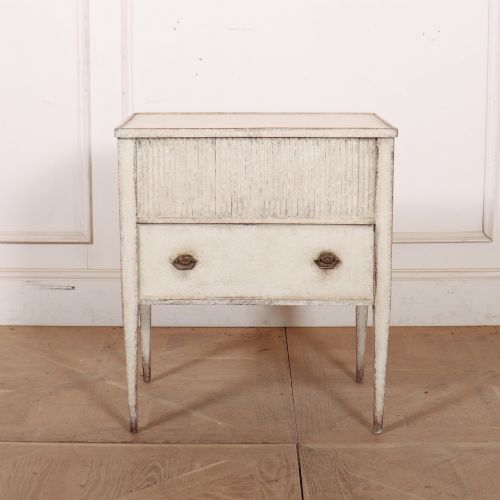


Distressed Bedside Tables
These distressed bedside tables bring worn character and practical bedside storage, grounded in centuries of painted and polished woodwork.
Distressed Bedside Tables
Distressed bedside tables cover a range of small storage pieces, including bedside cabinets, side tables, cupboards, and commodes. These items provide functional surfaces beside a bed while introducing aged surfaces and historic forms into a bedroom.
The pieces appearing on this page span from the eighteenth century through to the early twentieth century, taking in English, French, Dutch, Swedish, and Hungarian origins. You will frequently encounter painted pine, oak, and fruitwood, often showing the natural wear of decades or centuries of use.
Alongside standard bedside tables, the selection includes related items such as lamp tables, washstands, and small chests of drawers that serve the same compact footprint. These varied forms share a common heritage of domestic utility, softened by time and layered paint finishes.
How they were made
Cabinetmakers built these pieces using traditional timber construction, relying predominantly on pine, oak, mahogany, and fruitwood for the structural carcasses and drawers. Joinery methods matched the period, securing panels and frames to withstand daily domestic service.
Surfaces were frequently finished with multiple layers of paint, sometimes incorporating decorative details or faux marble tops to mimic more costly materials. Over time, these painted coats have worn down naturally, exposing the timber underneath through ordinary friction and age.
Distressed Bedside Tables Retail Price Guide 2026
Typical asking prices for distressed bedside tables among the pieces listed under this phrase on Sellingantiques today, from the lower quarter to the upper quarter. They describe what is for sale here now, not the wider market.
Listings feature pine, oak, and fruitwood pieces spanning the eighteenth to early twentieth centuries, incorporating English, French, Dutch, and Swedish regional styles.
What varies in quality
Quality rests in the integrity of the original construction and the authenticity of the surface finish. Pieces built with sound joinery and well-balanced proportions hold their structural strength despite the softening effects of age.
The character of the paint layer also distinguishes the range, where genuine historic wear and sympathetic patination carry more visual weight than uniform modern distressing. Superior examples retain their original hardware, internal fittings, and structural honesty without heavy modern intervention.
The Distressed Bedside Tables Glossary
- Commode
- A low cabinet or chest of drawers designed for bedroom use. In continental traditions, these pieces often feature elegant painted decoration or curved fronts.
- Washstand
- A piece of furniture originally constructed to hold a washbasin and pitcher before modern plumbing. Many examples now find a second life as bedside tables or lamp stands.
- Fruitwood
- Timber harvested from fruit-bearing trees such as pear, cherry, or apple, prized by cabinetmakers for its fine grain and warm tone. It is commonly found in continental European furniture.
- Faux marble
- A decorative paint technique intended to simulate the appearance of polished stone. Artisans applied this finish to timber surfaces to achieve a grander aesthetic at a smaller scale.
- Patina
- The deep surface sheen and softening of colour developed by wood and paint over decades of handling and exposure to light. It serves as a visual record of a piece's age.
Distressed Bedside Tables: Frequently Asked Questions
What is a distressed bedside table?
A distressed bedside table is a small antique storage piece, such as a cabinet, cupboard, or commode, featuring a worn or aged surface finish.
These items combine practical bedside utility with historical character, often displaying chipped paint or weathered wood from decades of use.
How were these tables used originally?
Bedside tables and small cabinets provided enclosed storage for personal items and a surface for a chamberstick or glass of water.
Related forms like washstands and side tables served adjacent domestic duties in bedrooms before being adapted for modern bedside placement.
How do I choose the right period?
Consider the overall aesthetic of your room, balancing eighteenth-century oak and pine with later nineteenth-century painted pieces or early twentieth-century examples.
Each era brings distinct proportions and finishes, from simple English country designs to decorative Swedish and French styles.
Are painted finishes original?
Many pieces retain historic layers of paint that have aged and worn down naturally through continuous domestic service over generations.
Examining the depth of the pigment and the nature of the underlying timber helps reveal the history of the surface.