

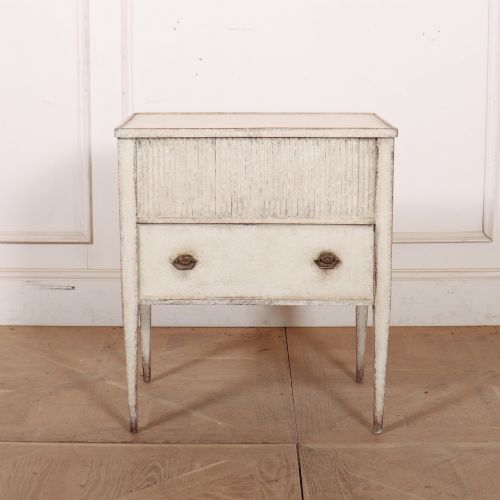


Distressed Bedside Cabinets
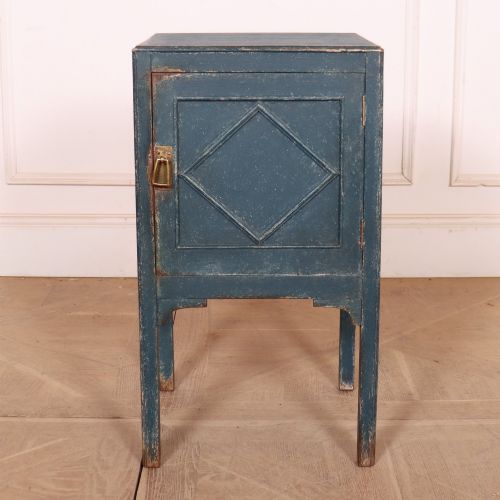
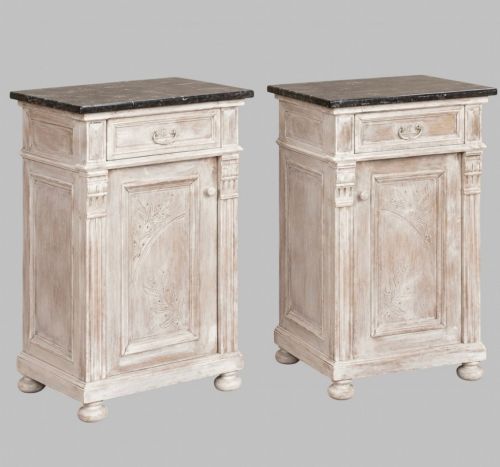
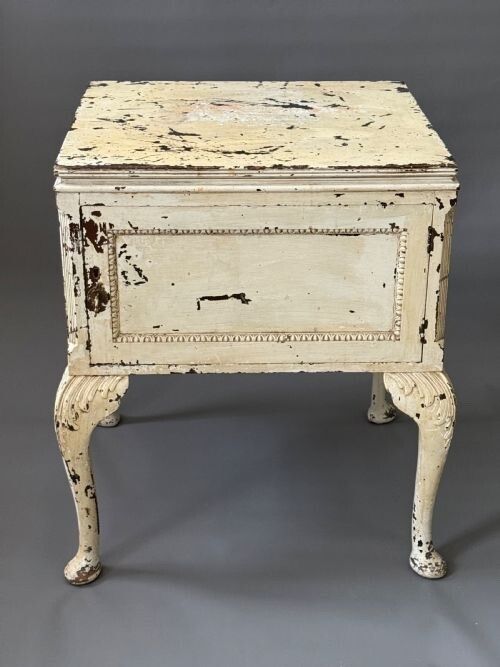
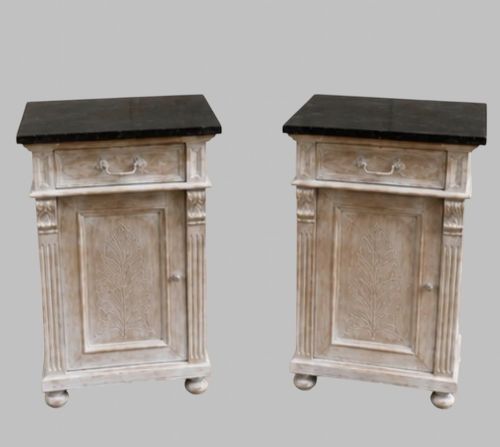
These distressed bedside cabinets bring character to a bedroom through aged surfaces and traditional timber construction.
Distressed Bedside Cabinets
Distressed bedside cabinets span the nineteenth century up to the nineteen-thirties, taking the form of small cupboards, commodes, and bedside tables. These pieces originate from various European traditions, including French, Dutch, and Swedish workshops.
The selection here relies heavily on painted wood finishes, often paired with pine, oak, or mahogany carcases. Buyers encounter single items and matching pairs designed to sit beside a bed.
Forms range from simple single-door cupboards to two-drawer chests and commodes. Each piece provides practical bedside storage while displaying the distinct proportions of its regional origin.
Materials and Construction
Cabinetmakers built these pieces using solid timber bodies of pine, oak, and mahogany, sometimes topped with marble. Brass hardware appears on handles and drawer pulls.
Surface decoration relies on layers of paint applied over timber, often showing wear that reveals underlying coats. Carved details and panelled doors reflect regional cabinetmaking styles from British, French, and Scandinavian workshops.
Distressed Bedside Cabinets Retail Price Guide 2026
Typical asking prices for distressed bedside cabinets among the pieces listed under this phrase on Sellingantiques today, from the lower quarter to the upper quarter. They describe what is for sale here now, not the wider market.
Listings feature items from the nineteenth century up to the nineteen-thirties, incorporating pine, mahogany, and marble materials.
Quality and Finish
The standard of timber preparation and the depth of the painted finish determine the character of each piece. Superior examples show harmonious wear across the painted surfaces rather than contrived distressing.
Construction details such as dovetailed drawer joints and solid backboards separate sturdier pieces from lighter alternatives. Regional variations in carving and proportions also influence the overall standard.
The Distressed Bedside Cabinets Glossary
- Commode
- A low cabinet fitted with drawers or doors, often used as a bedside chest in continental traditions. These pieces provide enclosed storage within a compact footprint.
- Chinoiserie
- European decorative style employing motifs inspired by traditional Chinese art and design. This ornamentation appears on painted cabinet doors and panels.
- Gustavian
- Swedish neoclassical style characterised by pale painted finishes and restrained classical proportions. These pieces date from the late eighteenth century onwards.
- Dovetail
- A traditional wood joint formed by interlocking wedge-shaped fingers, used to construct durable drawers and carcases. This method secures corners without relying entirely on metal fasteners.
Distressed Bedside Cabinets: Frequently Asked Questions
Are these cabinets sold in pairs?
Several listings feature matched pairs of bedside cabinets and commodes, while others are available as single pieces. Sourcing two identical items requires looking specifically for designated pairs from the same region.
Buyers needing symmetry should check titles for pair designations before making a selection.
What wood types are used?
Construction materials include pine, oak, and mahogany beneath painted surfaces. Some examples incorporate marble tops for added durability.
Timber choice often reflects the piece's geographic origin, with pine common in Scandinavian and Dutch examples.
How do I date these cabinets?
Dating relies on construction methods, timber types, and stylistic indicators pointing to the nineteenth or early twentieth century. Regional characteristics also help place a piece within a specific era.
Cabinet construction evolved from hand-cut joints towards machine-assisted production by the nineteen-thirties.
What is a commode in this context?
In these listings, a commode refers to a small chest of drawers or a low cabinet designed for storage. These units serve a similar function to bedside tables.
Continental European pieces frequently use this term for bedside storage furniture.