
Dining Room Buffet Cabinet
When you need a dining room buffet cabinet, you are looking at substantial storage furniture that anchors a room while hiding service ware.
Dining Room Buffet Cabinet
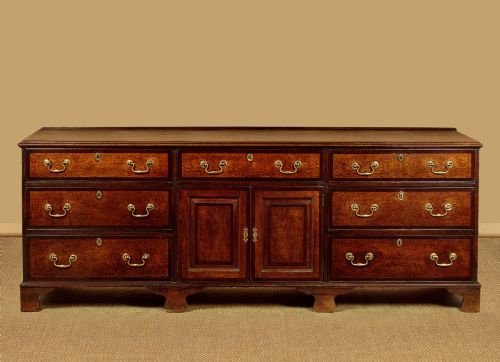
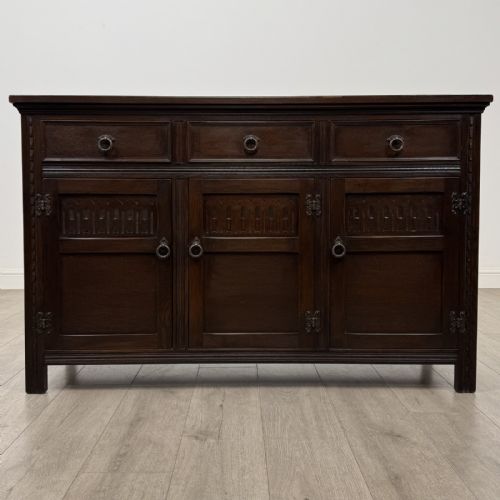
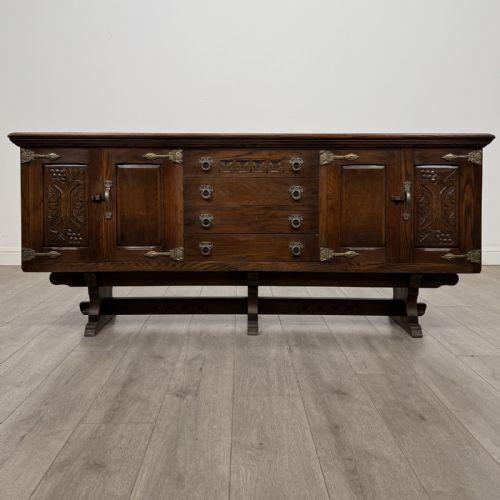
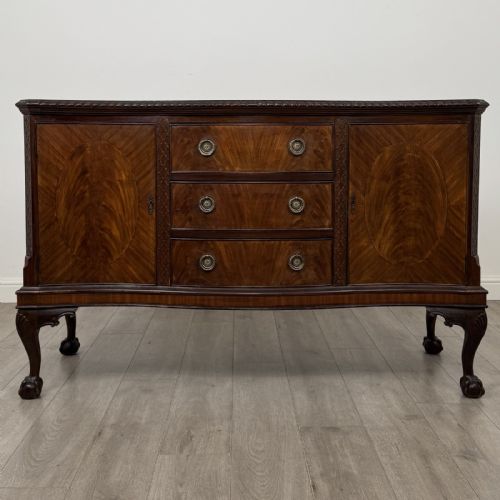
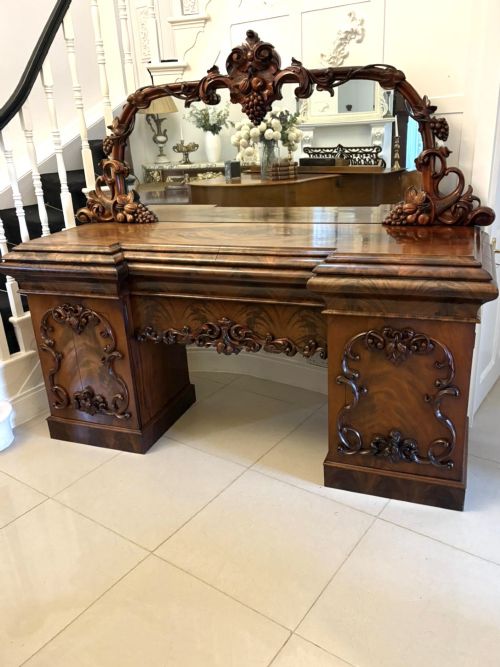
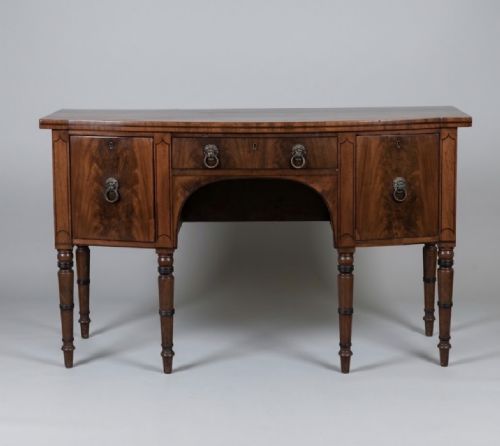
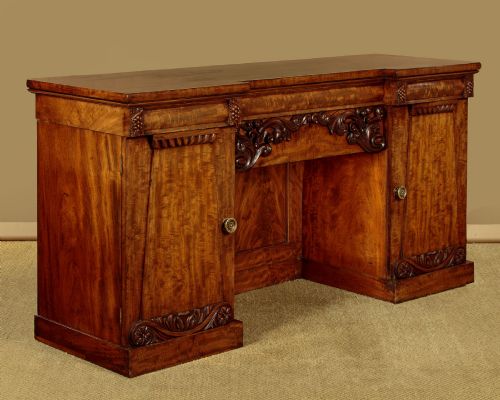
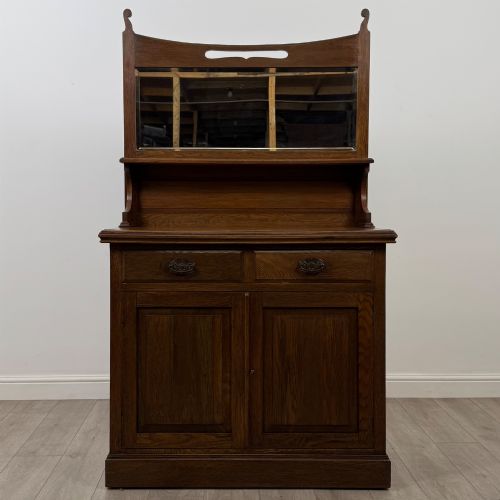
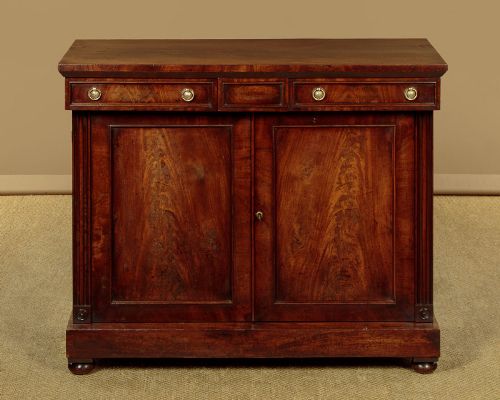
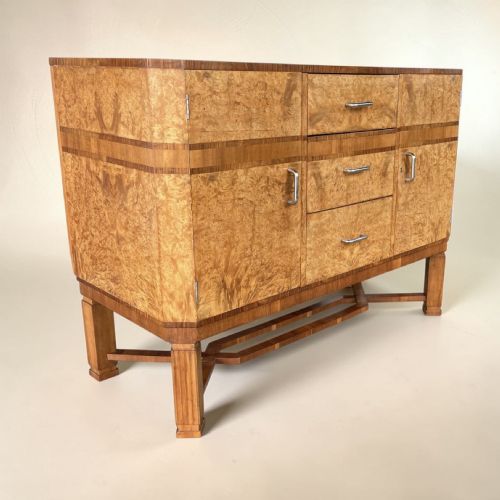
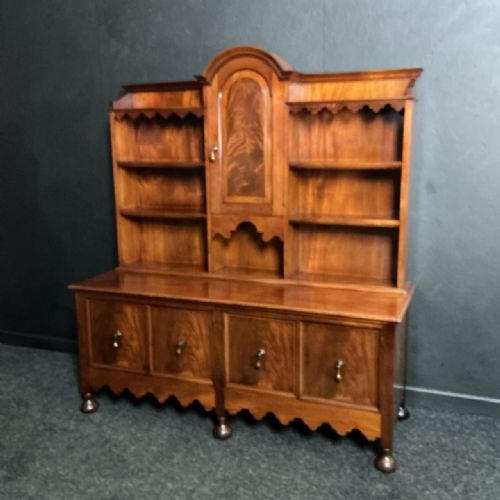
A dining room buffet cabinet spans several forms including sideboards, credenzas, chiffoniers, and dressers built to serve dining spaces. The pieces appearing here run from mid-nineteenth century Victorian designs through Edwardian iterations up to Art Deco works.
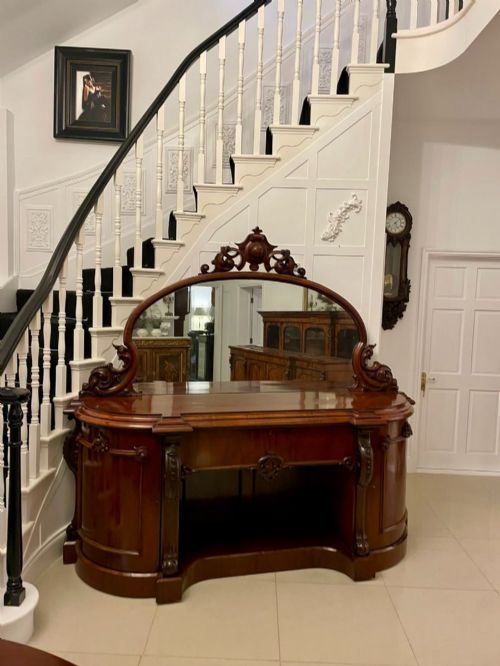
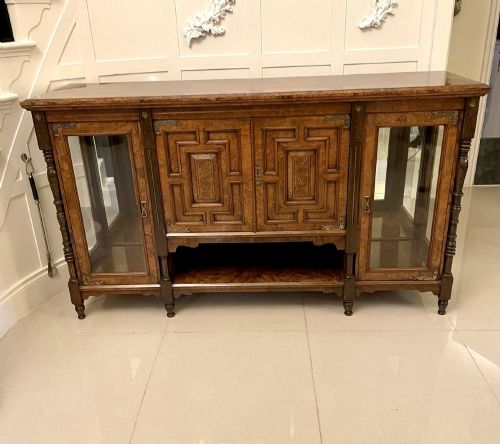
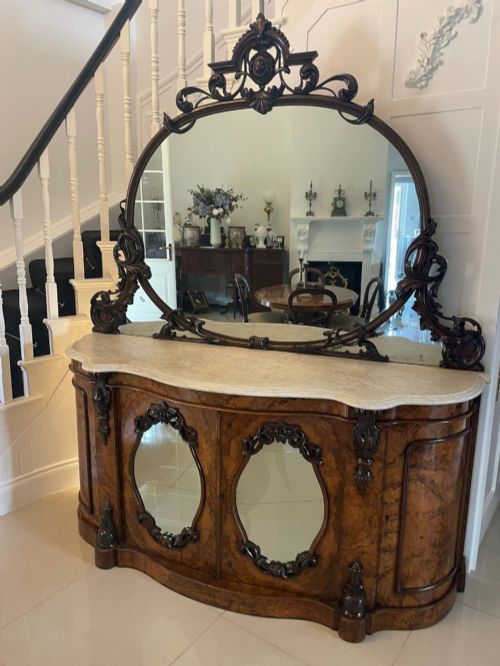
Mahogany and oak dominate the forms, supplemented by burr walnut and rosewood surfaces. Buyers encounter tall mirror backs on Victorian examples alongside low, clean lines on later twentieth-century pieces.
Makers utilised revival styles spanning Jacobean, Georgian, Regency, and Queen Anne alongside contemporary modernist lines. This variety allows buyers to match distinct interior periods without settling for modern reproductions.
How they were made
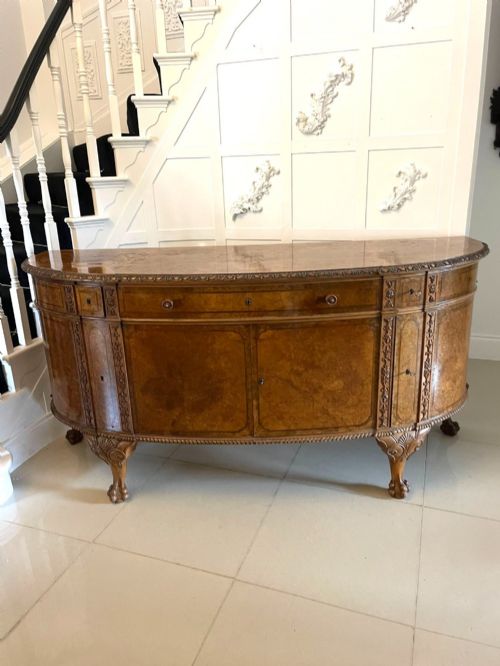
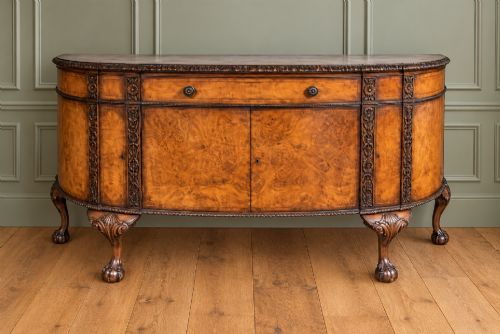
Cabinet makers built these carcasses using solid hardwoods like mahogany and oak, often applying figured mahogany, flame mahogany, or burr walnut veneers to primary display surfaces. These veneers created striking grain patterns across large drawer fronts and cabinet doors.
Secondary construction relied on traditional joinery methods, supplemented by brass hardware and occasional marble tops on mid-nineteenth century iterations. Carved details, marquetry inlays, and barley twist turnings demonstrate the manual labour invested in the surface decoration.
Listings feature periods spanning from the eighteen-fifties through the Art Deco era, constructed primarily in mahogany, oak, and burr walnut.
What varies in quality
Quality rests in the selection of timber veneers and the crispness of hand-carved ornamentation. Finer examples display symmetrical grain matching across panels and deeply carved architectural details rather than cast resin substitutes.
Internal construction reveals the maker's hand through dovetailed drawer boxes and solid timber drawer linings. Superior pieces retain original hardware, functioning locks, and integrated fittings like cutlery trays.
Hewetsons London·Maurice Adams·M D Miller and Sons Nottingham
The Dining Room Buffet Cabinet Glossary
- Burr walnut
- Wood taken from the wart or growth on a walnut tree, yielding intricate, swirling grain patterns. Cabinet makers prized this timber for high-status furniture facades.
- Chiffonier
- A compact sideboard featuring a lower cabinet enclosed by doors, often topped with a shelf and small mirror or backboard. It emerged in the nineteenth century as a smaller alternative to the grand dining room sideboard.
- Marquetry
- The art of applying pieces of veneer to a structure to form decorative patterns and pictures. Craftsmen combined different coloured woods to create geometric or floral scenes.
- Mirror back
- An upright wooden frame holding a glass mirror attached to the rear of a sideboard. This addition reflected candlelight and displayed decorative porcelain in nineteenth-century dining rooms.
- Bow front
- A convex curved cabinet front that swells outward in the centre. This shape softened the rigid geometry of dining room walls and required advanced woodworking skill.
Dining Room Buffet Cabinet: Frequently Asked Questions
What is a dining room buffet cabinet?
A dining room buffet cabinet functions as a large storage unit designed to hold tableware, linen, and serving dishes in a dining space. These pieces combine flat surface tops for food presentation with cupboards and drawers below.
They evolved through various nineteenth and twentieth-century design movements, shifting from heavy carved mahogany structures to streamlined Art Deco forms.
How do I date a wooden sideboard?
Dating relies on observing a combination of timber choices, construction techniques, and stylistic revival markers. Earlier nineteenth-century examples often feature solid mahogany or burr walnut veneers with hand-carved mirror backs.
Twentieth-century pieces introduce lighter oak finishes, geometric Art Deco lines, or barley twist turnings. Examining internal drawer construction and hardware also helps narrow the period.
What is the difference between a sideboard and a credenza?
Sideboards typically feature a combination of central drawers flanked by cupboards, standing directly on the floor on short legs or a plinth base. Credenzas historically lacked legs entirely, featuring low enclosed cabinet doors stretching across the entire width.
Victorian cabinet makers occasionally blurred these definitions, labelling mirrored server units with multiple interchangeable terms.
How do I care for antique mahogany furniture?
Maintain antique mahogany by keeping it away from direct sunlight and sudden temperature changes that cause wood to split. Dust regularly with a dry, soft cloth and avoid silicone-based sprays.
Apply quality beeswax sparingly to nourish the timber and preserve the natural sheen of the polished surface.