

Diamond Halo Engagement Ring
A diamond halo engagement ring centres a central stone within a bright border of smaller gems, offering enduring sparkle and presence.
Diamond Halo Engagement Ring
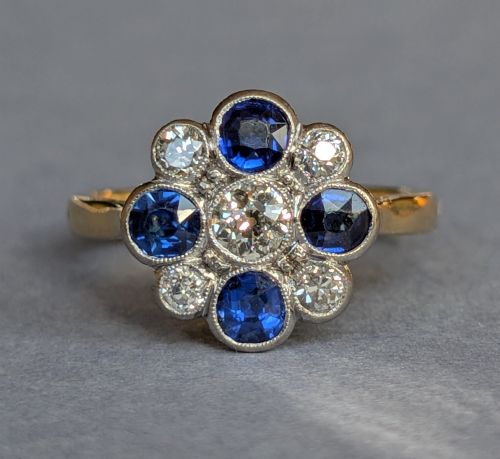
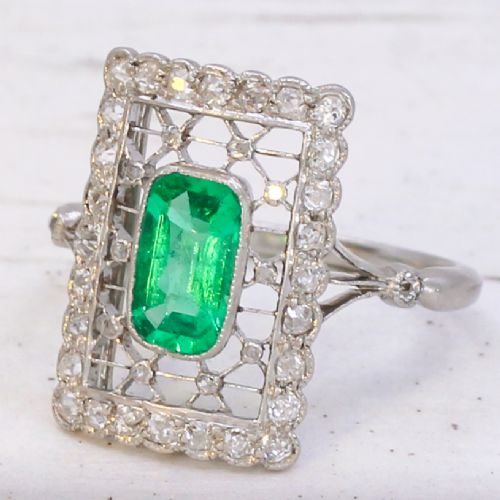
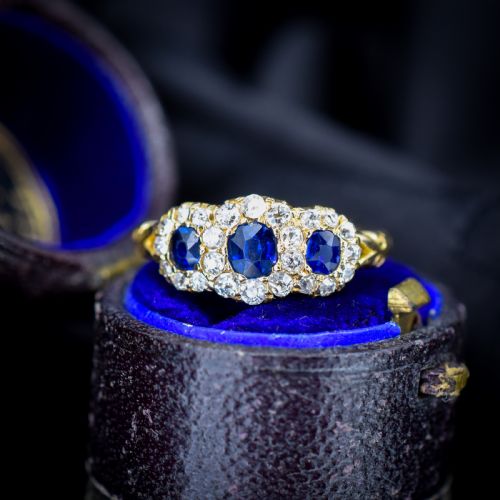
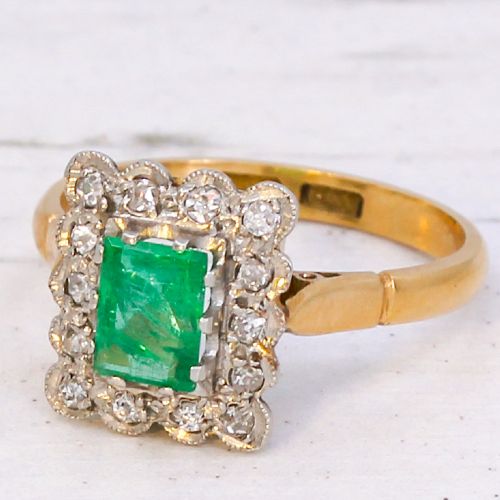
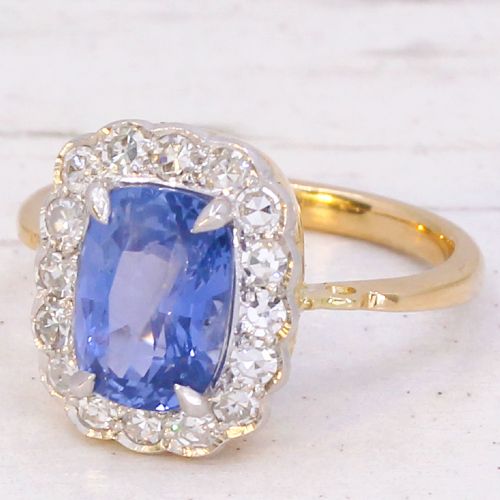
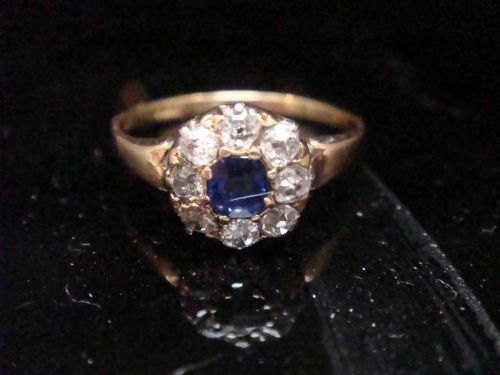
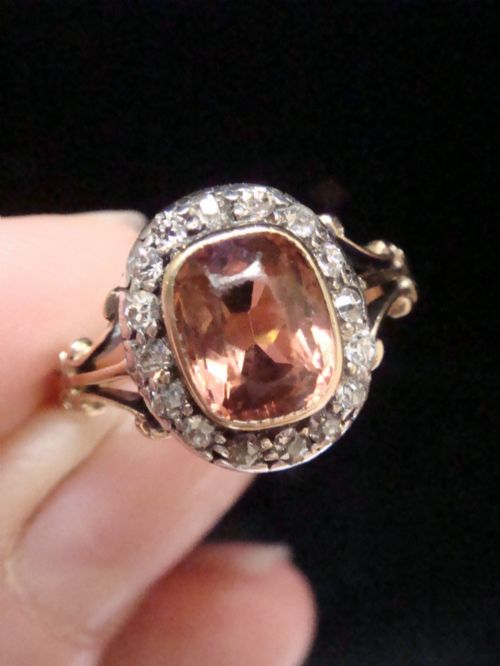
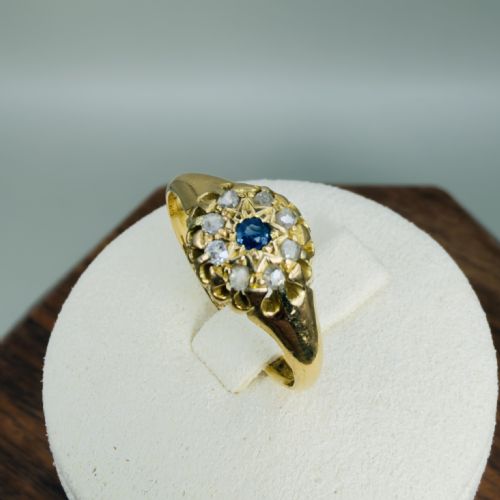
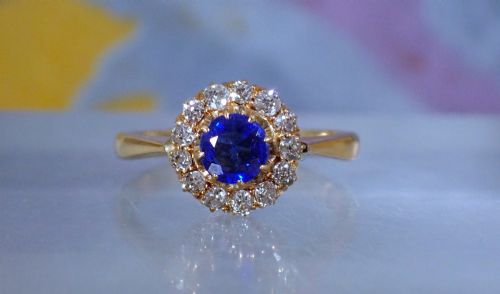
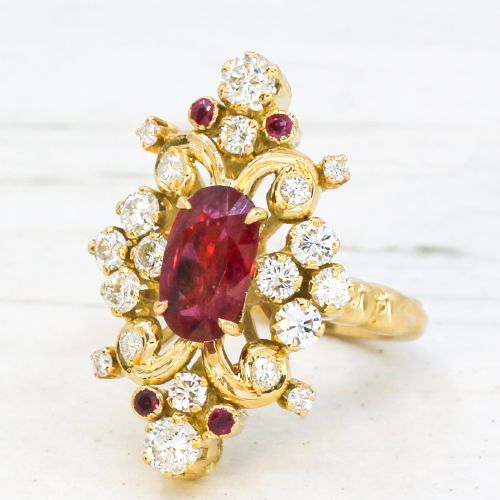
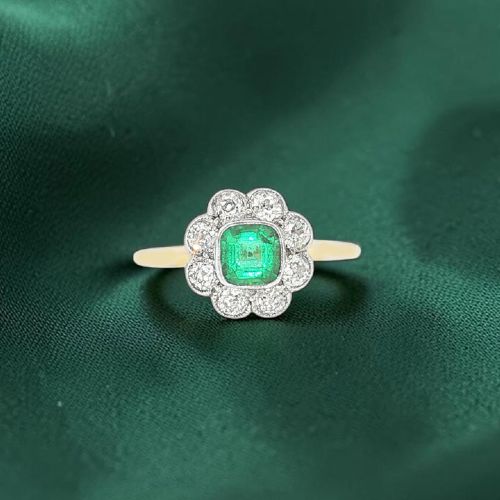
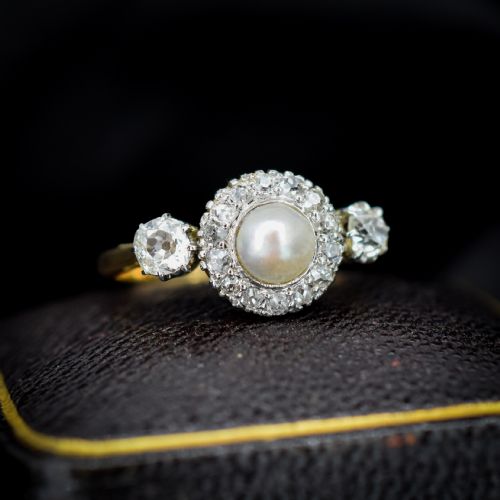
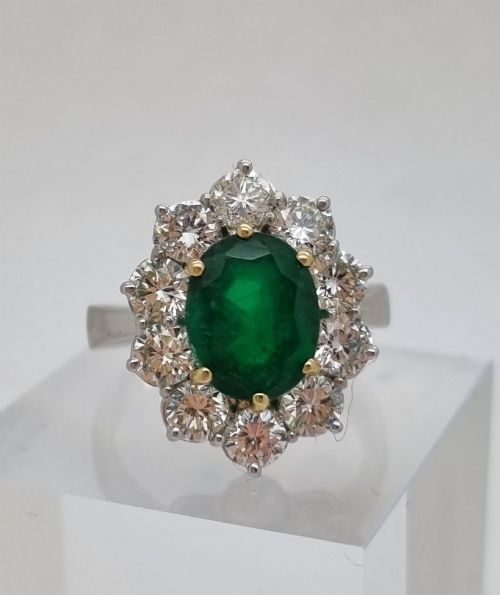
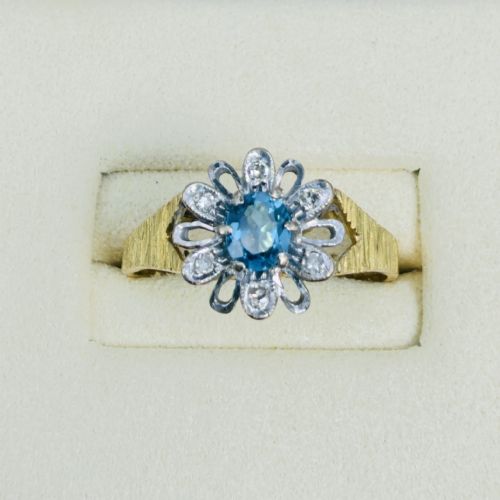
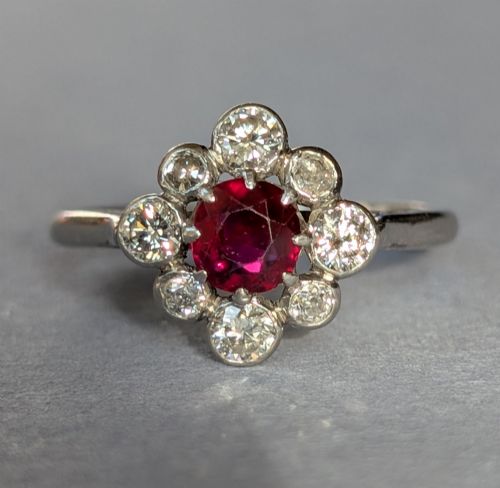
A diamond halo engagement ring centres a principal gemstone, such as a diamond, sapphire, emerald, ruby or pearl, surrounded by smaller accent diamonds. When exploring a diamond halo engagement ring on this page, the forms span floral clusters, daisy formations and geometric arrangements.
The selections encountered here originate from various periods including Victorian, Edwardian, Art Deco, Mid-Century and Vintage eras. Cluster rings and traditional fine jewellery designs dominate the selection, often taking circular, oval or navette shapes.
Makers and workshops utilise platinum, 18ct yellow gold, 18ct white gold and 14ct gold to set these stones. Each piece reflects the aesthetic preferences of its decade, from intricate Edwardian filigree to clean Art Deco geometry.
Materials and construction
Craftsmen set principal gemstones - including old mined cut diamonds, sapphires and emeralds - using platinum and 18ct gold alloys. The metalwork frequently incorporates intricate claw settings and secure bezel mounts to hold the surrounding border of accent stones.
Metals such as platinum provide a strong, bright white foundation that complements old cut diamonds and coloured gemstones. Yellow gold and white gold offer contrasting warm or neutral tones, shaped into traditional floral, daisy or cluster silhouettes.
Diamond Halo Engagement Ring Retail Price Guide 2026
Typical asking prices for diamond halo engagement ring among the pieces listed under this phrase on Sellingantiques today, from the lower quarter to the upper quarter. They describe what is for sale here now, not the wider market.
Listings feature platinum, yellow gold and white gold settings spanning the Victorian, Edwardian, Art Deco and Mid-Century eras.
Assessing quality and craftsmanship
The quality of a diamond halo engagement ring rests upon the clarity, colour and cut of the central gemstone alongside the matching uniformity of the surrounding accent diamonds. Natural origin and untreated statuses of coloured stones, such as unheated Burmese sapphires or Colombian emeralds, elevate the stature of a piece.
Fine craftsmanship shows in the precision of the stone setting, the secure alignment of the halo border and the durability of the platinum or 18ct gold shank over decades of wear.
Le Vian
The Diamond Halo Engagement Ring Glossary
- Halo
- A concentric ring of smaller pavé-set or bezel-set diamonds surrounding a larger central gemstone. This arrangement enhances the perceived size and brilliance of the principal stone.
- Cluster Ring
- A ring style featuring a central gemstone encircled by a group of smaller stones. This design creates a large visual impact on the hand.
- Old Mined Cut
- An antique diamond cut characterised by a high crown, small table and deep pavilion. These stones exhibit distinctive broad facets that catch candle or gas light.
- Navette
- A boat-shaped or marquise stone setting that tapers to points at either end. The elongated silhouette sits prominently across the finger.
Diamond Halo Engagement Ring: Frequently Asked Questions
How do I care for my ring?
Regular cleaning with warm soapy water and a soft brush helps maintain the brilliance of the diamonds and coloured gemstones. Avoid harsh chemical cleaners that might affect pearls or treated stones.
Periodic inspection by a professional jeweller ensures the platinum or gold claw settings remain secure around each stone.
Are coloured gemstones common in these rings?
Coloured gemstones frequently occupy the central position in these cluster designs. Sapphires, emeralds, rubies, tourmalines and aquamarines appear regularly alongside the surrounding diamond halo.
Many of these coloured stones originate from notable historical sources such as Burma, Ceylon and Colombia.
How can I tell the period of a ring?
Stylistic clues such as Edwardian garland motifs, Art Deco geometric lines or Victorian floral clusters indicate the era of manufacture. Hallmarks, metal types and gemstone cut styles provide further dating evidence.
Old mined cut diamonds and unheated sapphires point towards antique and vintage production periods rather than modern manufacturing.