




Diamond Half Eternity Ring
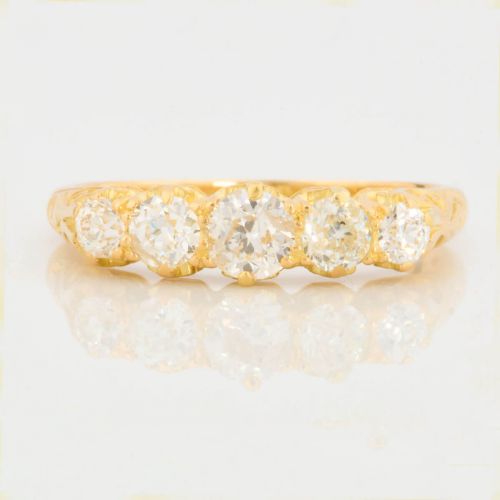
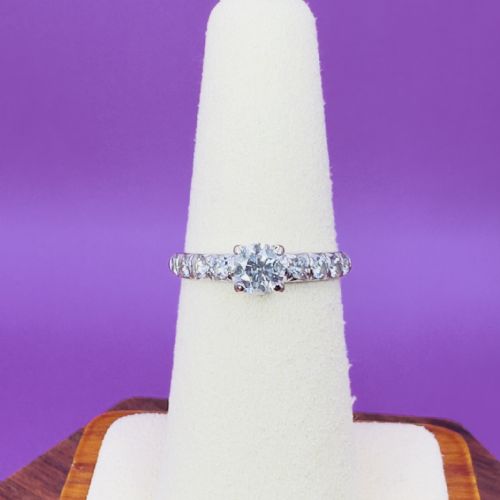
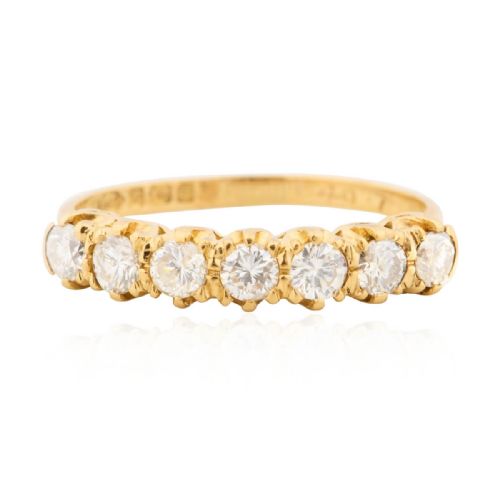
A diamond half eternity ring displays a line of stones across the band, offering a brilliant companion to an engagement or wedding ring.
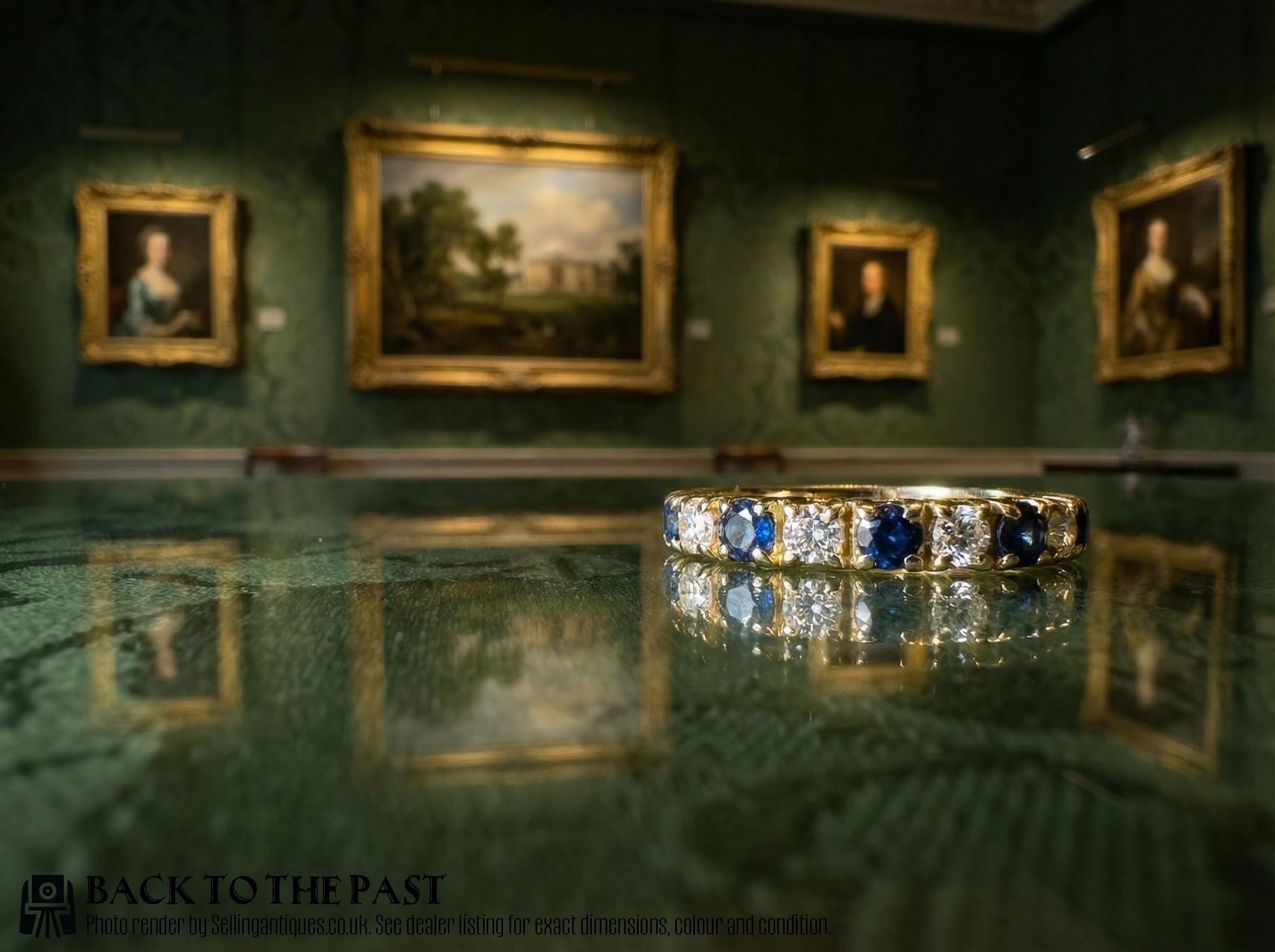
Diamond Half Eternity Ring
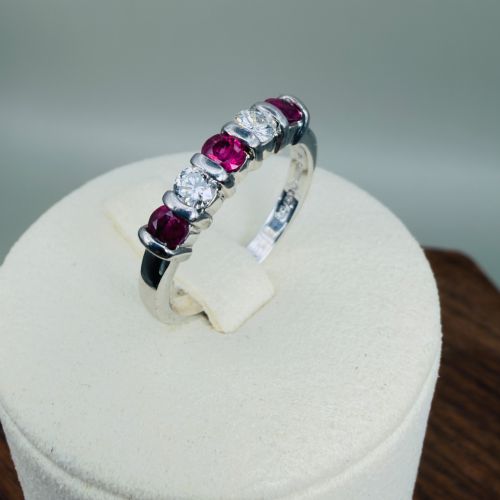
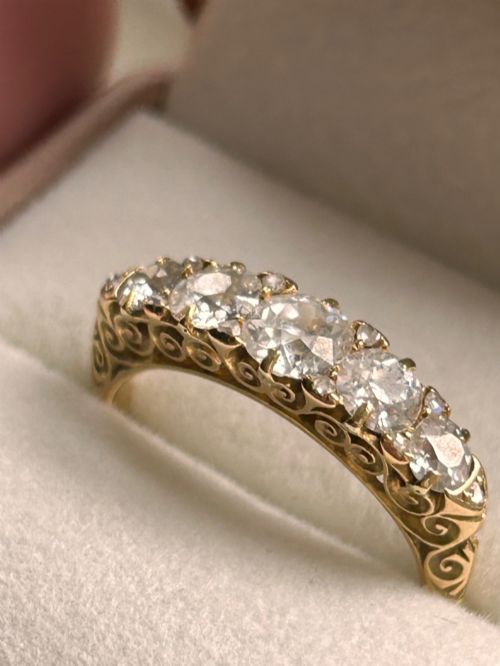
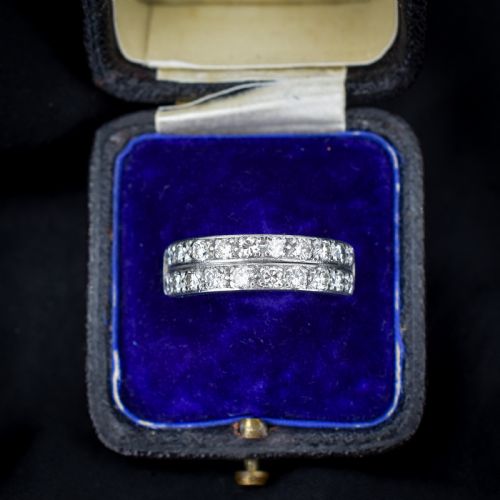
The selections available span multiple eras, with pieces originating from Victorian, Edwardian, Art Deco, and mid-century periods. Mid-century and later twentieth-century examples frequently feature clean rows of uniform stones, whereas earlier pieces often incorporate intricate geometric patterns or alternate diamonds with coloured gems.
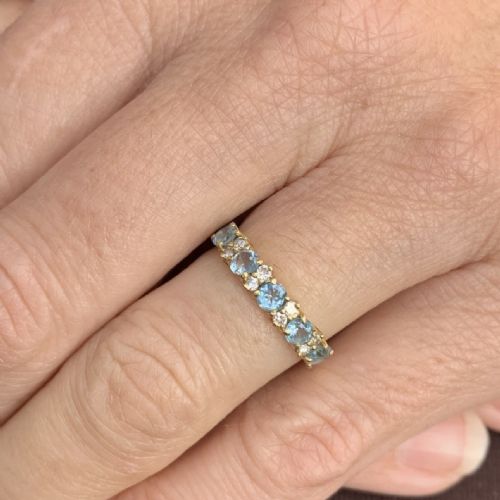
Yellow gold, white gold, and platinum serve as the primary precious metal foundations for these designs. Sapphires, rubies, and emeralds frequently accompany the diamonds, appearing alongside blue spinels and peridots in multi-stone configurations.
How they were made
Goldsmiths utilised yellow and white gold alongside durable platinum to construct the bands, frequently combining platinum settings with yellow gold shanks during the Art Deco period. Stones were secured using channel settings, gypsy settings, or individual claw arrangements that held the diamonds and coloured gems firmly in place.
Cut styles evolved across the periods represented, moving from older hand-cut stones such as old mine and transitional cuts to brighter modern brilliant and princess cuts. Jewelers arranged these stones in single rows, double rows, or crossover wave patterns to maximise the play of light across the finger.
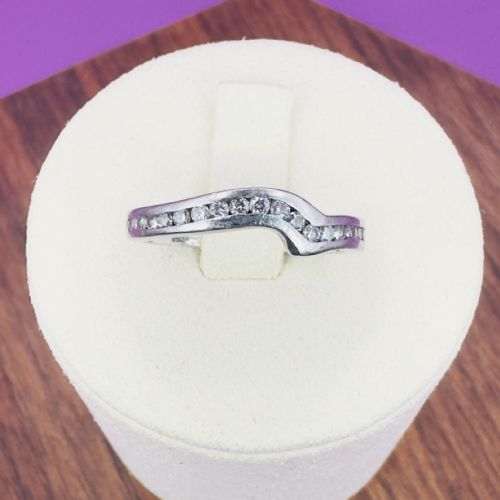
Some vintage rings feature clever wishbone curves designed purely to give a solitary diamond a comfortable place to rest.
What varies in quality
The calibre of craftsmanship shows in the precision of the stone setting and the structural integrity of the precious metal band. Superior examples maintain exact spacing and secure flush alignments between each gem, ensuring the metal work supports the stones without excessive bulk.
The visual harmony of the gems themselves dictates the upper tier of the range, where matched stone sizes, consistent colour grades, and lively cut proportions create an even sparkle. Lower tiers often display irregular stone spacing or mismatched inclusions that disrupt the clean line of the band.
Mappin and Webb
The Diamond Half Eternity Ring Glossary
- Half eternity
- A ring style featuring gemstones set along the upper portion of the band. This construction leaves the lower shank of plain metal, which facilitates future resizing.
- Old cut
- A vintage diamond cutting style characterised by a smaller table, higher crown, and open culet. These stones display a softer, chunkier scintillation under candlelight.
- Gypsy setting
- A mounting style where the gemstone is flush-set directly into the thick metal band. The metal is pushed up around the girdle of the stone to hold it securely.
- Wishbone ring
- A band shaped in a distinct curve or chevron angle. This silhouette nests neatly against standard solitaire engagement rings.
- Transitional cut
- A diamond cutting style bridging old mine cuts and modern round brilliants, produced primarily during the early twentieth century. It combines smaller facets with a rounder overall profile.
Diamond Half Eternity Ring: Frequently Asked Questions
Can I wear a diamond half eternity ring every day?
These rings suit daily wear thanks to the sturdy nature of gold and platinum bands combined with securely set diamonds. The half-band design protects the underside from constant impact against objects.
Over time, regular checks by a jeweller ensure the claws or channels remain tight and secure. Removing the ring during heavy manual tasks prevents unnecessary wear on the precious metal.
How do I wear this with my engagement ring?
A half eternity band pairs naturally beside a traditional engagement ring on the wedding finger. Straight bands sit flush against standard solitaires, while wishbone shapes accommodate low-set centre stones.
Matching the metal type, such as white gold with white gold, creates a cohesive suite. Mixing yellow and white metals offers a deliberate contrast favoured in vintage styling.
How do I tell an Art Deco ring from a mid-century piece?
Art Deco rings from the 1920s and 1930s frequently employ platinum settings with geometric patterns, calibre-cut coloured gems, and intricate milgrain detailing. They showcase a distinct architectural precision in the metalwork.
Mid-century examples from the 1950s and 1960s tend towards streamlined profiles, cleaner lines, and uniform stone arrangements. These later designs often utilise standard round brilliant or transitional cut diamonds in straightforward channel or claw settings.
What is the difference between a half and full eternity ring?
A half eternity ring places diamonds across the top visible half of the hoop, leaving the lower shank as plain metal. A full eternity ring carries gemstones in an unbroken circle around the entire finger.
The half design allows for straightforward sizing adjustments by a jeweller, whereas altering a full eternity ring remains extremely difficult. This makes half eternity versions practical for everyday comfort and long-term wearability.