




Round Cut Diamond Band
A round cut diamond band brings together the precision of brilliant faceting and enduring precious metals across eras from the Victorian period onwards.
Round Cut Diamond Band
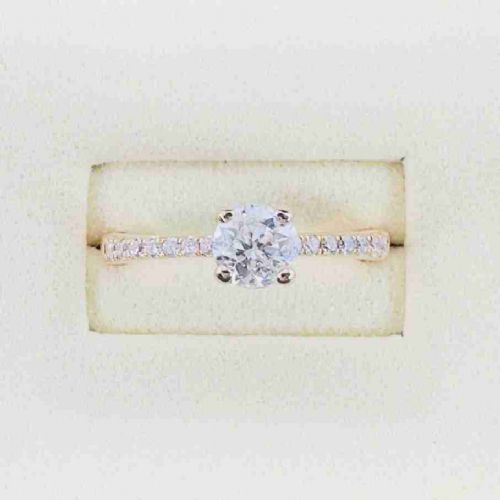
When you search for a round cut diamond band, you encounter jewellery spanning the Victorian, Art Deco, mid-century and later periods. The selection here ranges from delicate diamond half eternity rings to full diamond eternity designs and multi-stone configurations.
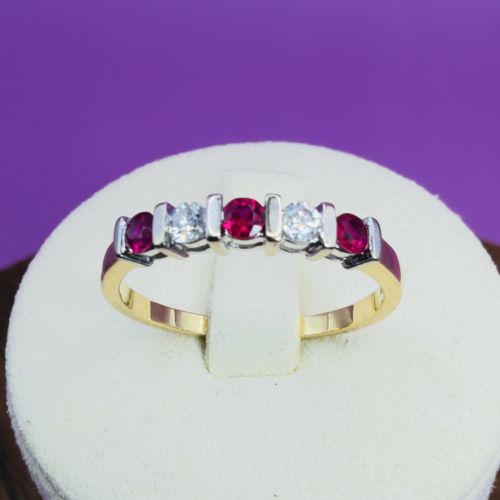
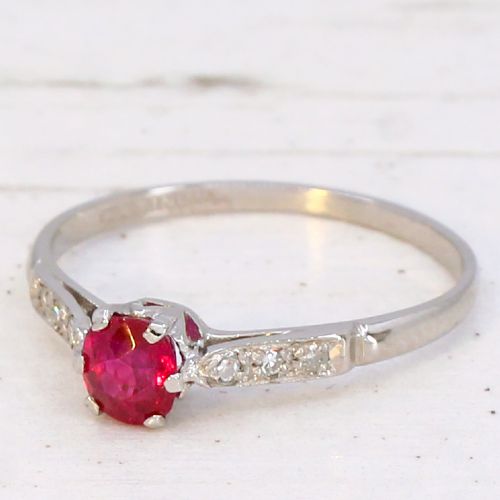
Most pieces utilise platinum or various purities of gold, frequently incorporating stones such as rubies and sapphires alongside the central diamonds. The forms include traditional engagement rings, solitaire settings, trilogy arrangements and complete bands.
Originating from workshops across decades like the 1930s, 1940s and 1950s, these rings display distinct stylistic shifts from geometric Art Deco mountings to flowing mid-century curves.
How these rings were constructed
The materials recorded in the evidence rely heavily on platinum and gold, specifically 18ct yellow gold, 18ct white gold, 18ct rose gold and 9ct gold. These durable metals provide the secure settings required for multiple small stones or prominent solitaire mountings.
Master jewellers employed specialised cutting techniques for the gems, featuring old European cuts, transitional cuts, brilliant cuts and rose cut diamond shoulders. These stones are mounted alongside occasional sapphires and rubies using channel, prong or bezel techniques.
Design styles span Victorian, Art Deco, mid-century, and classic twentieth-century aesthetics.
What defines the standard of a round cut diamond band
The calibre of a piece depends on the precision of the metalwork, particularly in platinum and gold alloy structures where the integrity of the setting secures each stone. Heavier gauge mountings and crisp, unblemished shared-prong or channel designs distinguish superior examples from simpler productions.
The character and matching of the diamonds also set pieces apart, where uniform clarity, colour and cut grade across a multi-stone half eternity or full eternity band create a harmonious visual rhythm. Expert gem selection for accompanying rubies or sapphires further elevates the overall execution.
The Round Cut Diamond Band Glossary
- Platinum
- A dense, durable and naturally white precious metal frequently utilised in Art Deco and mid-century jewellery for secure stone settings. It does not tarnish and develops a soft patina over decades of wear.
- Eternity ring
- A band set continuously with gemstones symbolising unending affection. Full versions feature stones encircling the entire finger, while half versions limit the gems to the upper arc.
- Trilogy ring
- A ring featuring three primary gemstones representing past, present and future. These commonly pair a larger central diamond with two smaller side stones on a gold or platinum band.
- Old European cut
- An early precursor to the modern brilliant cut diamond characterised by a small table, high crown and open culet. It is commonly found in Victorian and early twentieth-century pieces.
- Solitaire
- A mounting designed to showcase a single prominent gemstone without distraction. It allows light to enter the diamond from multiple angles to maximise brilliance.
Round Cut Diamond Band: Frequently Asked Questions
What periods do these rings come from?
The pieces span several decades, including Victorian examples from the late nineteenth century alongside Art Deco creations from the 1920s and 1930s. Mid-century designs from the 1940s, 1950s and 1960s are also heavily represented.
Later styles extend beyond the 1960s, offering a wide chronological scope for collectors and daily wearers alike.
How do half eternity and full eternity bands differ?
Half eternity rings feature gemstones set across the upper visible portion of the band, leaving the lower shank plain metal for easier resizing and comfort. Full eternity bands continue the uninterrupted line of diamonds all the way around the finger.
Both styles utilise durable settings in platinum or gold to hold the stones securely in place.
Are coloured gemstones common in these bands?
Yes, several designs incorporate vivid rubies and sapphires alongside the central or flanking diamonds. These coloured stones appear in multi-stone configurations and accented engagement rings.
They offer a distinct contrast to the colourless sparkle of the surrounding diamonds.
What metals are typically used for the bands?
The primary metals recorded are platinum and various forms of gold, including 18ct yellow gold, 18ct white gold, 18ct rose gold and 9ct gold. Platinum was particularly favoured during the Art Deco period for its strength and bright white finish.
Gold selections provide warmer tones that define different stylistic eras.