


Diamond Daisy Head Ring
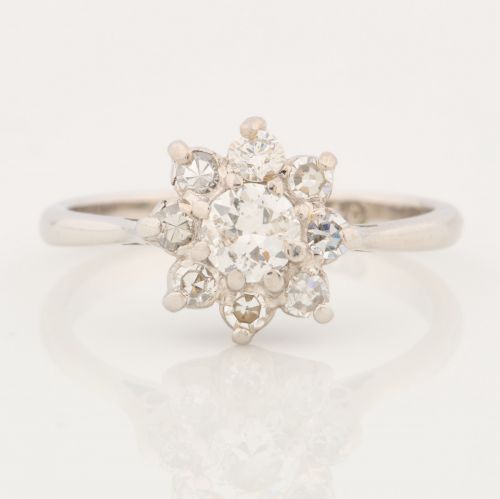
These diamond daisy head ring examples combine central cluster stones with surrounding petals, offering a classic floral motif that collectors prize for everyday wear.
Diamond Daisy Head Ring
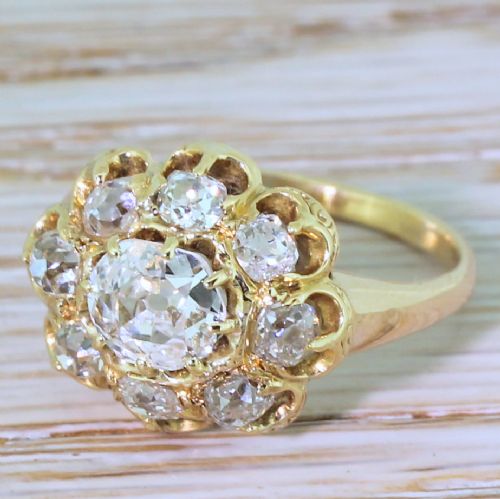
A diamond daisy head ring presents a circular cluster of stones arranged like a flower, where a central diamond sits surrounded by a ring of smaller gems. Buyers exploring this category encounter pieces spanning the Victorian, Edwardian, Art Deco, and mid-century periods, as well as general vintage designations.
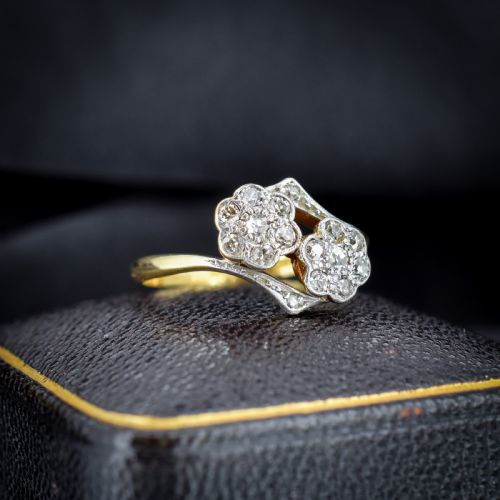
The configurations on this page range from straightforward gold bands to elaborate double twist shanks and platinum settings. Most examples utilise traditional 18ct yellow or white gold alongside platinum to securely hold the stones.
Formations mimic natural floral motifs closely, with some specimens incorporating alternative gems such as rubies or opals alongside the principal diamonds. These jewels function primarily as engagement rings or dress rings due to their low profile and secure cluster setting.
How They Were Made
Craftsmen built these clusters using durable precious metals, mounting brilliant, old European, or old cut diamonds into platinum or gold settings. Platinum integration became common in Edwardian pieces to create delicate, strong claw or bezel arrangements that maximised light entry into the stones.
Shanks were cast or hand-forged in 18ct yellow gold, 18ct white gold, or 9ct gold, occasionally featuring double twists or floral shoulders. Stone arrangements relied on precise hand-setting techniques to keep the surrounding petal diamonds flush and secure around the central table.
Some Victorian makers experimented with opal centres, turning floral diamond clusters into miniature technicolour garden party specimens.
What Varies in Quality
The calibre of a diamond daisy head ring depends heavily on the cut and matching of the stones, with old European and brilliant cuts dictating the sparkle of the cluster. Superior specimens display consistent colour and clarity across both the central gem and the surrounding petals.
Metalwork refinement also separates standard examples from exceptional ones, particularly where platinum claw work or intricate gold twist shanks are involved. Preservation of original settings and minimal wear to the mounting indicate superior longevity and careful past ownership.
The Diamond Daisy Head Ring Glossary
- Cluster Ring
- A ring featuring a central stone surrounded by a group of smaller gems. This configuration maximises visual impact and creates the signature floral silhouette.
- Platinum Set
- A technique where platinum is utilised specifically for the gemstone claw settings on a gold band. This method provides superior strength while maintaining a bright white backdrop for diamonds.
- Double Twist
- A shank design where the gold band splits and intertwines as it approaches the head. This adds architectural interest and texture to the profile of the ring.
Diamond Daisy Head Ring: Frequently Asked Questions
How do I wear a daisy ring daily?
These rings sit relatively flat on the hand, making them practical for everyday wear compared to high-set solitaire rings. Their robust cluster construction protects the girdle of the smaller stones.
Owners should still remove them during heavy manual tasks or swimming to protect the gold and platinum settings from unnecessary wear and chemical exposure.
Are these rings suitable for engagements?
Yes, cluster configurations have served as popular engagement rings for over a century, offering substantial finger coverage and historical charm. The floral motif provides a romantic alternative to single-stone designs.
Buyers often select Edwardian or Victorian examples specifically for their distinctive handcrafted character and romantic association.
How do I date a daisy ring?
Dating relies on observing metal combinations, shank styles, and the specific cut of the diamonds utilised in the cluster. Edwardian pieces often use platinum-topped gold with intricate piercing, while mid-century examples show simpler, heavier yellow gold profiles.
Hallmarks stamped inside the band also provide direct clues to the assay office and year of manufacture.
What maintenance do old cluster rings need?
Regular inspection of the claws holding the central and petal diamonds is essential to prevent stone loss over time. A jeweller can check if any settings have thinned through decades of wear.
Gentle cleaning with warm soapy water and a soft brush helps maintain the brilliance of the diamonds without damaging softer surrounding gems.