


Diamond Cluster Studs
Diamond cluster studs combine a central gem within a surrounding border of smaller stones, offering concentrated brilliance to the earlobe.
Diamond Cluster Studs
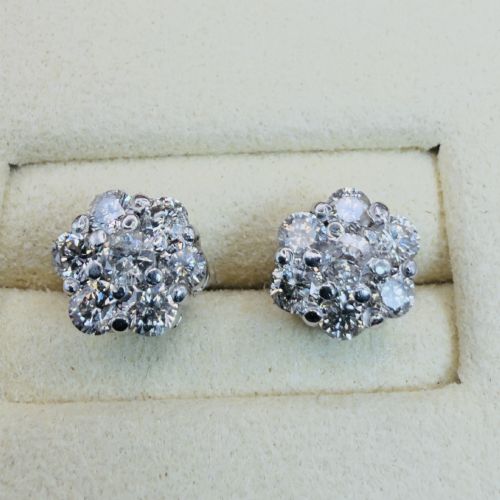
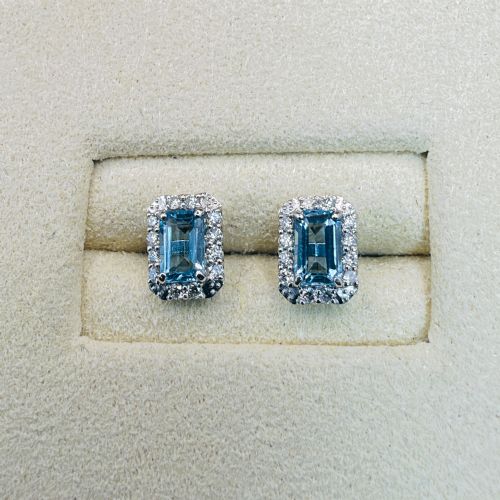
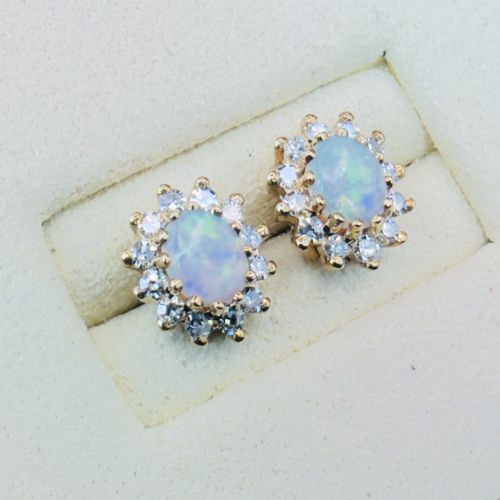
Diamond cluster studs comprise a central gemstone encircled by smaller diamonds, forming distinct geometric or floral arrangements on the ear.
The selections available range across Edwardian, Art Deco, Victorian, and mid-century modern periods, reflecting diverse historical design preferences.
Earrings in this category utilise varied precious mountings, including platinum, 18ct white gold, and yellow gold, often shaped as daisies or round rosettes.
How they were made
Craftsmen set diamonds alongside coloured stones such as sapphires, emeralds, aquamarines, and pearls into platinum or gold foundations.
Historical pieces utilise old cut, rose cut, or single cut diamonds, mounted closely to maximise light reflection within the cluster frame.
Some mid-century screw backs were engineered with extra twists just to ensure the floral cluster stayed upright.
What varies in quality
Quality rests upon the matching and colour of the central stone relative to the surrounding border of smaller diamonds.
The precision of the metalwork and the security of the settings dictate the structural integrity of each cluster.
The Diamond Cluster Studs Glossary
- Cluster
- An arrangement where a central gemstone is surrounded by a ring of smaller stones. This design creates the visual impact of a larger single ornament.
- Old Cut
- A historic diamond cutting style characterised by a smaller table and larger facets. These cuts distribute candlelight and gaslight effectively.
- Platinum
- A dense, durable white metal used for secure gemstone settings. Its strength allows for delicate prongs that hold small cluster stones firmly.
- Cabochon
- A gemstone shaped and polished with a smooth convex surface rather than faceted. This style is frequently utilised for opals and certain sapphires.
Diamond Cluster Studs: Frequently Asked Questions
What periods do these earrings represent?
The pieces span from the late Victorian and Edwardian eras through the Art Deco period and into mid-century modern designs.
Each era brings distinct mounting styles and gemstone cuts to the cluster format.
Which gemstones appear alongside diamonds?
Sapphires, emeralds, aquamarines, garnets, and pearls frequently form the central focus of these cluster designs.
Coloured stones are encircled by white diamonds to create strong visual contrast.
How are these earrings secured?
Mountings include traditional posts with butterfly backs, screw backs, and clip-on mechanisms.
Fastening types often correspond to the period and weight of the specific pair.
What is a daisy design?
A floral cluster configuration where rounded stones surround a central gem to resemble flower petals.
This symmetrical layout was particularly popular during the Edwardian and mid-century periods.