

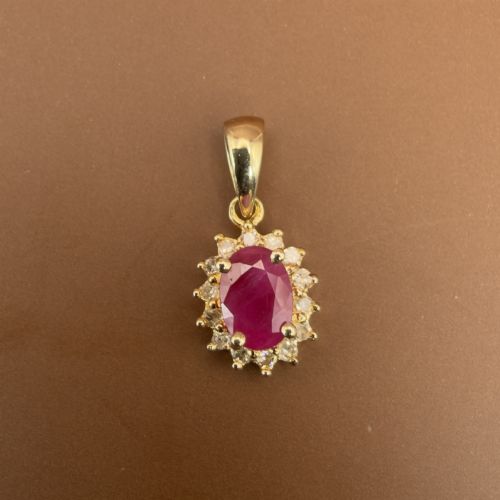

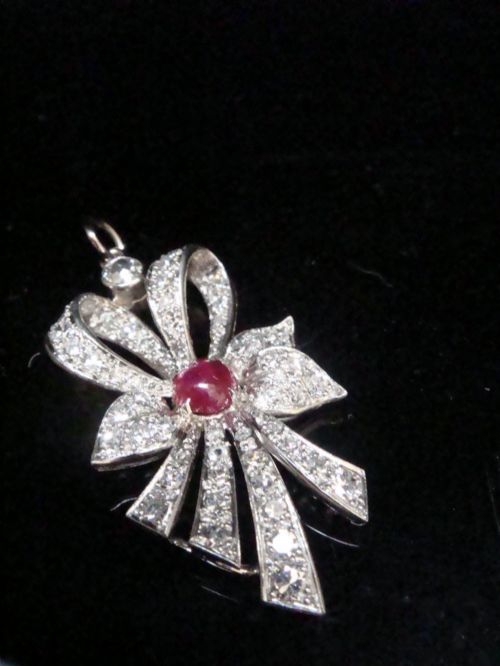


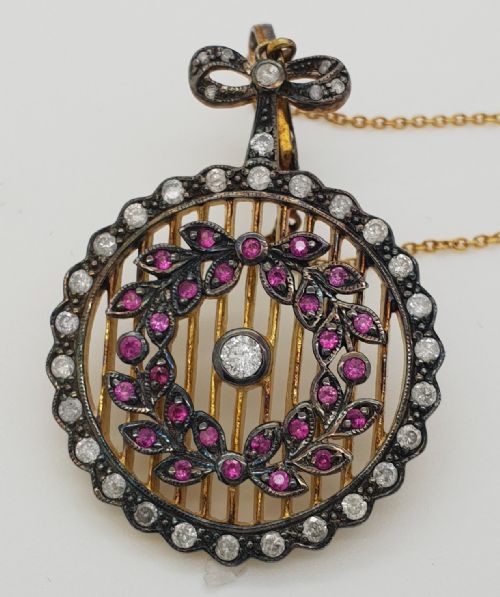


Diamond and Ruby Pendant
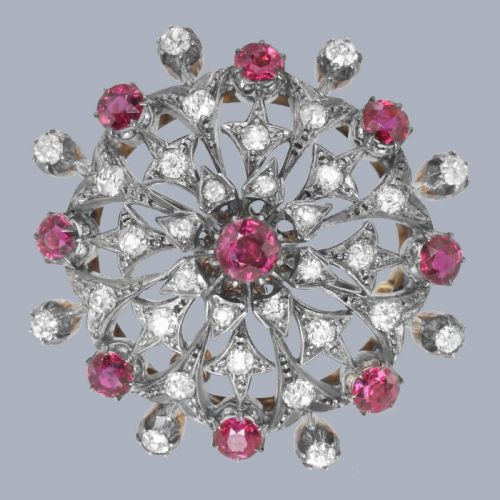
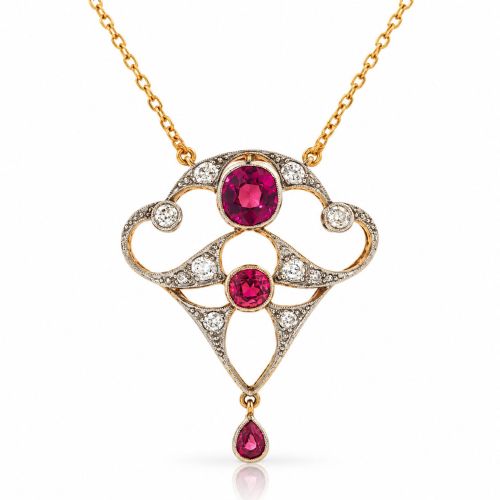
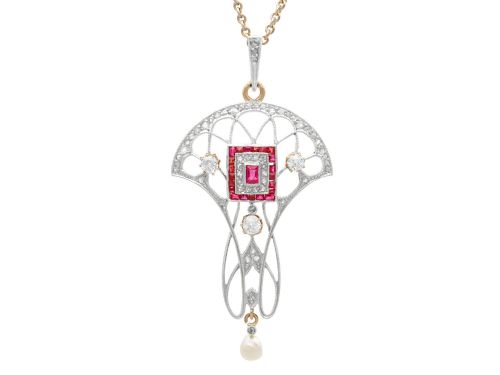
A diamond and ruby pendant brings together the deep red fire of corundum and the bright flash of diamonds, spanning eras from the Victorian years through to the mid-century.
Diamond and Ruby Pendant
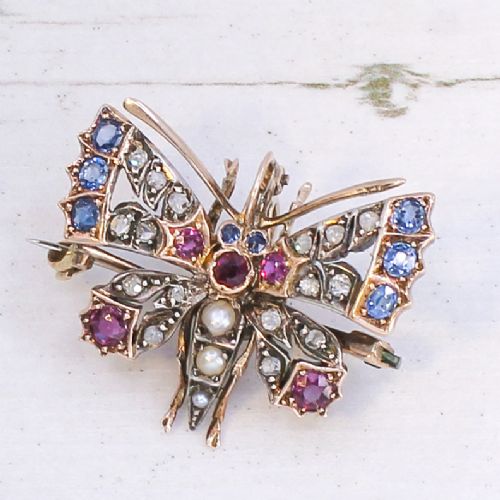
A diamond and ruby pendant combines precious stones in forms ranging from simple cluster settings to elaborate bow, floral, and animal designs. These items often double as brooches, offering versatile ways to wear period jewellery.
The pieces appearing here stretch from the late nineteenth century into the twentieth century, taking in Victorian, Edwardian, and mid-century retro styles. Gold, silver, and platinum form the mounts for stones that include natural rubies, pearls, and opals alongside diamonds.
How they were made
Goldsmiths and jewellers mounted diamonds and rubies in combinations of yellow gold, 18ct gold, silver gilt, and platinum. Early pieces often utilise silver on top of gold settings to catch the light on diamonds, whilst later twentieth-century work relies on solid yellow gold and platinum mounts.
Constructing these pendants required detailed work in stone setting, from cluster arrangements to complex hinged mounts that allowed dual use as brooches. Natural rubies and rose cut or oval cut diamonds are secured within claw, bezel, or pave configurations depending on the period.
Diamond and Ruby Pendant Retail Price Guide 2026
Typical asking prices for diamond and ruby pendant among the pieces listed under this phrase on Sellingantiques today, from the lower quarter to the upper quarter. They describe what is for sale here now, not the wider market.
Among the creatures immortalised in these jewels are snakes, monkeys, birds on branches, and butterflies.
What varies in quality
The distinction between ordinary and exceptional pieces lies in the origin and treatment of the stones, particularly when natural untreated rubies or Burmese gems are present. Matching the depth of colour in the rubies with the brilliance of the diamonds dictates the visual harmony of the piece.
Handwork in the metal mount distinguishes finer workshops, visible in the delicacy of wirework, the security of the settings, and the preservation of original conversions like detachable brooch fittings. Heavier casting and precise stone alignment separate high-end traditional jewellery from standard commercial output.
The Diamond and Ruby Pendant Glossary
- Cluster pendant
- A central gemstone surrounded by a ring of smaller stones, typically featuring a ruby centre with a diamond border.
- Rose cut
- An early diamond cut characterised by a domed top with triangular facets and a flat base, common in Victorian work.
- Silver gilt
- Sterling silver covered with a thin layer of gold, often utilised in Edwardian mounts to provide a warm tone alongside white metal.
- Pendant brooch
- A dual-purpose item fitted with both a suspension loop and a pin, allowing it to hang from a chain or fasten to clothing.
- Cabochon
- A gemstone shaped and polished with a smooth convex surface rather than faceted, frequently seen on older rubies and opals.
Diamond and Ruby Pendant: Frequently Asked Questions
Can I wear a pendant brooch on a chain?
Most pieces designed for dual use include a hidden or fold-down loop alongside the brooch pin, allowing them to hang securely from a necklace.
Heavier items may require a sturdy chain to support the weight of the gold and the stones properly.
How do I care for antique ruby and diamond jewellery?
Clean these pieces gently with a soft brush and warm soapy water, avoiding harsh ultrasonic cleaners that can damage softer stones like pearls or opals.
Store them separately in lined boxes to prevent the harder diamonds from scratching the gold or the rubies.
What is the difference between Victorian and Edwardian settings?
Victorian pieces often employ yellow gold with heavier mountings, sometimes combining silver on the face to enhance the sparkle of rose cut diamonds.
Edwardian jewellery moves towards lighter platinum settings and delicate openwork like bows and garlands, reflecting a preference for airier designs.
Are all rubies in these pieces natural?
The selections span various periods where natural stones are standard, and certain pieces are accompanied by gem reports confirming untreated origins.
Checking individual listings provides specific details on whether the rubies originate from notable sources like Burma.