




Ruby Necklace Charm
A ruby necklace charm brings together small gemstone pendants and charms to wear at the neck, offering rich colour and historic character.
Ruby Necklace Charm
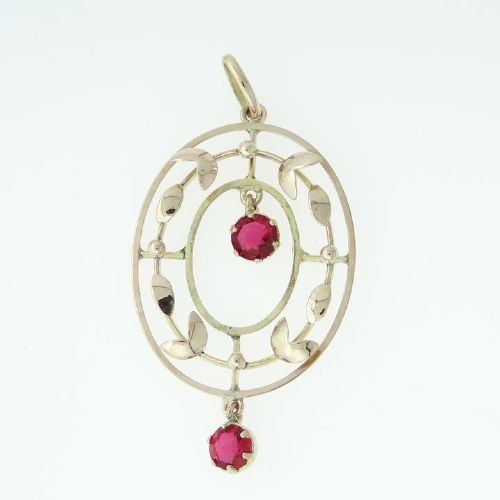
A ruby necklace charm comprises small pendants and pendant charms featuring rubies, appearing in styles from the Victorian and Edwardian periods as well as the nineteen fifties.
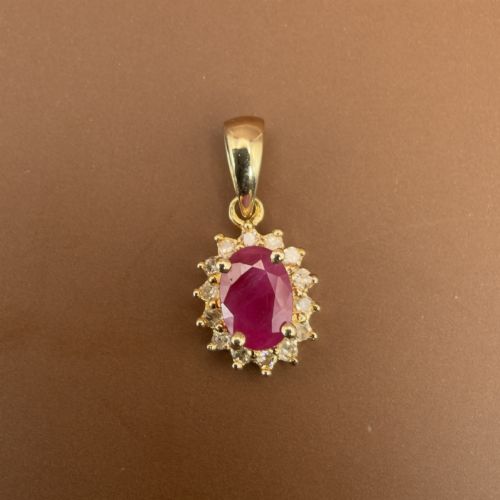
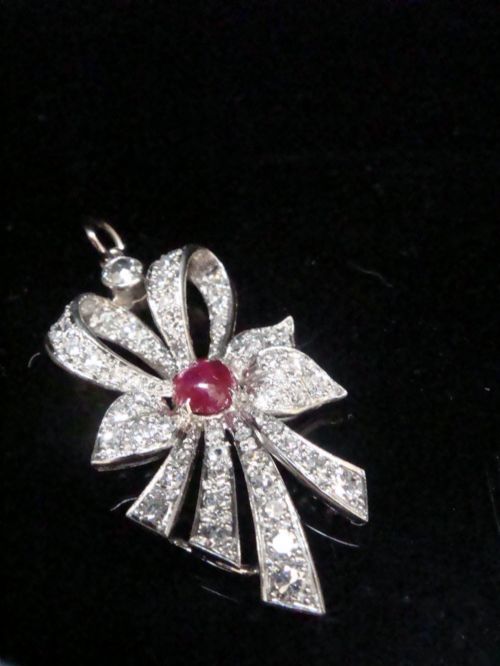
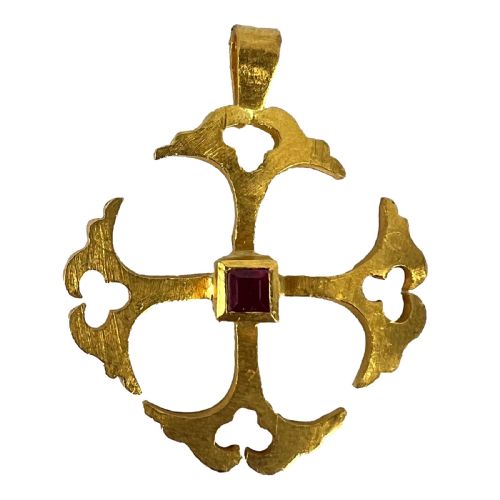
Buyers searching for a ruby necklace charm encounter cluster designs, bow motifs, cross pendants, and snake forms set in yellow gold, rose gold, platinum, and eighteen karat gold.
Many examples combine rubies with diamonds, pearls, sapphires, or aquamarines, functioning as both pendants and charms worn on chains.
How they were made
Craftsmen built these pieces using yellow gold, rose gold, platinum, and eighteen karat gold as the primary mounting metals for the gemstones.
The construction incorporates claw settings and cluster arrangements to secure rubies alongside diamonds, white sapphires, pearls, and aquamarines.
One exceptional piece takes the form of a double-sided flower vase carved from sapphire, ruby, and emerald in eighteen karat yellow gold.
What varies in quality
Quality rests in the complexity of the design, such as carved stones, double-sided floral motifs, or detailed platinum bow work.
The choice of accompanying materials, from diamonds and pearls to simple gold settings, determines the distinction between standard and elaborate examples.
The Ruby Necklace Charm Glossary
- Cluster pendant
- A jewellery piece featuring a central stone surrounded by a ring of smaller gemstones.
- Bow pendant
- A pendant shaped to resemble a tied ribbon, popular in Edwardian jewellery designs.
- Platinum
- A dense, silvery-white precious metal utilised for mounting fine gemstones securely.
- Simulated ruby
- A laboratory-created or alternative stone used to replicate the appearance of a natural ruby.
Ruby Necklace Charm: Frequently Asked Questions
What periods do these charms come from?
The pieces span the Victorian and Edwardian eras, alongside mid-century designs from nineteen fifty.
Each period brings distinct metal choices and mounting styles to the pendants.
What metals are used in these pendants?
Makers utilised nine carat yellow gold, rose gold, fourteen carat gold, eighteen carat gold, twenty-two carat gold, twenty-four carat gold, and platinum.
Precious metals provide the structural framework for holding the rubies and secondary stones.
Are other gemstones combined with rubies?
Yes, diamonds, pearls, white sapphires, and aquamarines frequently appear alongside rubies in cluster and multi-stone settings.
These combinations define specific styles like the Edwardian bow and the mid-century cluster.
How do I wear a ruby necklace charm?
These items function as pendants and charms designed to be suspended from a suitable neck chain.
Their varied forms allow them to be worn as standalone statement pieces or incorporated into existing jewellery collections.