
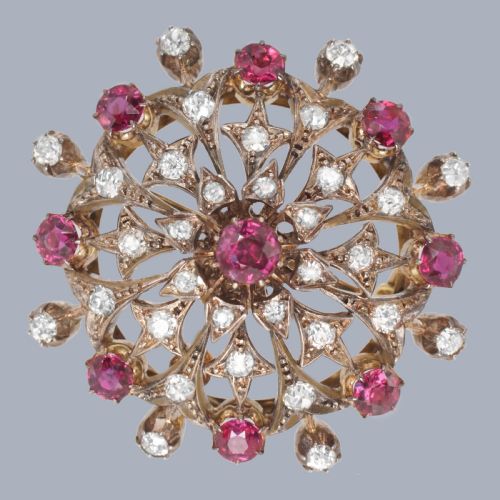


Ruby Cluster Pendant
A ruby cluster pendant brings together vibrant red stones in a central arrangement, offering enduring elegance for daily wear or evening dress.
Ruby Cluster Pendant
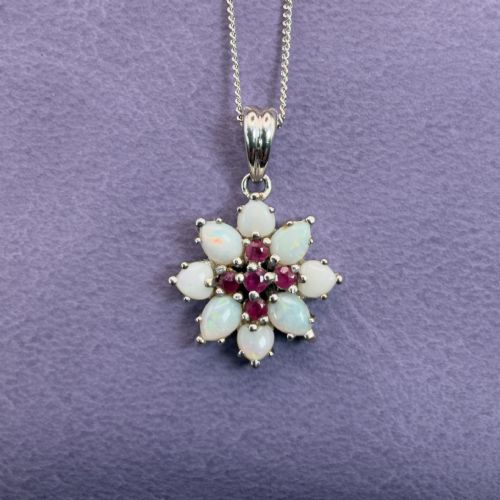
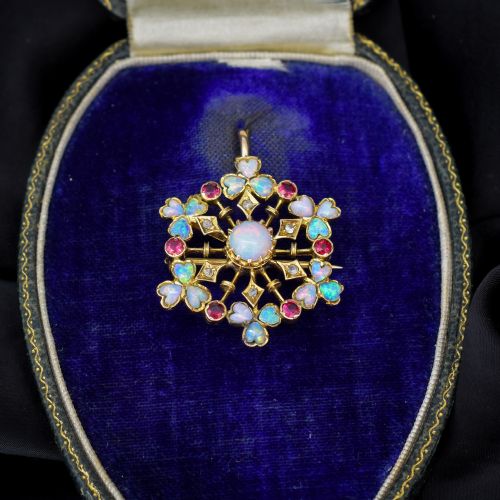
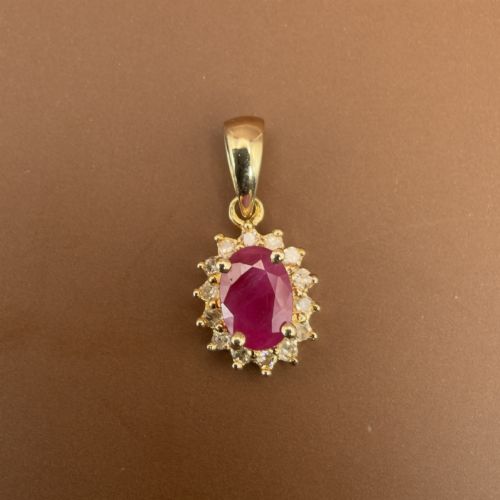
A ruby cluster pendant presents a gathering of stones set close together to maximise visual impact, typically featuring a central red gem surrounded by smaller stones. These pieces appear across several eras, ranging from nineteenth-century conversion pieces to mid-century designs. Buyers seeking a ruby cluster pendant will encounter formats that double as brooches, alongside straightforward drops designed for chains.
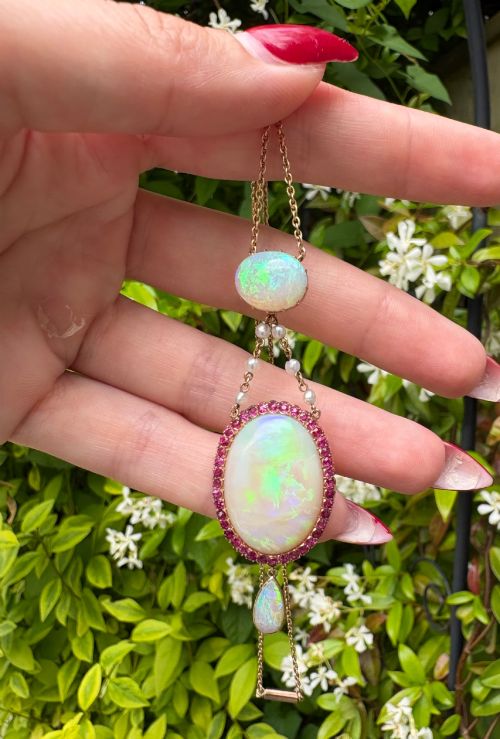
The materials paired with the central red stones vary considerably, with diamond and opal frequently accompanying the primary gemstone. Settings range from nine-carat and fifteen-carat gold to fourteenth and eighteenth-carat yellow gold, reflecting the period of manufacture. Many items function as convertible pieces, possessing integrated fittings that allow the owner to wear them pinned to clothing or suspended from a necklet.
Materials and construction
Goldsmiths utilised varying purities of gold, including nine-carat, fifteen-carat, and higher carat yellow gold, to mount the gemstones securely by hand. Stones were cut in traditional styles such as oval, pear, and rose cuts, then positioned closely to form the characteristic cluster profile.
Makers integrated pin stems and suspension loops into the reverse of many items, enabling dual usage as both brooches and pendants. Metalwork often involved delicate claw or collet settings designed to let light pass through the transparent red stones and surrounding diamonds.
Many Victorian makers cleverly hid tiny folding loops behind their brooches so the wearer could switch from lapel to neckline in seconds.
Evaluating craftsmanship and condition
The quality of a ruby cluster pendant depends largely on the origin and treatment of the central red stones, with natural untreated gems commanding greater attention than treated alternatives. The matching and grading of surrounding diamonds or accent stones further distinguish finer examples from standard production pieces.
Structural integrity also dictates quality, particularly in convertible brooch-pendant combinations where hinges, pins, and loops experience regular mechanical wear. Surviving original settings and minimal metal fatigue indicate superior preservation over time.
The Ruby Cluster Pendant Glossary
- Cluster pendant
- A necklace drop featuring a central gemstone encircled by a ring of smaller accent stones. This layout was popular across the Victorian and mid-century periods.
- Convertible piece
- An item of jewellery designed with multiple mounting options, such as a loop for a chain and a pin for fastening as a brooch. These items offer versatility in how they are worn.
- Rose cut
- An antique diamond cut featuring a flat base and a domed crown faceted into triangles. It imparts a subtle, softer reflection compared to modern brilliant cuts.
Ruby Cluster Pendant: Frequently Asked Questions
Can I wear my pendant every day?
Gold and rubies possess sufficient durability for regular wear, provided the settings remain secure and free from damage.
Owners should remove such items before engaging in strenuous physical activity or household chores to protect delicate claws and softer accent stones like opal.
How do I clean a vintage cluster piece?
Warm soapy water and a soft-bristled brush will safely remove everyday oils and dust from the metal and stones.
Avoid harsh chemical dips or ultrasonic cleaning if the piece incorporates softer gems such as opals or pearls, which require careful handling.
Are these pieces usually marked with hallmarks?
Many older items bear partial stamps or maker marks, while others rely on professional testing to confirm the gold purity.
Lacking a stamp does not diminish authenticity, as tiny conversion pieces often had limited space for standard assay marks.
What chain should I pair with my pendant?
A yellow gold chain matching the carat weight and tone of the mount provides a harmonious appearance.
Ensure the bail or suspension loop can accommodate the thickness of the chain ring without forcing the metal.