


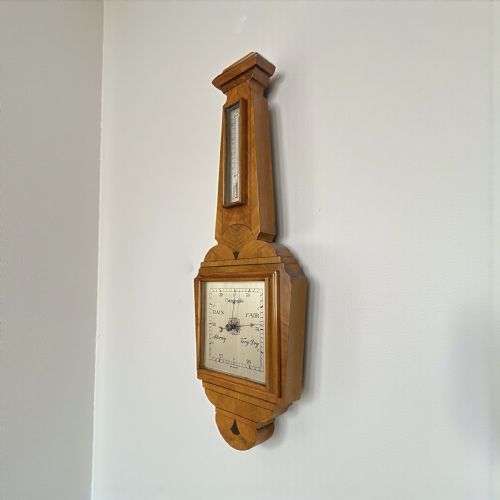


Dial Weather Station
These dial weather station examples combine atmospheric measurement and timekeeping in classic housings.
Dial Weather Station
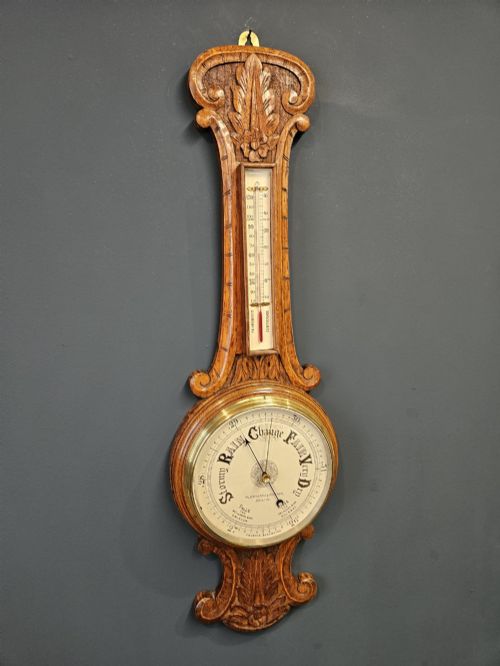
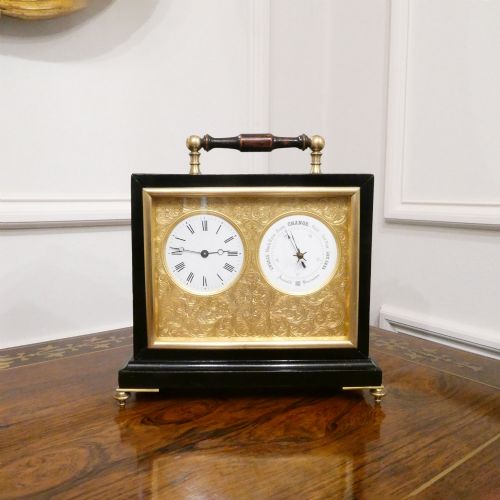
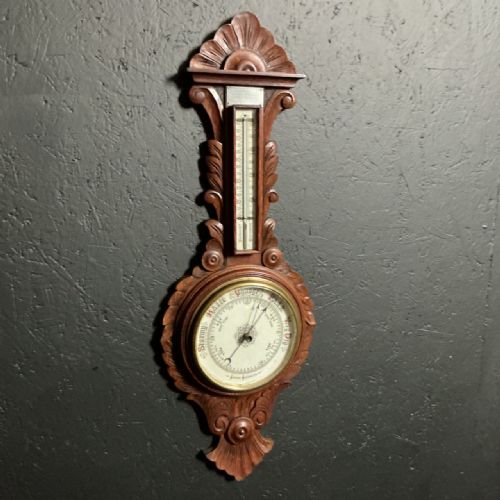
A dial weather station brings together instruments such as barometers, thermometers, and clocks within a single functional object. When searching for a dial weather station, collectors encounter pieces ranging from substantial wall-hanging banjo barometers to compact desk compendiums and mantel clock combinations. These instruments record atmospheric pressure alongside time and temperature, serving both a domestic purpose and a decorative role in a room.
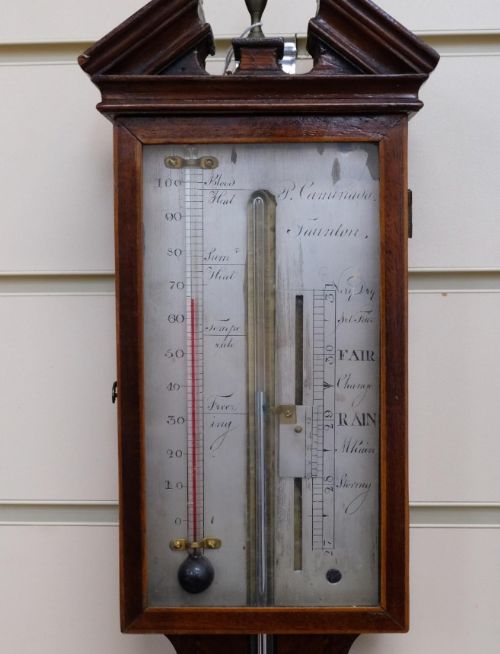
The versions most commonly met on this page span the Victorian, Edwardian, and Art Deco periods, alongside earlier George III and Regency examples. Materials vary from carved oak, mahogany, and walnut to ebonised wood and gilt and silvered bronze. Forms include traditional banjo barometers, wall clocks, and elaborate desk sets shaped like a caduceus or finished in Chinoiserie styles.
Originating as essential scientific tools for domestic forecasting, these combination instruments reflect the craftsmanship of their respective eras. Makers such as Negretti & Zambra and Maple & Co produced pieces that survive today as practical items of interior decoration. Buyers acquire them to anchor a traditional study, hallway, or mantelpiece with a working piece of historical instrumentation.
How they were made
Cases for these instruments rely on cabinet timbers such as mahogany, oak, and walnut, often shaped into banjo profiles, rectangular desk blocks, or architectural mantel clock housings. Carvers utilised dense woods to house the delicate glass tubes of mercury barometers and the mechanical gears of aneroid movements safely. Ebonised finishes and gilt or silvered bronze elements added contrasting detail to the timber structures.
The internal dials utilise silvered metal, enamel, and printed glass to display pressure readings, temperatures, and time. Graduations and maker inscriptions are etched or painted onto the metal faces behind bevelled glass panes. Instrument makers mounted mercury tubes with cistern covers or fitted aneroid mechanisms to translate atmospheric shifts into visible dial movements.
Dial Weather Station Retail Price Guide 2026
Typical asking prices for dial weather station among the pieces listed under this phrase on Sellingantiques today, from the lower quarter to the upper quarter. They describe what is for sale here now, not the wider market.
Materials utilised across these weather instruments include carved oak, mahogany, walnut, ebonised wood, and silvered metal.
What varies in quality
The distinction between standard production items and finer examples rests in the depth of cabinetwork and the precision of the signed instrument dials. High-grade pieces feature deeply carved oak or figured mahogany cases with clean architectural lines, paired with finely engraved silvered metal plates. Maker signatures from established firms add historical weight to the piece.
The clarity of the glass, the legibility of the enamel or silvered metal dials, and the integrity of the combined clock or thermometer elements define the upper tier of quality. Simpler utilitarian barometers lack the decorative carvings and dual-function setups found in oversized desk compendiums and signed mantel combinations.
P. Caminada·JB Bergna·Jenkins Of Old Swindon·Maple & Co·Blake & Son·Negretti & Zambra·L. Malacrida
The Dial Weather Station Glossary
- Aneroid barometer
- An instrument that measures atmospheric pressure without liquids, using a flexible metal box. It expands and contracts with pressure changes to move a pointer across a dial.
- Mercury barometer
- A forecasting device that uses a column of liquid mercury in a glass tube to measure atmospheric pressure. Changes in air pressure cause the mercury level to rise or fall.
- Desk compendium
- A multi-instrument desk set housing combinations of clocks, barometers, and thermometers. These portable objects organise several measurement tools into a single desktop housing.
- Banjo barometer
- A wall-mounted weather instrument housed in a case shaped like a banjo. This form typically displays a large circular dial at the top above a tapered wooden body.
- Silvered metal
- A brass or copper dial treated with a silver finish to provide a contrasting background for black engraved text. This surface treatment prevents glare and highlights the maker inscriptions.
Dial Weather Station: Frequently Asked Questions
How do aneroid and mercury barometers differ?
Aneroid barometers use a sealed metal chamber that reacts to air pressure changes without using liquids. This mechanical design allows them to be housed in compact desk clocks and portable compendiums.
Mercury barometers rely on an open column of liquid metal to measure atmospheric shifts. These traditional instruments require careful wall mounting to keep the glass tube secure.
Where should I place a wall barometer?
Hang your barometer on an interior wall away from direct sunlight and sudden temperature shifts from radiators or open fires. Stable indoor conditions help preserve the timber case and keep internal mechanical components functioning accurately.
Choose a location at eye level in a hallway, study, or living room where you can easily read the dial and consult the forecast daily.
How do I identify the period of a piece?
Examine the timber, case style, and dial typography to determine the era of manufacture. Georgian and Regency pieces often feature simple mahogany stick frames, while Victorian examples introduce heavier carved oak and banjo shapes.
Edwardian and Art Deco models shift toward cleaner geometric lines, lighter oak housings, and simplified aneroid dials.