




Dial Thermometer Barometer
These dial thermometer barometer pieces bring practical meteorology and handsome period joinery into a room, combining instrument science with traditional cabinet work.
Dial Thermometer Barometer
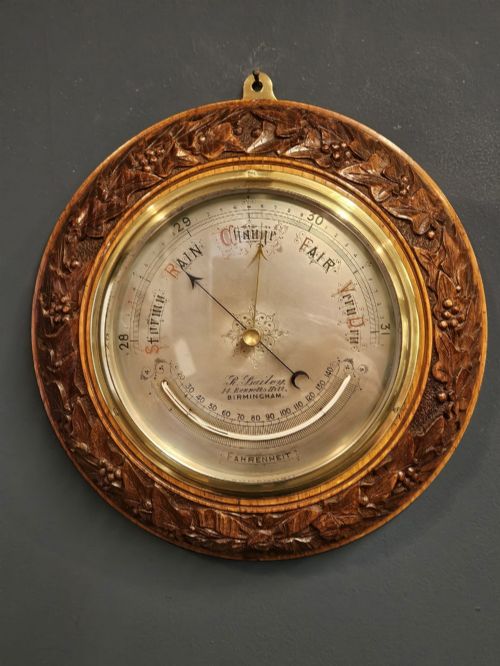
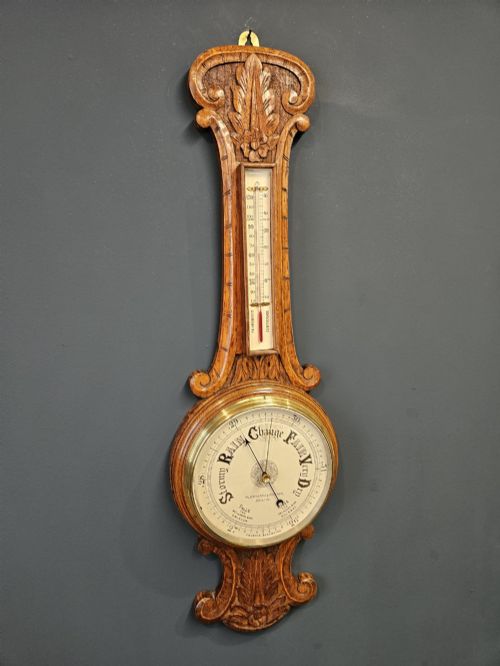
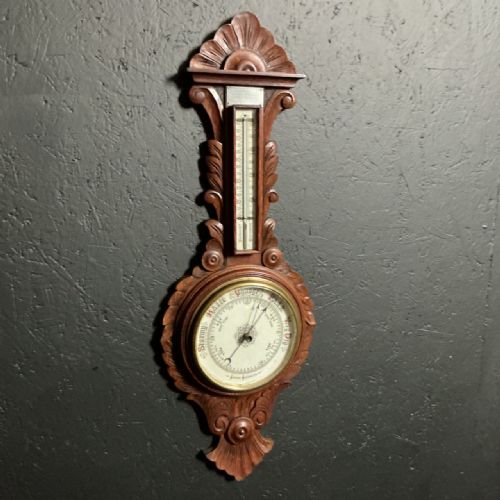
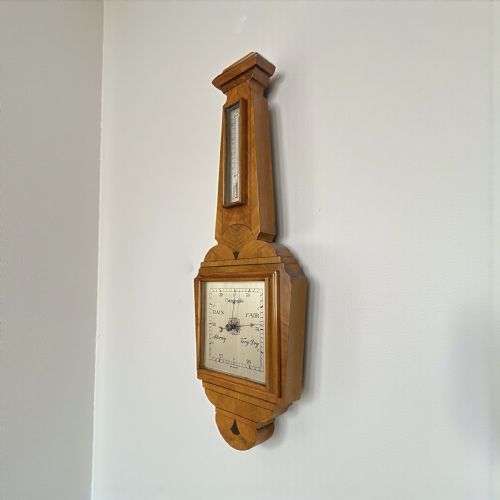
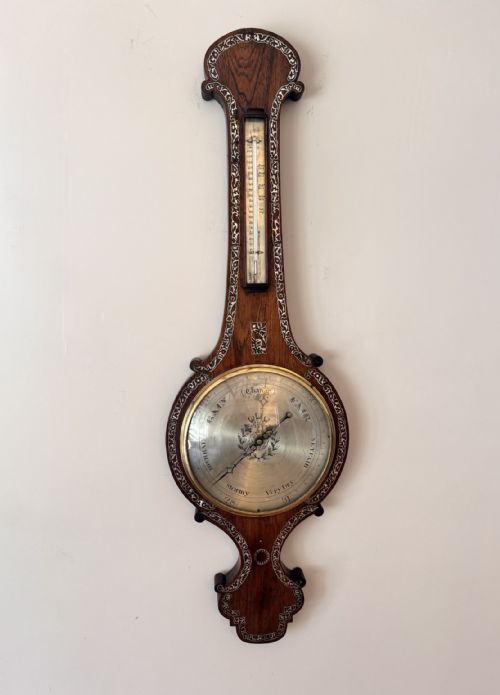
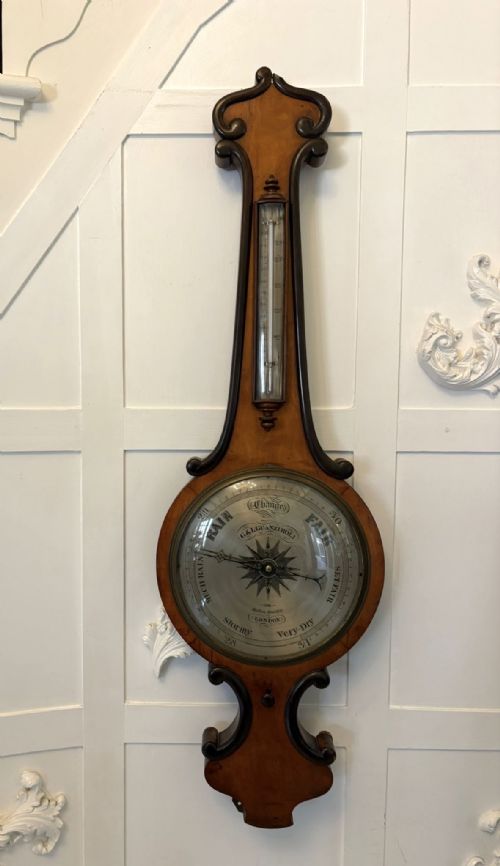
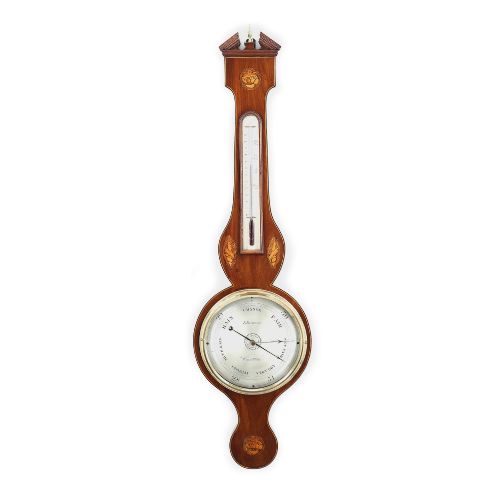
A dial thermometer barometer combines atmospheric pressure measurement with temperature reading on a visible circular face, often housed within a domestic wall-hanging instrument case. When you search for dial thermometer barometer, you meet banjo shapes, wheel formats, and carved oak or mahogany domestic weather stations.
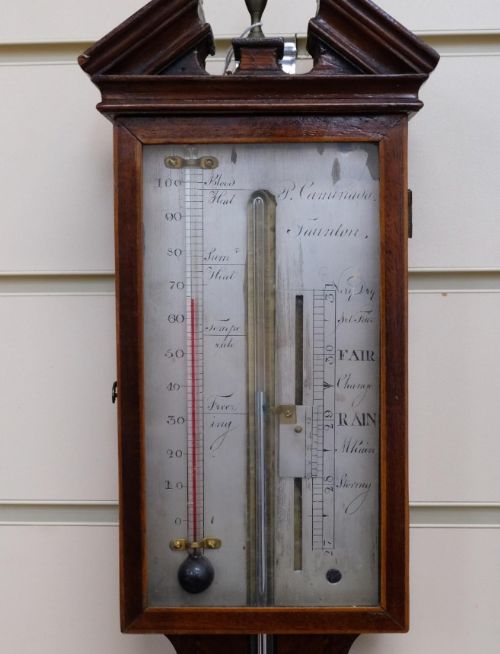
The domestic wall barometer evolved through the Georgian, Regency, and Victorian periods, moving from simple stick frames to generous circular dials mounted in carved wooden bodies. Many examples include hygrometers and spirit thermometers alongside the main dial, creating a comprehensive weather station for the home.
Makers housed these precision movements in assorted regional furniture timbers, ranging from figured rosewood and walnut to simple oak and mahogany. Some versions sit upon a desk rather than hang upon a wall, taking the form of compendiums and travel instruments.
Materials and construction
Cases utilise dense hardwoods like mahogany, walnut, and rosewood, frequently shaped into banjo or wheel silhouettes and sometimes enriched with mother of pearl inlay or carved bird motifs. Timber selection dictated how well the instrument housing held its shape against seasonal humidity changes.
Dials are commonly executed in silvered brass or painted metal, inscribed with barometric scales and weather indicators that match the era of production. Glass covers protect the delicate needles and painted faces from dust and accidental contact.
Internal mechanisms rely on mercury tubes or aneroid capsules linked to mechanical linkages that translate atmospheric pressure into needle movement across the dial face. Precision engineering by provincial and city makers ensured dependable meteorological readings.
Dial Thermometer Barometer Retail Price Guide 2026
Typical asking prices for dial thermometer barometer among the pieces listed under this phrase on Sellingantiques today, from the lower quarter to the upper quarter. They describe what is for sale here now, not the wider market.
Some Victorian oak barometers feature hand-carved birds keeping watch over the weather.
Markers of quality
The distinction between standard output and finer workshop production lies in the crispness of the case carving, the richness of the timber grain, and the legibility of the silvered brass dial. Finer pieces demonstrate careful attention to dial engraving and harmonious proportions in the wooden surround.
Signed movements by known makers elevate an instrument, as does the survival of original glass, thermometer tubes, and matching wooden bezels. Untouched surfaces and clear maker inscriptions provide the physical evidence that collectors value above later restorations.
P. Caminada·B. Besozzi·G & L Guanziroli·Molton of Norwich·Jenkins Of Old Swindon·Maple & Co·M Pillischer·Negretti & Zambra·James Murray·Schiavi of Chesham·George Dollond
The Dial Thermometer Barometer Glossary
- Banjo barometer
- A wall barometer housed in a case shaped like a banjo, featuring a small round dial at the top and a larger dial below. This form dominated nineteenth-century domestic interiors.
- Aneroid barometer
- An instrument that measures air pressure without liquid, using a small flexible metal box that expands or contracts with pressure changes. This movement replaced mercury in many later Victorian designs.
- Silvered brass
- A metallic dial finish achieved by applying a silver compound onto brass, creating a bright surface for engraved numerals. It offers high contrast against black-filled lettering.
- Desk compendium
- A multi-instrument desk object combining a clock, barometer, and thermometer in a single portable brass or wooden frame. These pieces served as library and study accessories.
- Wheel barometer
- An alternative name for a banjo-style instrument where a float on the mercury column turns a wheel connected to the pointer needle.
Dial Thermometer Barometer: Frequently Asked Questions
What is a dial thermometer barometer?
A dial thermometer barometer is a combined weather instrument featuring a circular dial face to display atmospheric pressure alongside temperature readings. These instruments combine scientific utility with decorative cabinet work.
They appear in various formats, from wall-hanging banjo cases in mahogany and rosewood to compact desk compendiums designed for study tables.
How do I date an antique barometer?
Dating relies on stylistic clues in the wooden case, the typography on the dial, and the type of internal mechanism used. Regency and Georgian examples often feature simple wheel or stick configurations with handwritten maker labels.
Victorian pieces frequently introduce carved oak decoration, aneroid movements, or richer woods like rosewood and walnut, reflecting changing domestic tastes.
Where should I hang a wall barometer?
Wall barometers require a stable interior partition away from direct heat sources, heavy vibrations, and strong drafts. Securing the instrument firmly to a wall stud ensures it hangs plumb and reads accurately.
Placing the piece at eye level allows easy reading of the weather scale and appreciation of the cabinet woodwork.
Are these barometers still accurate?
Many surviving antique barometers remain functional if their internal linkages and tubes are intact and properly calibrated. Aneroid and mercury movements respond to local barometric shifts much as they did originally.
Minor adjustments via the control screw on the back can align the needle with current local weather reports.