

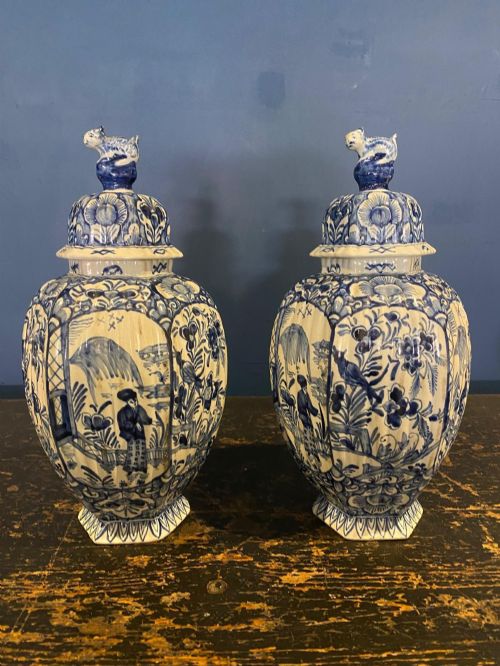
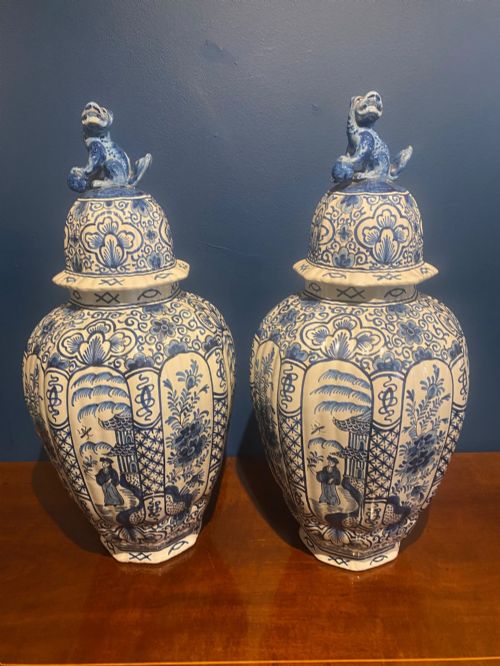
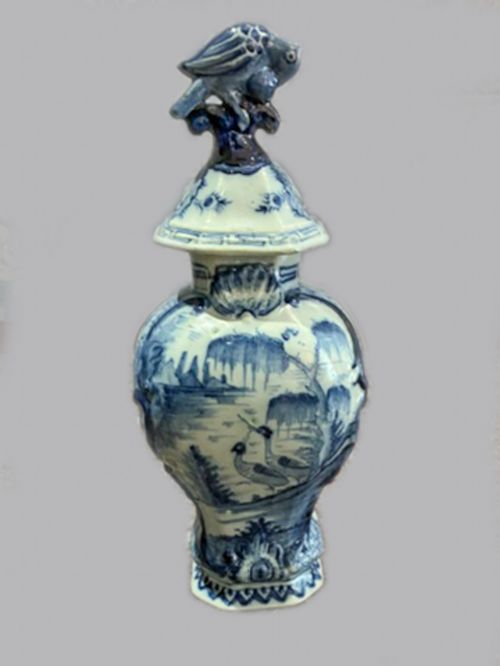
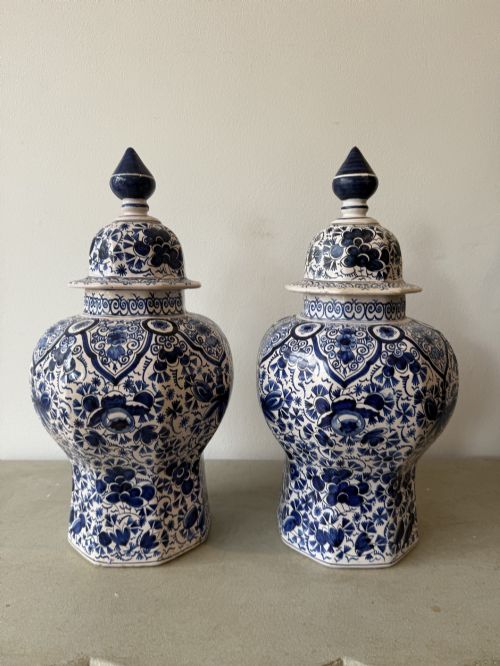




Delftware Lidded Jar
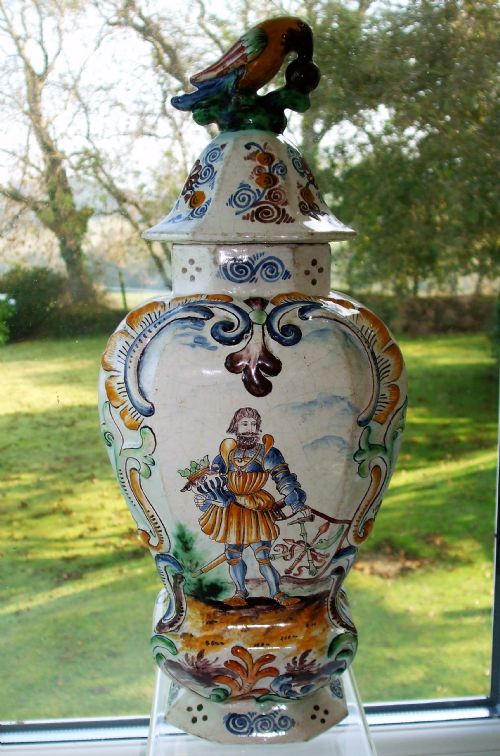
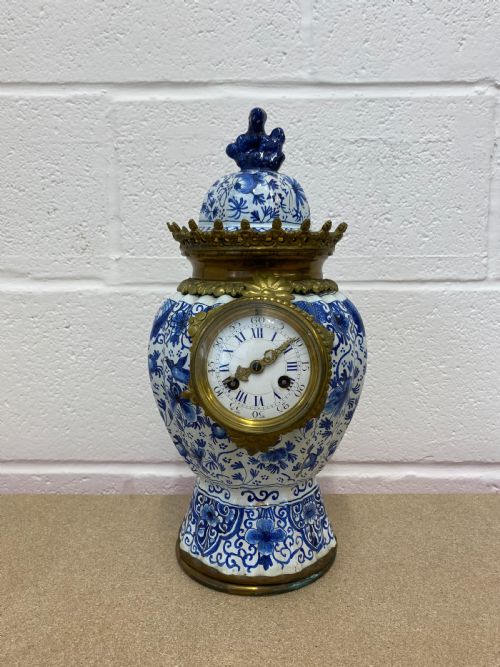
These delftware lidded jar pieces bring tin-glazed earthenware and Dutch Baroque character into a room.
Delftware Lidded Jar
A delftware lidded jar combines ceramic construction with tin glaze, forming a vessel designed for storage or display. These objects cross several centuries of production, appearing in forms such as tobacco jars, storage jars, and lidded vases.
The pieces on this page span the eighteenth and nineteenth centuries, featuring Dutch Baroque and Delftware styles. Collectors encounter both blue and white examples and polychrome decoration.
Most entries originate from Dutch traditions or nineteenth-century interpretations, offering sturdy earthenware bodies with fitted covers. Buyers often find pairs alongside individual lidded urns and jars.
Materials and construction
Makers shaped these vessels from clay and earthenware before applying a tin glaze that created an opaque white surface for painting. Artisans then hand-painted cobalt blue or polychrome pigments directly onto the unfired glaze.
Kiln firing fused the metallic oxides into the glaze, producing the characteristic glossy finish seen on eighteenth and nineteenth-century pieces. Certain examples incorporate brass elements or glass components alongside the primary ceramic body.
Delftware Lidded Jar Retail Price Guide 2026
Typical asking prices for delftware lidded jar among the pieces listed under this phrase on Sellingantiques today, from the lower quarter to the upper quarter. They describe what is for sale here now, not the wider market.
Listings feature tin-glazed earthenware and clay pieces spanning the eighteenth and nineteenth centuries.
Judging quality in these vessels
Quality rests in the precision of the hand-painted decoration and the crispness of the tin glaze across the earthenware body. Finer examples display detailed brushwork and balanced proportions on both the jar and its matching cover.
The integrity of the glaze surface and the harmonious fit between the lid and the jar body distinguish superior items. Lesser pieces show uneven glaze pooling or crude repairs that obscure the original ceramic form.
The Delftware Lidded Jar Glossary
- Tin-Glazed Earthenware
- Earthenware pottery coated with a lead glaze made opaque by the addition of tin oxide. This surface provided a white ground for painting in imitation of imported porcelain.
- Polychrome
- Decoration employing multiple colours rather than a single hue. In these ceramics, artisans used various mineral pigments alongside traditional cobalt blue.
- Dutch Baroque
- An artistic style characterised by dynamic forms and rich ornamentation. This aesthetic influences the curves and decorative motifs found on many eighteenth-century jars.
- Tobacco Jar
- A specialised ceramic vessel equipped with a tight-fitting lid to keep leaf tobacco moist. These jars often bear painted labels or trade inscriptions.
Delftware Lidded Jar: Frequently Asked Questions
What were delftware lidded jars used for?
These vessels served practical storage roles in households and apothecaries, holding dry goods, spices, or tobacco. Over time, many transitioned into pure display pieces due to their decorative painted surfaces.
Their substantial lids kept contents secure from air and moisture, making them reliable containers before the widespread availability of glass or metal packaging.
How do I date a delftware jar?
Dating relies on examining the ceramic body, the characteristics of the tin glaze, and the style of the painted decoration. Eighteenth-century pieces typically exhibit thinner potting and softer glaze tones compared to nineteenth-century iterations.
Comparing the cobalt blue shades and floral or figural motifs against documented examples helps narrow the period of manufacture.
Are lids usually original to the jars?
Matching the lid to the jar requires checking the glaze consistency, wear patterns, and clay fabric on both components. Many covers are replacements gathered during later centuries.
A correct pairing sits flush on the rim and displays matching ageing characteristics under natural light.
How should I display these jars at home?
Place these vessels on sturdy surfaces away from high-traffic areas to protect their tin-glazed earthenware bodies from accidental knocks. Stable shelving allows the painted details to be viewed at eye level.
Keep them out of direct sunlight to preserve the stability of the glaze and pigments over the years.