




Delft Ceramic Vases
These delft ceramic vases bring together tin-glazed earthenware and Dutch Baroque style to anchor a room with classical form.
Delft Ceramic Vases
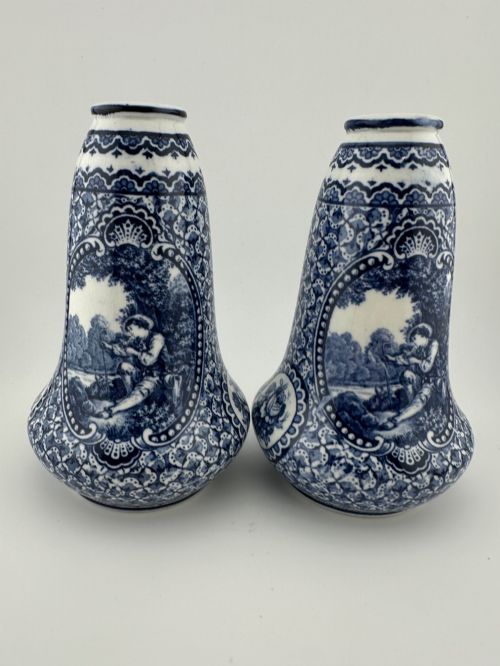
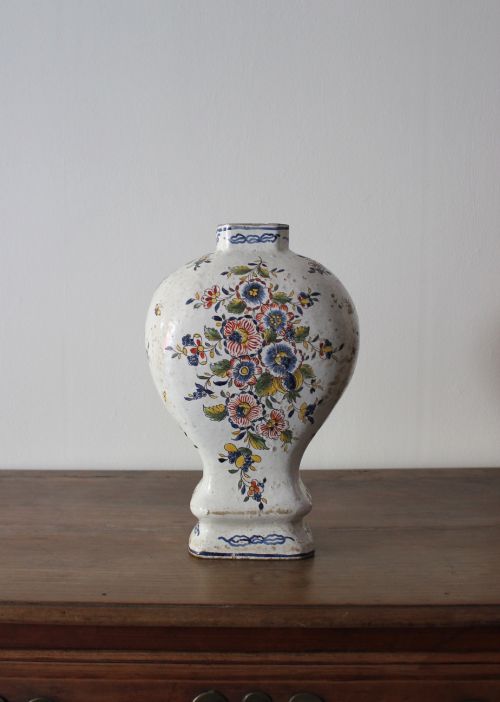
Delft ceramic vases encompass lidded jars, baluster forms, garden urns, and table lamps created across the seventeenth, eighteenth, and nineteenth centuries. Buyers searching for delft ceramic vases encounter objects defined by tin-glazed earthenware and faience production.
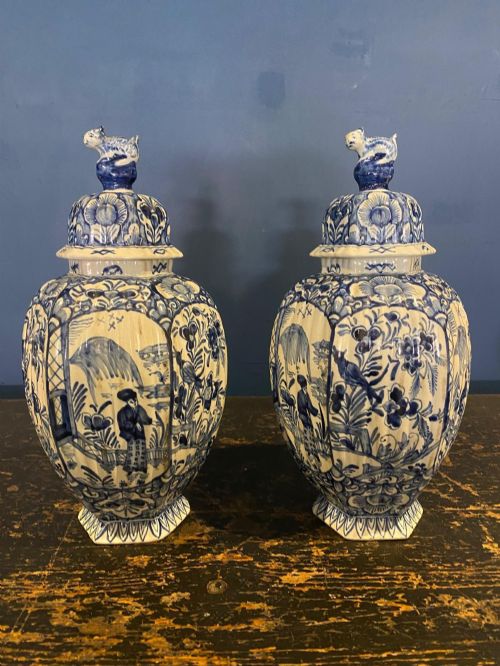
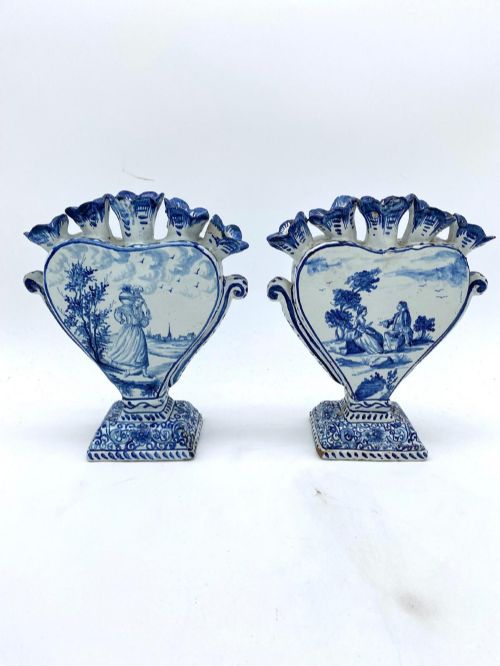
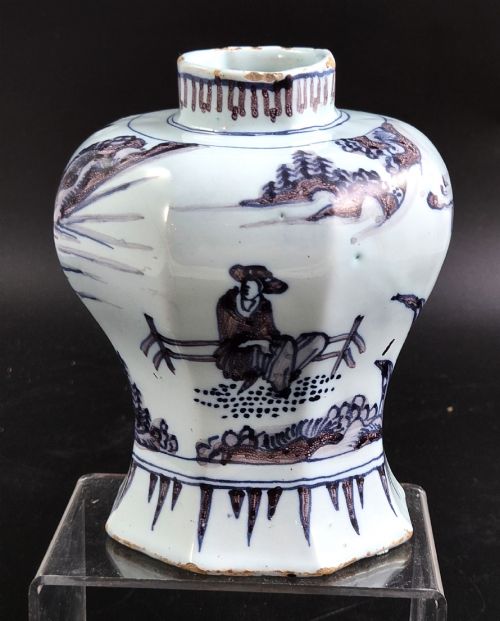
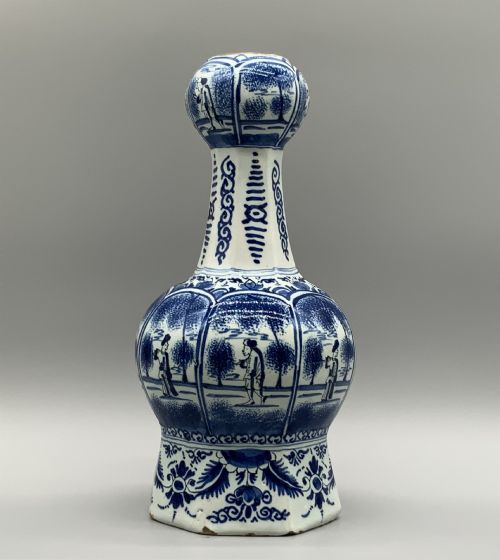
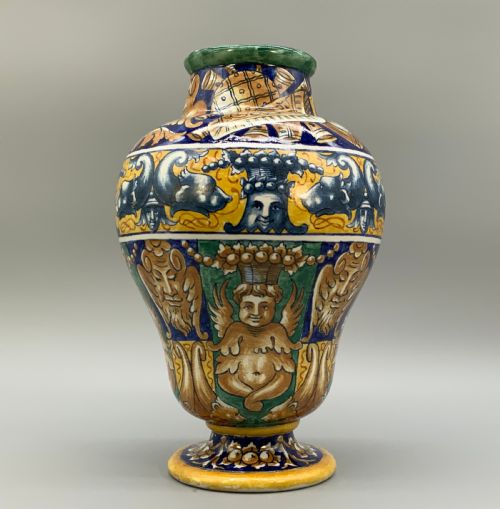
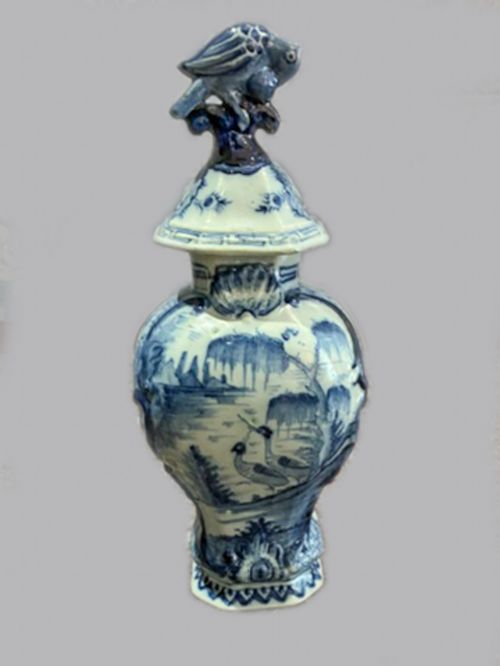
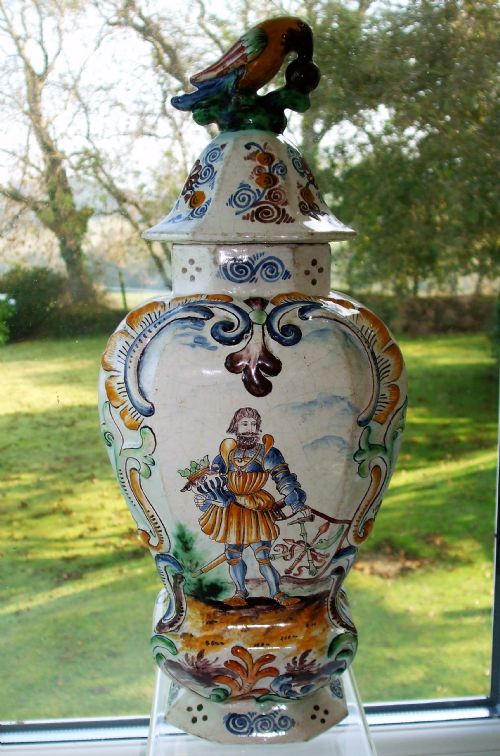
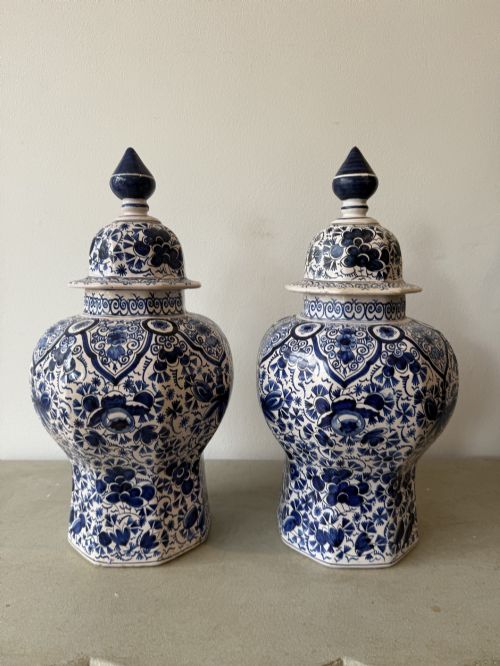
The seventeenth and eighteenth-century examples lean heavily towards Dutch Delftware and Chinoiserie blue and white decoration, featuring birds, flowers, and Chinese scholar motifs. Later nineteenth-century pieces introduce revival styles such as Louis XVI and Renaissance revivals, alongside polychrome palettes.
Many survivors take the form of pairs, while others appear as single large baluster vases, beakers, or vessels converted into lamps. The selection ranges from early seventeenth-century earthenware to twentieth-century interpretations.
How they were made
Potters shaped these vessels from clay and earthenware, applying an opaque white tin glaze that provided a smooth canvas for painting. Artisans painted directly onto the unfired tin glaze using cobalt blue and manganese pigments, absorbing the colour permanently during the second firing.
Makers formed many larger pieces on the potter's wheel, whilst elaborate baluster vases, lidded jars, and octagonal profiles required sectional throwing and careful assembly. Some decorative garden urns and planters integrated moulded elements and handles before glazing.
Delft Ceramic Vases Retail Price Guide 2026
Typical asking prices for delft ceramic vases among the pieces listed under this phrase on Sellingantiques today, from the lower quarter to the upper quarter. They describe what is for sale here now, not the wider market.
Several centuries ago, some inventive owners turned empty delft jars into fashionable table lamps, shedding new light on old earthenware.
What varies in quality
The precision and fluidity of the hand-painted brushwork separate standard production from superior pieces, particularly in detailed Chinoiserie scenes and botanical motifs. Crispness in the modelling of ribbed beaker shapes and octagonal baluster profiles also marks out finer workshops.
The stability of the white tin glaze and the depth of the blue or manganese pigment determine the visual impact. Early seventeenth-century works display a characteristic brilliance in pigment absorption that later revivals interpret with varying degrees of success.
3 BELLS Drie klokken Factory·Royal Bonn Franz Anton Mehlem·Louis Victor
The Delft Ceramic Vases Glossary
- Tin-Glazed Earthenware
- Pottery coated with a lead glaze made opaque by the addition of tin oxide, creating a white surface suitable for painting. This technique forms the foundation of traditional delftware production.
- Faience
- European tin-glazed pottery produced in France, Germany, and other regions outside Italy, closely related in technique to Dutch delft. The term often describes vessels sharing the characteristic white glaze and painted decoration.
- Baluster Vase
- A vessel with a curved, swelling lower body that tapers towards a narrow neck, resembling an architectural baluster. These forms frequently appear as pairs in seventeenth and eighteenth-century interiors.
- Chinoiserie
- European decorative motifs imitating Chinese artistic styles, widely employed on seventeenth and eighteenth-century delftware. Painters depicted imaginary landscapes, scholars, and birds in blue and white pigment.
- Polychrome
- Decoration utilising multiple colours rather than a single hue like blue and white. In delft ceramics, this involves combinations of green, red, yellow, and manganese alongside traditional blue.
Delft Ceramic Vases: Frequently Asked Questions
What is delft ceramic?
Delft ceramic is a type of tin-glazed earthenware originating in the Netherlands, known for its opaque white surface and painted decoration. Artisans traditionally used cobalt blue pigments to create intricate botanical and figural scenes.
Over subsequent centuries, production spread across Europe, incorporating polychrome colours and various revival styles while retaining the core tin-glaze technique.
Are these vases waterproof?
Most antique tin-glazed earthenware vases are porous and prone to moisture seepage through hairline cracks in the glaze. Using them with dry floral arrangements or placing a hidden glass liner inside protects the ceramic body.
Careful handling ensures these historic vessels remain preserved for display without risking damage to the original glaze.
How are old vases dated?
Dating relies on stylistic clues, including the profile of the vessel, the composition of the tin glaze, and the pigment characteristics. Seventeenth-century pieces often display specific Chinoiserie interpretations, whereas nineteenth-century revivals exhibit different potting weights and glaze formulations.
Comparing painted motifs and factory marks provides further context for placing a piece within a specific century.
How should I clean them?
Dusting with a soft, dry cloth is the safest method for maintaining tin-glazed surfaces. Moisture can infiltrate historic earthenware through existing chips or crazing, so abrasive cleaners and immersion in water are unsuitable.
Gentle maintenance preserves the integrity of the fragile glaze and the painted decoration underneath.