


Deep Seat Velvet Armchairs
Deep seat velvet armchairs offer deep proportions and soft piled upholstery, combining generous comfort with period character from the nineteenth century onwards.
Deep Seat Velvet Armchairs
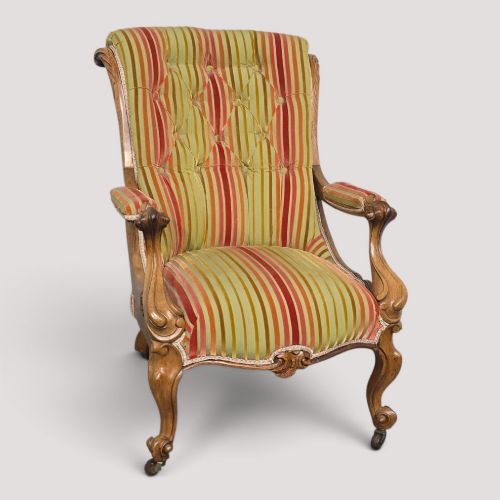
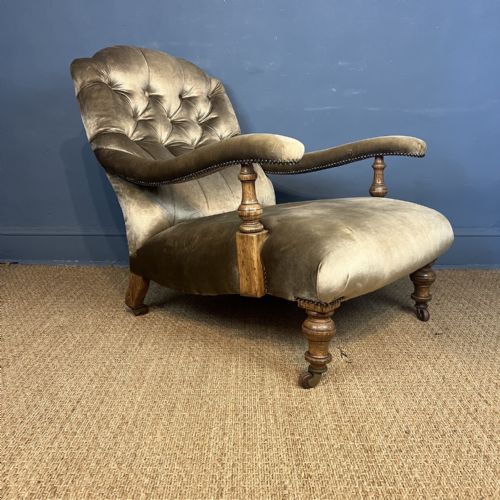
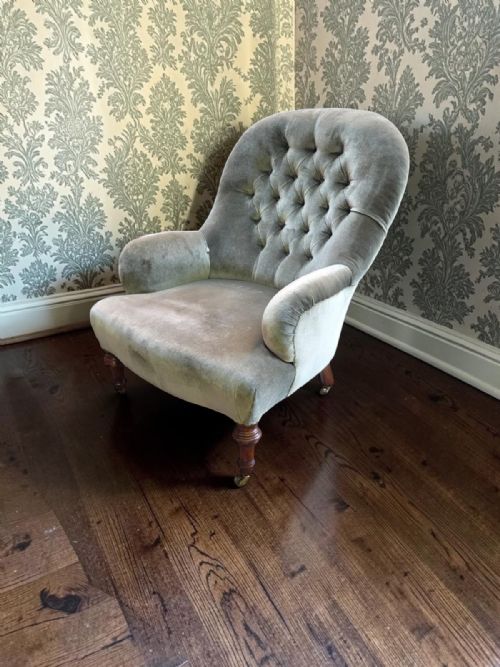
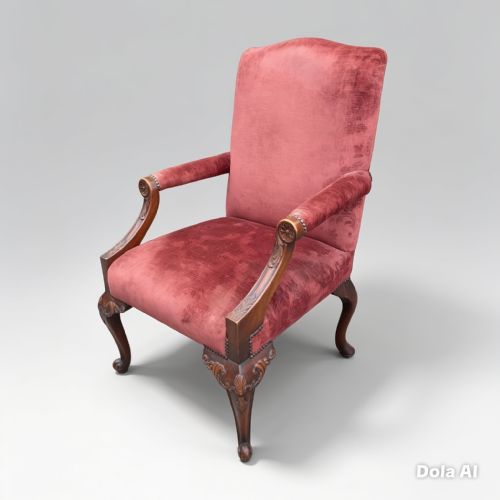
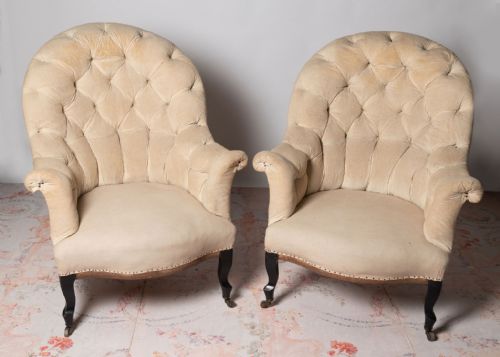
Deep seat velvet armchairs combine generous proportions with soft pile upholstery, creating comfortable seating designed for relaxation. When searching for deep seat velvet armchairs, buyers encounter diverse forms ranging from low fireside chairs to substantial library seats and Howard style armchairs.
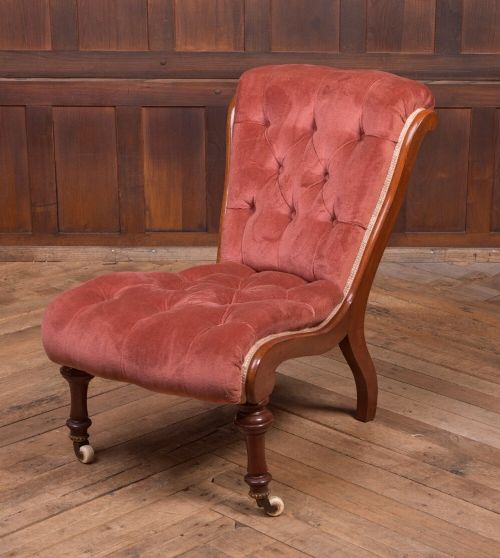
The selection on this page spans several distinct eras, with Victorian, Edwardian, and Regency examples appearing alongside later twentieth century pieces. Frames take various traditional shapes, including button back, wingback, spoon back, and club chair designs.
Construction materials reflect traditional cabinet making, utilising timbers such as mahogany, walnut, rosewood, oak, and hardwood for the frames. Brass castors frequently support the legs beneath upholstered bodies covered in velvet.
How they were made
Frames are built from hardwoods like mahogany, walnut, rosewood, oak, and beech, joined securely to support heavy daily use. Exposed wooden elements show careful turning, carving, or ebonising, often terminating in brass castors.
Upholstery relies on traditional sprung interiors layered beneath heavy pile velvet. Buttoning, hand-tacking, and padded wings or scroll arms define the silhouette of Victorian and Edwardian examples.
Some nineteenth century library chairs feature clever 'P' shaped arms designed to accommodate bulky ledgers or a resting elbow.
What varies in quality
The distinction between average and exceptional pieces lies in the integrity of the underlying frame and the quality of the timber. Finer examples exhibit crisp carving on mahogany or walnut structures rather than simple softwood framing.
Upholstery execution dictates longevity, with hand-tied springs and precise buttoning marking superior workshop output. The weight and lustre of the velvet covering also separate standard production from high quality commissions.
Miles & Edward·Howard and Sons·Gillows
The Deep Seat Velvet Armchairs Glossary
- Button back
- A traditional upholstery technique where deep depressions are formed by sewing through the padding to secure buttons in a grid pattern. This method creates a firm, tailored surface often seen on Victorian chairs.
- Spoon back
- An upholstered chair back shaped in a concave oval resembling a spoon, popular during the mid-nineteenth century. The wooden frame is usually carved from walnut or mahogany.
- Howard style
- A classic nineteenth century armchair design associated with deep comfort, low rolled arms, and substantial cushioning. These chairs often feature concealed castors and turned wooden legs.
- Wingback
- An armchair featuring protective side panels attached to the backrest to shield the sitter from draughts. These chairs frequently appear in nineteenth century and later domestic settings.
- Slipper chair
- A low-seated bedroom chair traditionally used by women for putting on shoes or garments. They often feature upholstered frames with minimal exposed woodwork.
Deep Seat Velvet Armchairs: Frequently Asked Questions
How do I identify a Victorian armchair?
Victorian armchairs typically feature walnut or mahogany frames with buttoned upholstery, spoon backs, or balloon back forms. Exposed woodwork often shows period carving and rests on ceramic or brass castors.
Construction methods from this era rely on traditional joinery combined with sprung padding designed for domestic comfort.
What is a Howard style armchair?
A Howard style armchair is characterised by low rolled arms, deep proportions, and heavily padded seating designed for maximum comfort. These chairs often stand on short wooden legs fitted with brass castors.
The style originates from the nineteenth century firm Howard and Sons and remains a benchmark for traditional seating.
Where should I place a velvet armchair?
These armchairs suit studies, libraries, drawing rooms, and bedrooms where their deep proportions provide a comfortable reading seat. Pairing them with fireside settings or reading corners highlights their traditional domestic function.
Placement should avoid direct sunlight to preserve the rich pile and colour of the velvet upholstery.
How do I care for velvet upholstery?
Velvet requires gentle brushing with the pile to maintain its lustre and prevent the fabric from crushing over time. Professional cleaning is recommended for deep maintenance to protect the delicate pile fibres.
Keeping upholstered pieces away from direct heat sources helps preserve both the fabric and the underlying wooden frame.