

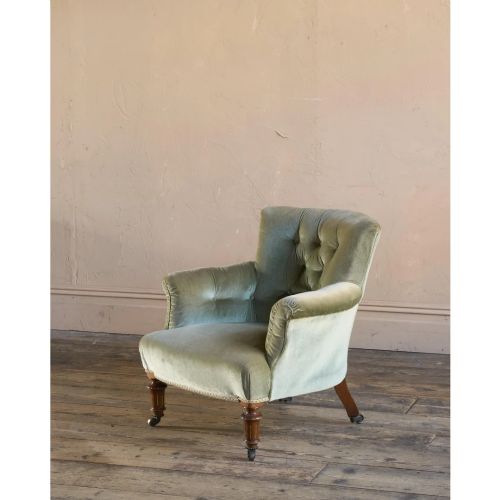
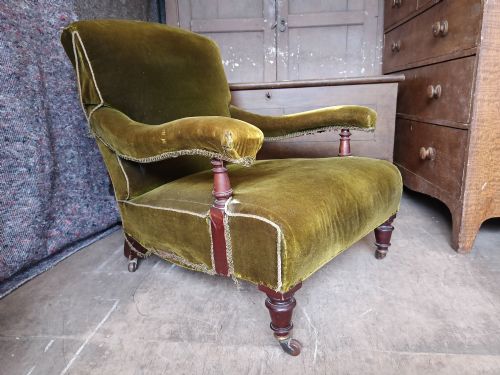
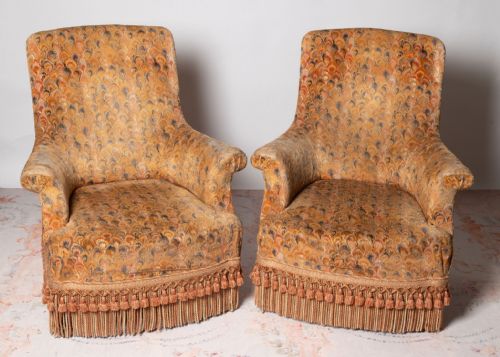
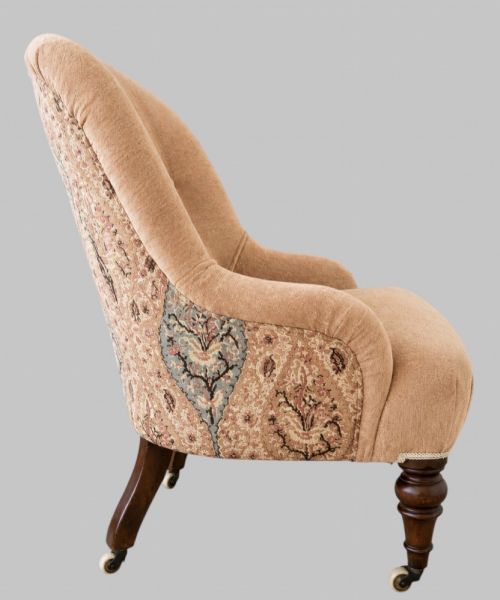
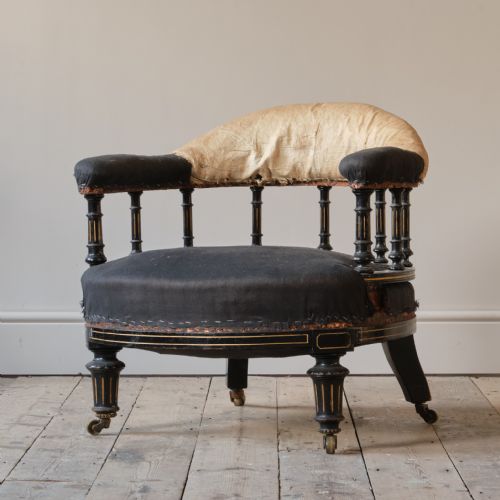


Low Velvet Armchairs
Low velvet armchairs bring intimate scale and tactile warmth to a room, offering low seats paired with plush pile upholstery across nineteenth-century and early twentieth-century forms.
Low Velvet Armchairs
Low velvet armchairs encompass compact seating designed for bedrooms, dressing rooms, and intimate parlour settings. These pieces date from the nineteenth century into the Edwardian period and the early twentieth century.
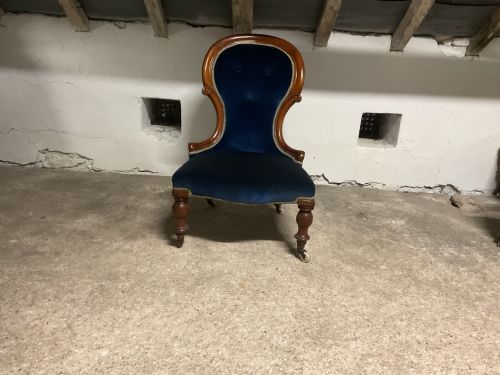
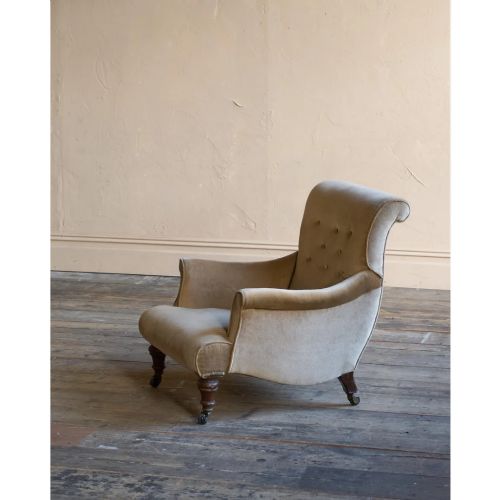
The selections span distinct functional forms including nursing chairs, slipper chairs, occasional chairs, and boudoir chairs. Victorian and Edwardian examples dominate the listings alongside French and English vernacular interpretations.
Makers and retail houses such as Gillows, Howard and Sons, and Hampton and Sons produced notable iterations. Frames range from button-backed nursing seats to library chairs and club chairs upholstered in velvet.
Materials and Construction
Frames rely on native and imported hardwoods including mahogany, walnut, and ebonised wood, sometimes accented with brass castors and ceramic components. Structural joinery supports sprung or padded seats built for low profiles.
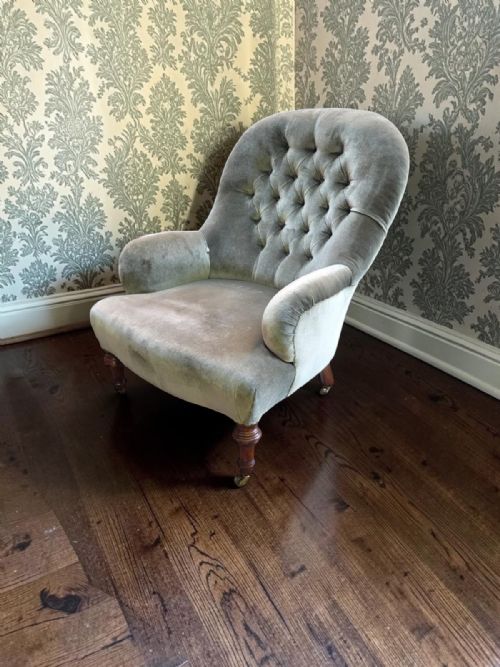
Upholstery employs velvet fabrics, occasionally incorporating button-back detailing, piping, and decorative braid. Secondary supports utilise iron backs, coil springs, and traditional stuffing materials suited to the period.
Listings feature wood frames in mahogany, walnut, and ebonised finishes paired with velvet upholstery across the Victorian and Edwardian periods.
Quality and Distinction
Distinction rests on the integrity of the timber frame, the crispness of carved details such as barley twists or ebonised and gilt finishes, and the presence of maker stamps or paper labels. Pieces originating from documented workshops like Gillows or Howard and Sons carry specific cabinet-making merit.
Proportion and scale dictate visual success, particularly in diminutive bedroom and nursing chairs where low centres of gravity must balance comfort with refined upholstery lines. The execution of buttoning and the choice of textile grading elevate standard seating into decorative focal points.
Gillows·Howard and Sons·Hampton and Sons·Hindley and Sons
The Low Velvet Armchairs Glossary
- Nursing chair
- A low-seated Victorian chair originally designed to allow women to nurse infants comfortably while sitting near a hearth. These pieces typically feature padded backs and low wooden legs.
- Slipper chair
- An upholstered chair with very short legs designed to sit low to the floor, historically used in bedrooms for changing shoes or dressing.
- Button back
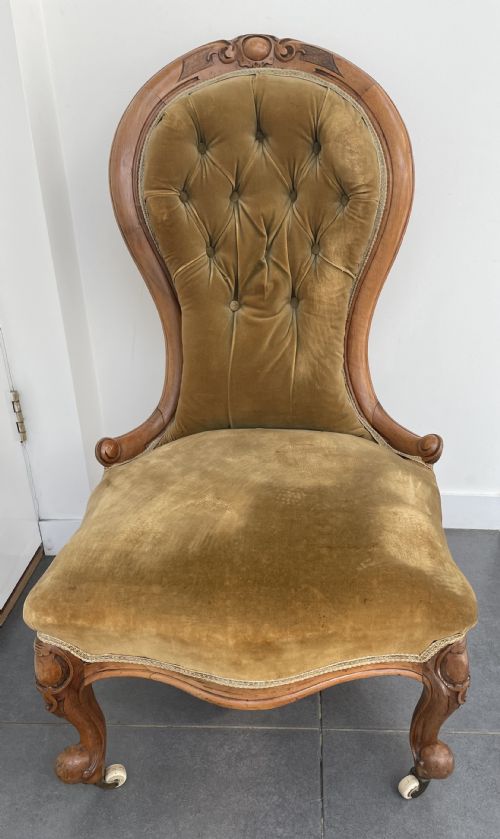
- An upholstery technique where deep buttons are pulled through the padding at regular intervals to create a diamond pattern of tufts. This method secures internal stuffing while adding texture.
- Ebonised wood
- Timber treated with chemical stains or black finishes to imitate costly ebony wood. This technique was popular for nineteenth-century aesthetic and Victorian frames.
- Barley twist
- A decorative turning technique resembling a twisted rope carved into furniture legs or stretchers. It appears frequently on mid-Victorian walnut and mahogany frames.
Low Velvet Armchairs: Frequently Asked Questions
Where were low velvet armchairs used?
These chairs were primarily made for domestic bedrooms, dressing rooms, and private drawing rooms rather than formal reception spaces. Their low seat heights suited intimate tasks and fireside relaxation.
Today, their compact proportions make them versatile accent pieces for modern bedrooms, studies, and smaller living areas where standard seating overwhelms the floor plan.
How do I identify a Victorian nursing chair?
Victorian nursing chairs feature notably low seats paired with high, often button-backed upholstery designed to support the head and back. They frequently rest on short wooden legs fitted with brass and ceramic castors.
Frames in this category commonly utilise walnut or mahogany, sometimes displaying turned elements like barley twists or upholstered sprung structures.
What is a slipper chair?
A slipper chair is an armless, low-to-the-ground seat historically kept in bedrooms for dressing and putting on footwear. The absence of arms allowed voluminous nineteenth-century garments to drape easily over the sides.
On this page, these chairs appear in nineteenth-century and early twentieth-century variations, often upholstered in brightly coloured velvet.
How do I care for antique velvet?
Antique velvet requires gentle handling to preserve the pile and prevent crushing. Regular light brushing with a soft-bristled brush helps maintain the nap, while professional textile cleaning is recommended for deep maintenance.
Keep velvet chairs out of direct sunlight to prevent fading of the pile, and avoid resting heavy objects on the fabric for extended periods.