

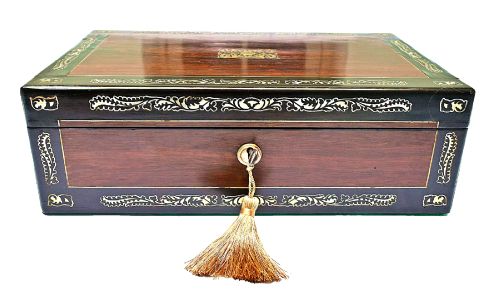
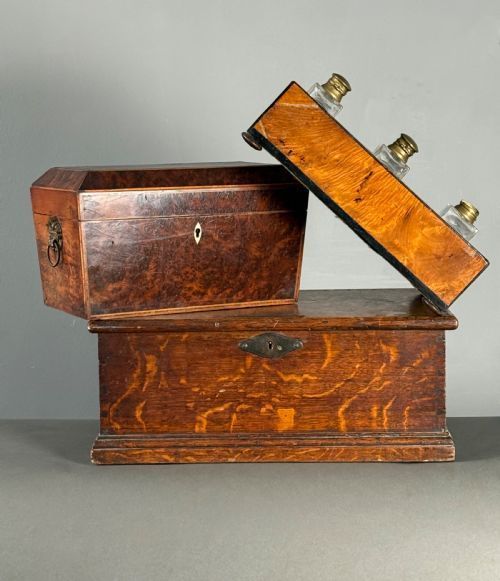

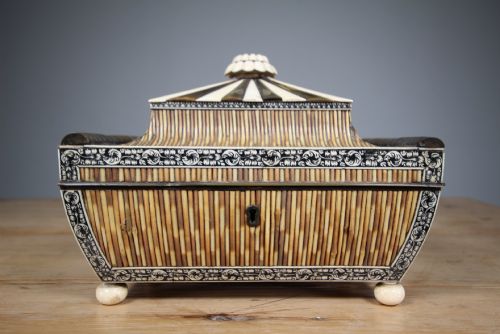


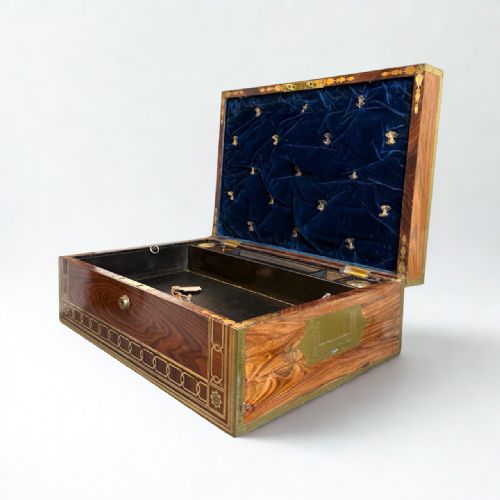


Decorative Writing Box
A decorative writing box brings tactile warmth to a desk, holding correspondence and keepsakes inside timber surfaces worked with marquetry, brass or mother of pearl.
Decorative Writing Box
A decorative writing box encompasses portable writing slopes, stationary boxes and desktop caskets designed for correspondence and desk organisation. These pieces range from Georgian and Regency examples to Victorian walnut or rosewood slopes and Edwardian items.
Most pieces encountered on this page date from the nineteenth century, including Victorian manifestations finished with brass banding, parquetry or lacquer. Alongside these English desk accessories, the selection includes Chinese rosewood writing boxes and eighteenth-century wood boxes.
Internal arrangements typically feature sloping lids for writing, compartments for inkwells and nibs, and hidden drawers. Beyond utilitarian writing furniture, these boxes function as decorative objects for modern interiors.
Materials and Construction
Cabinet makers utilised dense hardwoods such as mahogany, walnut, rosewood, coromandel and ebony as foundations for a decorative writing box. These timbers were frequently enhanced with veneers, boxwood stringing and geometric parquetry.
Decoration relied on contrasting materials applied to the wooden carcass, including brass mounts, agate cabochons, mother of pearl, bone details and pietra dura panels. Papier mâché and lacquer also appear among the crafting techniques.
Internal components combined shaped cedar or oak linings with leather writing surfaces, fitted glass inkwells and precision hinges to secure the folding slopes.
Decorative Writing Box Retail Price Guide 2026
Typical asking prices for decorative writing box among the pieces listed under this phrase on Sellingantiques today, from the lower quarter to the upper quarter. They describe what is for sale here now, not the wider market.
Periods represented in the selection range from the 17th century through Georgian, Regency, Victorian, and Edwardian eras up to the 1930s.
Evaluating Craftsmanship
Quality in a decorative writing box is visible in the precision of the marquetry inlay, the tightness of the timber mitres and the integration of brass mounts. Superior examples display crisp botanical or geometric patterns executed in contrasting woods.
The integrity of the internal fittings defines the standard of the piece, from the presence of original glass inkwells and complete secret drawers to the smoothness of the folding mechanism. Maker attribution and specialised decorative techniques like pietra dura elevate specific items.
C.G. Hope Hastings·Gill and Reigate
The Decorative Writing Box Glossary
- Writing slope
- A portable box with a hinged, slanted lid designed to provide an angled surface for handwriting. Inside, compartments store stationery, pens and ink.
- Marquetry
- Decorative veneer work formed by fitting together small pieces of wood, bone or shell to create pictorial or geometric patterns on the box exterior.
- Tunbridge ware
- A specialised form of woodworking originating in Kent involving mosaic patterns built from thousands of tiny tinted wood blocks. These geometric designs decorate the lids of nineteenth-century boxes.
- Pietra dura
- An Italian technique using cut and fitted polished coloured stones to create decorative images inlaid into a stone or wooden background.
- Parquetry
- Geometric mosaic woodwork arranged in repeating patterns such as cubes or chequers across the surface of a box.
Decorative Writing Box: Frequently Asked Questions
What is a decorative writing box used for?
Historically, these boxes served as portable desks for writing letters, storing personal documents, and keeping ink and quills organised while travelling or at home.
Today, they function as desktop storage for modern stationery, photographs, and small keepsakes while adding period character to a room.
How do I identify a Victorian writing slope?
Victorian examples frequently feature dark timbers like walnut or mahogany, often enhanced with brass corners, shield escutcheons, and fitted interior compartments for ink.
They commonly include a sloping lid lined with leather or velvet that folds flat to reveal secret drawers beneath the stationery partitions.
What woods are common in these boxes?
Cabinet makers predominantly used mahogany, walnut, and rosewood, occasionally utilising exotic alternatives like coromandel, ebony, and fruitwood.
Surfaces were often embellished with burr walnut veneers, boxwood stringing, or contrasting marquetry and parquetry patterns.
Can I use an antique writing box daily?
These boxes are durable enough for gentle daily use, such as holding modern stationery, pens, or household documents on a desk or table.
Care should be taken to protect the polished wood finishes and delicate interior leather surfaces from moisture and direct sunlight.