




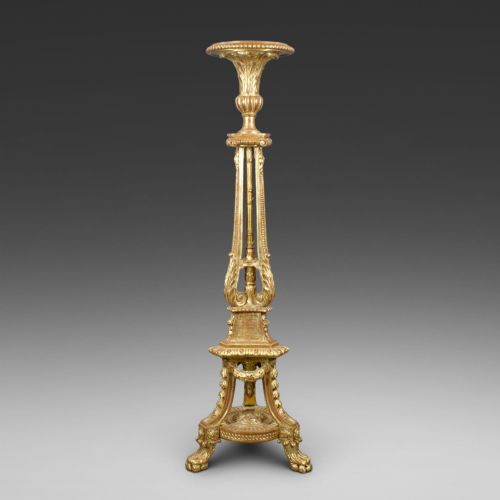

Decorative Wooden Torchere
These decorative wooden torchere stands and figures bring height and drama to a room, offering a sculptural perch for lamps or plants.
Decorative Wooden Torchere
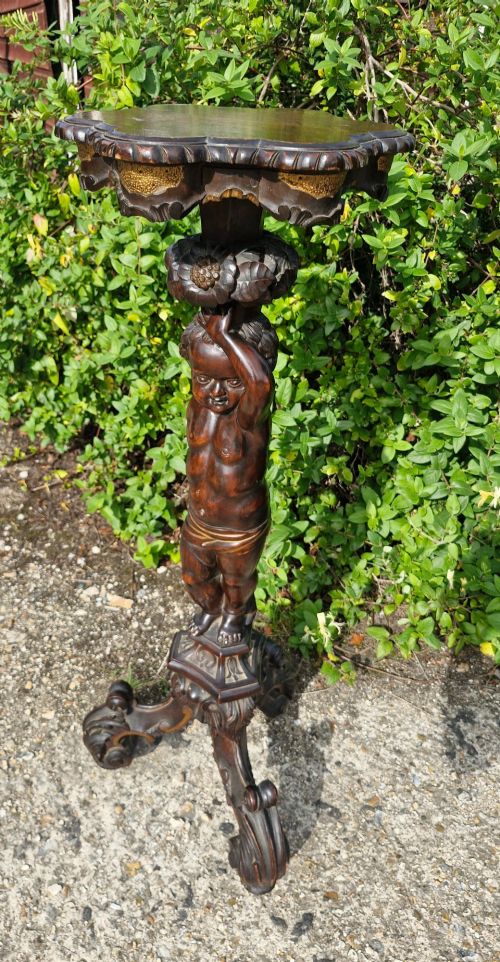
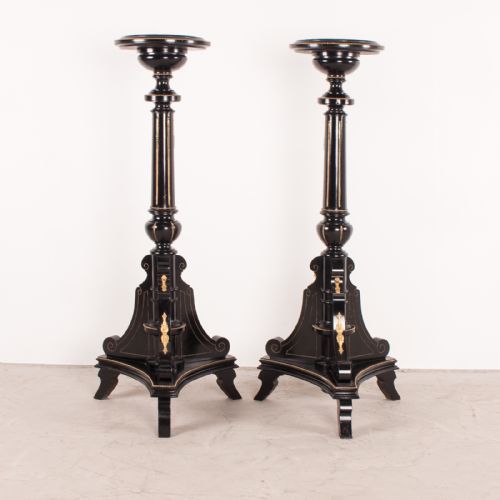
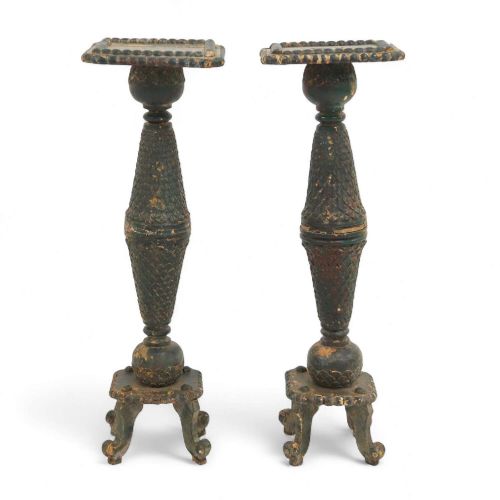
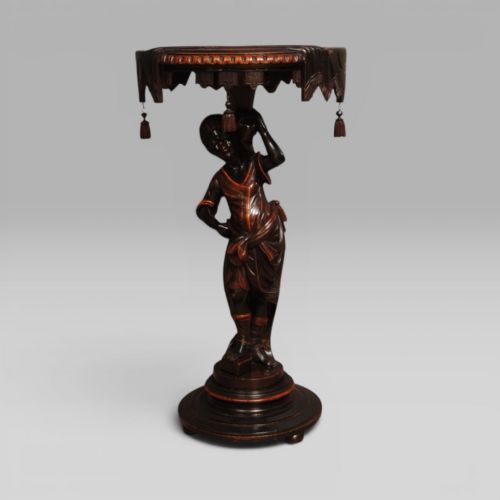
A decorative wooden torchere takes the form of tall, slender stands, plant holders, and figural sculptures designed to hold light or display objects. The pieces appearing here span from the eighteenth century through to the early twentieth century, with a strong representation of nineteenth-century craftsmanship.
Italian and Venetian workshops dominate the selection, often taking the shape of elaborate carved figures, including gondoliers and attendants. Alongside these figural works, buyers will encounter simpler oak and carved stands intended to elevate vases or lighting.
The regional styles lean heavily towards Venetian Baroque and Renaissance Revival aesthetics, alongside French influences and Victorian interpretations. These forms function primarily as focal points in a hallway or corner, combining practical support with theatrical presence.
Materials and construction
Makers shaped these pieces predominantly from carved wood, utilising timbers such as oak and walnut as a base for intricate sculptural detail. Artisans then applied layers of gesso to smooth the surfaces before adding decorative finishes.
Colour and lustre came through the application of polychrome paint, original green paint, and gold leaf. Ormolu and ebonised wood also appear, providing sharp contrast and rich surface texture to the carved elements.
Decorative Wooden Torchere Retail Price Guide 2026
Typical asking prices for decorative wooden torchere among the pieces listed under this phrase on Sellingantiques today, from the lower quarter to the upper quarter. They describe what is for sale here now, not the wider market.
Listings feature pieces spanning from the eighteenth century through to 1920, incorporating materials such as gesso, ormolu, and ebonised wood.
Assessing quality and execution
Surface preservation dictates much of the appeal, particularly where original paint, parcel-gilt details, or gold leaf survive intact. Superior stands maintain their structural stability despite their height, with balanced proportions and robust joinery.
The Decorative Wooden Torchere Glossary
- Torchere
- A tall stand originally designed to carry a torch or candle, later evolving into pedestals for lamps and decorative objects. They often feature slender shafts supported by elaborate bases.
- Gesso
- A plaster-like mixture applied to wood surfaces to create a smooth base for gilding and painting. It allows carvers to achieve sharp relief before applying metallic leaf.
- Parcel-gilt
- Partially gilded, where gold leaf is applied only to specific highlighted areas rather than the entire surface. This technique emphasises particular carved details against a painted ground.
- Ormolu
- Gilded bronze mounts and decorative details applied to furniture and wooden objects. It adds a metallic brilliance that complements the carved wood and paint.
Decorative Wooden Torchere: Frequently Asked Questions
What is a torchere used for?
These tall stands served traditionally to hold candles or lighting fixtures in large rooms. Today, they function well as pedestals for floral arrangements, sculptures, or table lamps.
Their elevated profile allows them to fill empty corners and draw the eye upward in high-ceilinged spaces.
How do I clean a painted wooden torchere?
Dust the surface regularly with a soft, dry brush to prevent particle buildup. Avoid using water or chemical solvents on painted and gilded areas.
Preserving fragile finishes requires gentle maintenance without abrasive cloths or polish.
Are these stands stable enough for modern lamps?
Most torcheres have sturdy wooden bases designed to support weight, but height can make them top-heavy. Position them away from high-traffic walkways where they might get knocked.
Check the base and weight distribution before placing heavy electrical lamps on top.
How can I tell an eighteenth-century piece from a nineteenth-century one?
Dating relies on the tool marks, timber selection, and the ageing process of the gesso and paint layers. Eighteenth-century examples often exhibit deeper patination and hand-forged structural elements.
Nineteenth-century revival pieces frequently adopt bolder, more theatrical interpretations of earlier Baroque styles.