




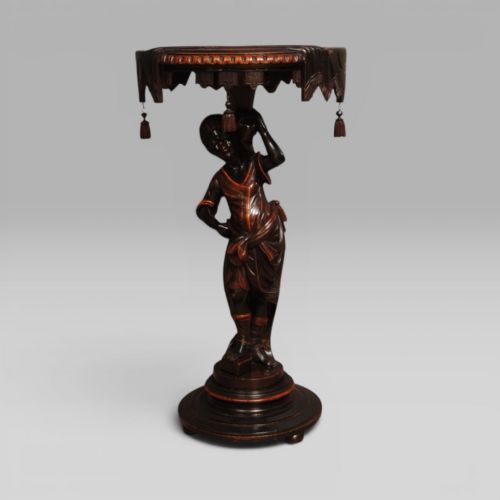
Decorative Wooden Table
These decorative wooden table selections bring together diverse period craftsmanship, offering carved surfaces, marquetry details, and distinctive forms for interior spaces.
Decorative Wooden Table
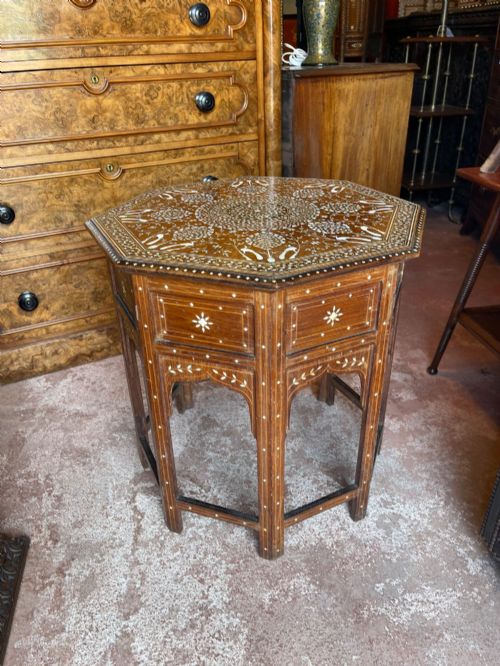
The selections span multiple eras, including the nineteenth century, Victorian period, and early twentieth century. Common stylistic influences appearing within these groups include Anglo-Indian, French Provincial, French Rococo, Arts and Crafts, Edwardian, and English Country designs.
Many examples incorporate regional craftsmanship, featuring carved elements, marquetry, painted finishes, or contrasting wood types like mahogany and elm. These items serve both practical placement needs and distinct aesthetic functions within a room.
Materials and construction methods
Construction relies heavily on hardwoods such as oak, mahogany, walnut, rosewood, and kingwood, often paired with secondary elements like brass, copper mounts, lacquer, and gesso. Artisans utilised traditional joinery alongside carving techniques to shape complex forms, legs, and surfaces.
Surface decoration forms a central aspect of these pieces, employing techniques such as marquetry inlay, hand painting, polychrome work, and ebonising. Metal mounts, including ormolu, frequently accent the wooden structures to add contrast and detail.
Makers shaped structural timber into diverse forms, from tripod bases and cricket tables to folding or pedestal frames. The integration of painted panels, carved flora, and contrasting veneers demonstrates the varied workshop practices of the nineteenth and early twentieth centuries.
Decorative Wooden Table Retail Price Guide 2026
Typical asking prices for decorative wooden table among the pieces listed under this phrase on Sellingantiques today, from the lower quarter to the upper quarter. They describe what is for sale here now, not the wider market.
Materials appearing alongside timber include brass, copper, lacquer, gesso, and painted finishes.
Factors influencing overall quality
Quality rests upon the precision of the carving, the complexity of the marquetry, and the selection of timber veneers. Finely executed hand-carved details and balanced proportions distinguish superior examples from simpler production items.
The integrity of the surface finish, whether original polish, polychrome paint, or lacquer work, dictates visual depth and historical retention. Skill in applying brass or ormolu mounts without disrupting the surrounding wood further separates standard items from exceptional ones.
Coherence of style within regional works, such as Anglo-Indian or French revival pieces, reflects the maker's mastery. Well-executed joinery ensures structural stability beneath decorative veneers and intricate top surfaces.
Liberty and Co·Mappin Bros
The Decorative Wooden Table Glossary
- Marquetry
- Decorative veneer work arranged in geometrical or pictorial patterns across a wooden surface. This technique utilises various wood types to create contrast and imagery.
- Ormolu
- Gilded bronze mounts applied to furniture and decorative objects. These metal elements provide ornate highlights against dark wood surfaces.
- Cricket table
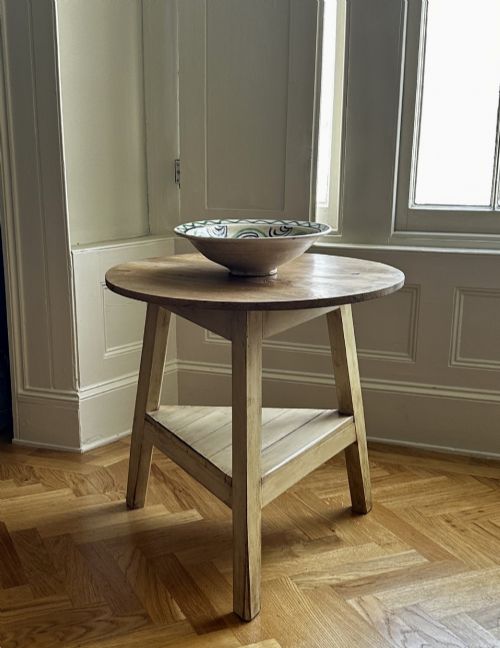
- A small, lightweight wooden table typically featuring three splayed legs and a round top. This traditional English form provided stability on uneven floors.
- Polychrome
- The practice of decorating architectural elements, wood, or sculpture in a variety of colours. It appears frequently on Italian and continental decorative surfaces.
Decorative Wooden Table: Frequently Asked Questions
What periods do these tables represent?
The available inventory predominantly spans the nineteenth century, the Victorian era, and the early decades of the twentieth century. Pieces reflect prevailing design movements of those decades, including Arts and Crafts and various regional revivals.
Craftsmen during these periods utilised diverse woods and decorative techniques, resulting in distinct regional styles such as Anglo-Indian and French provincial forms.
How are different wood types utilised?
Timbers like oak, mahogany, walnut, and rosewood form the primary structural and visual components of these tables. Hardwoods provide the durability necessary for functional furniture frames while accepting intricate carved details.
Finer veneers such as kingwood and burr walnut are applied to visible surfaces to create striking grain patterns and decorative contrasts.
What decorative techniques appear on surfaces?
Surfaces frequently feature hand-carved motifs, marquetry inlay, painted finishes, and polychrome details. Metal mounts in brass or ormolu are also applied to enhance the overall ornamentation.
These varied methods reflect both British craftsmanship and continental European workshop traditions from the nineteenth and early twentieth centuries.
How do occasional tables function in interiors?
Occasional and side tables provide adaptable surface space for lamps, decorative objects, or books within living areas. Their compact proportions allow them to fit easily beside seating or in hallways.
In addition to practical utility, their decorative surfaces and carved timber frames serve as visual focal points in a room.