

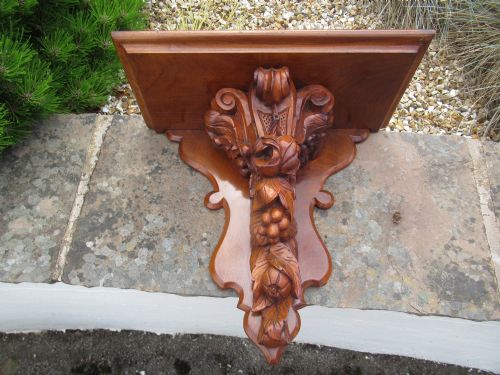


Decorative Wood Wall Shelf
These decorative wood wall shelf pieces bring architectural interest and practical display space to a room, ranging from simple rustic ledges to elaborate carved brackets.
Decorative Wood Wall Shelf
A decorative wood wall shelf serves to elevate ornaments, clocks, or books upon a wall surface, bringing both utility and ornamental depth to an interior. When exploring decorative wood wall shelf examples, buyers encounter diverse forms including wall brackets, console mirrors, and multi-tiered hanging units.
The selection spans centuries of design, with pieces originating from the seventeenth century through to the nineteen thirties. Common manifestations on this page include carved wooden brackets, architectural corbels, and small mahogany bookcases designed to mount directly onto plaster or wood panelling.
Stylistic influences vary significantly across the inventory, drawing upon Georgian restraint, Victorian elaboration, and Rococo exuberance. These objects function equally well as solitary focal points or paired items framing a mirror or fireplace.
Materials and construction methods
Makers utilised a variety of timbers including mahogany, walnut, oak, pine, and hardwood to construct these shelves and brackets. Carving remained a primary method of embellishment, often paired with applied gesso and giltwood surfaces to catch the light.
More specialised pieces incorporate brass fittings, ormolu mounts, inlaid details, and ebonised finishes to achieve distinctive textures. Construction techniques range from traditional joinery in earlier centuries to more decorative fretwork assemblies in later periods.
Decorative Wood Wall Shelf Retail Price Guide 2026
Typical asking prices for decorative wood wall shelf among the pieces listed under this phrase on Sellingantiques today, from the lower quarter to the upper quarter. They describe what is for sale here now, not the wider market.
Listings span periods from the seventeenth century through the nineteen thirties, featuring materials like giltwood, brass, and carved hardwood.
Distinctions in quality and execution
The depth and crispness of the carving distinguish finer examples from simpler production, particularly where cherubs, acanthus leaves, or scrollwork are rendered in high relief. The choice of timber also dictates quality, with dense hardwoods and well-figured mahogany holding sharper details than softer woods.
Surface treatment plays a major role in the overall execution, where original gilding, patination, or faux finishes demonstrate the skill of the original workshop. Structural integrity, clean joints, and the survival of secondary elements such as original brackets or mirrors complete the assessment.
Henri Dasson
The Decorative Wood Wall Shelf Glossary
- Corbel
- A structural or decorative bracket projecting from a wall to support a weight above it. In these listings, they often appear as carved wooden supports for shelves or mantelpieces.
- Giltwood
- Timber that has been coated with gold leaf or gold paint. This technique was widely utilised in Baroque and Rococo Revival pieces to create a reflective, opulent finish.
- Ormolu
- Gilded bronze used for decorative mounts on furniture and clocks. It provides a bright metallic contrast against dark ebonised or polished wood surfaces.
- Fretwork
- Ornamental design worked in openwork by carving or cutting with a scroll saw. It appears frequently on lighter hanging shelves from the nineteenth century.
- Bracket
- A supporting member projecting from a vertical surface. These range from simple functional ledges to highly ornate sculptural forms supporting display objects.
Decorative Wood Wall Shelf: Frequently Asked Questions
How do I secure an antique wall shelf safely?
Most wall brackets and shelves rely on traditional hanging loops or screw holes integrated into their backplates or structural timbers. Fixing them securely into wall studs or using appropriate masonry plugs ensures they safely bear the weight of displayed items.
Heavier carved wood or marble-topped brackets require heavy-duty fixings matched to the specific wall type. Consulting a professional installer is advisable for substantial nineteenth-century pieces or fragile giltwood items.
Were these shelves originally designed for books or display?
The intended use varied widely according to the specific object type and period. Small mahogany bookcases and multi-tiered shelves held volumes, while decorative wall brackets and gilded consoles were made for porcelain, clocks, and small sculptures.
Many architectural fragments and corbels were salvaged from larger interiors to serve secondary display functions. Examining the depth and weight capacity of each shelf reveals its original domestic purpose.
How can I date a carved wooden wall bracket?
Dating relies upon stylistic markers, wood selection, and construction tool marks visible on the reverse. Seventeenth-century examples typically feature dense oak and robust hand-cut joinery, whereas nineteenth-century revival pieces often display softer walnut or pine with machine-assisted shaping.
Gilt finishes and gesso application methods also shift between periods, moving from heavy hand-applied priming to later mass-produced composition ornament. Comparing the decorative motifs to known furniture styles of the era confirms the timeline.
Can these shelves support heavy decorative objects?
Weight capacity depends entirely on the construction method, timber density, and the wall fixings used. Stolid oak corbels and solid mahogany brackets generally handle substantial loads, while delicate fretwork or intricate giltwood pieces are strictly suited for light ornaments.
Checking the rear mounting points provides a good indication of intended load-bearing capacity. When in doubt, display lighter ceramics or clocks rather than heavy bronze figures.